

In a Nutshell
No controlled study has established that sermorelin reduces abdominal or visceral fat in adults who do not have diagnosed growth hormone deficiency. That is the honest answer to the question.
There is one randomized trial that comes close, and it is worth knowing exactly what it found — including the part that gets left out. In men with HIV-associated lipodystrophy, a condition involving reduced growth hormone secretion, twelve weeks of GHRH significantly reduced trunk fat and increased lean mass. The absolute reduction in abdominal visceral fat did not reach statistical significance 10. That is the endpoint this page's question is actually about, and it is the one the trial missed — in the population most likely to respond.
Sermorelin is a growth hormone-releasing hormone analog. It is supplied today as a compounded preparation, not an FDA-approved finished drug. Its historical approvals as GEREF® were for diagnostic use and pediatric growth hormone deficiency — not adult body composition, fat loss or weight management. The products were discontinued in 2008 and those approvals were withdrawn effective June 18, 2009 1.
It is sometimes prescribed with the goal of improving body composition. That is an intended treatment goal, not an established benefit. Controlled evidence for chronic compounded adult use remains limited, and no reliable onset timeline has been established.
If the reason you are reading this is that you want to lose abdominal fat, the medicines with large product-specific trials and an approved weight-management indication are further down this page — and they are not sermorelin.
What the Studies Cited for This Claim Actually Measured
This is worth showing, because it explains why the answers you find conflict with each other.
A small set of studies is cited repeatedly in support of sermorelin and abdominal fat. Read one at a time, here is what each actually measured:
| What it is cited to support | What the study actually measured |
|---|---|
| Sermorelin reduces belly fat | Sermorelin in children with idiopathic growth hormone deficiency |
| Sermorelin reduces belly fat | GHRH treatment of growth hormone deficiency, published 1987 |
| Sermorelin reduces belly fat | A two-page commentary on adult-onset growth hormone insufficiency |
| Sermorelin reduces belly fat | Brain GABA levels, measured by neuroimaging in mild cognitive impairment — a sub-study of a trial that tested tesamorelin 5 |
| Sermorelin reduces belly fat | Growth hormone secretagogues in hypogonadal males — a review |
Not one is a controlled trial of sermorelin, in adults without diagnosed deficiency, with fat as the measured endpoint.
The fourth is worth pausing on. It is a brain-imaging study measuring a neurotransmitter, in older adults with mild cognitive impairment, and it belongs to a trial of tesamorelin — a different molecule 5. It has no bearing on sermorelin and abdominal fat.
A related citation is a 2006 review reporting that growth hormone therapy reduced body fat in adults — in adults found to be growth hormone deficient, treated with recombinant growth hormone. That is a different molecule given to a different population for a diagnosed disease.
This is the substitution to watch for. Evidence about growth hormone, in people with a diagnosed deficiency, is read as evidence about sermorelin, in people without one. The populations are not interchangeable, and neither are the drugs.
Why "Targets Belly Fat" Sounds Plausible
The claim is not invented from nothing, and it is worth being precise about what the underlying biology does and does not support.
Growth hormone does affect fat metabolism, and the growth hormone axis genuinely interacts with visceral adipose tissue — the deep abdominal fat that sits around the organs, as distinct from the subcutaneous fat you can pinch. Adults with diagnosed growth hormone deficiency carry more visceral fat, and growth hormone replacement in that population changes body composition.
There is also a GHRH analog with a current FDA approval for reducing visceral fat: tesamorelin, marketed as Egrifta®. That approval is real, and it is fair to say it establishes that this axis can be moved.
But the approval is narrow — HIV-associated lipodystrophy only — and visceral fat reaccumulated once treatment stopped: the 52-week extension found the effects "do not last beyond the duration of treatment" 9. Tesamorelin is a different molecule, studied at defined doses in a defined population for a defined condition. Its label is not evidence for sermorelin, and it is not evidence for general abdominal fat in adults who do not have that condition. See sermorelin vs tesamorelin.
So the mechanism is not fictional. What does not follow is the leap from this axis is involved in fat metabolism to this compounded preparation will reduce your belly fat. A plausible mechanism is a reason to run the trial, not a substitute for having run it.
And no systemically administered weight-management medicine has been shown to let a patient choose where fat is lost. Two narrow exceptions prove the rule rather than break it: tesamorelin's effect on visceral abdominal fat is specific to that product, indication and population; and deoxycholic acid injection is FDA-approved for submental fat, but it is a locally injected treatment whose label states that use outside the submental region is not established. Neither supports a systemic drug selectively reducing abdominal fat, and neither transfers to sermorelin.
The claim that sermorelin "selectively melts deep abdominal fat while protecting muscle" — the wording on the current top-ranking page — describes something no weight-management medicine has demonstrated. Spot reduction is not an established pharmacological effect.
Is Sermorelin Like Ozempic?
This question is asked often enough to deserve a direct answer: both are peptides, and that is close to the end of the similarity.
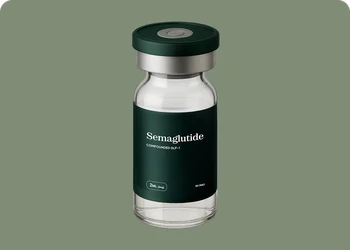
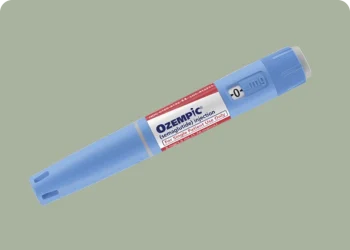
Semaglutide is a peptide that mimics GLP-1, a gut hormone that regulates appetite and gastric emptying. It went through large randomized controlled trials and is manufactured under pharmaceutical controls. Approval belongs to a product and an indication, not to a molecule: Wegovy® is the semaglutide product labeled for long-term weight reduction, while Ozempic® contains the same molecule but is labeled for type 2 diabetes and cardiovascular risk reduction, not weight loss.
Sermorelin acts on an entirely different system: it prompts the pituitary to release growth hormone. It is compounded rather than FDA-approved as a finished drug, and its adult body-composition evidence is limited.
The difference that matters is not chemistry. It is that one has published outcome data and a label for weight reduction, and the other does not. See peptides for weight loss.
How Much Weight Would You Lose on Sermorelin?
There is no published figure to give you, and that is itself the answer.
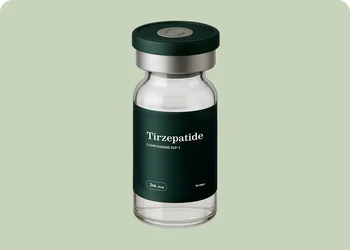
For the approved weight-reduction medicines, the numbers come from trials and can be stated precisely: semaglutide 2.4 mg produced 14.9% mean weight loss at 68 weeks in STEP 1 2; tirzepatide produced mean reductions of roughly 15.0%, 19.5% and 20.9% at 5 mg, 10 mg and 15 mg at 72 weeks in SURMOUNT-1 3.
For sermorelin, no equivalent figure exists for adults seeking fat loss. The nearest thing is the trial above: 31 men, twelve weeks, GHRH 1 mg twice daily, in HIV-associated lipodystrophy. Lean body mass rose by 0.9 kg against a 0.3 kg fall on placebo, and trunk fat fell by 0.4 kg against a 0.2 kg gain. Abdominal visceral fat fell by 19.2 cm² against a 2.3 cm² gain — a difference that did not reach the conventional threshold for statistical significance 10.
Read carefully, that trial argues against the marketing rather than for it. The changes were modest; they occurred in a defined clinical population with a documented growth hormone deficit rather than in general midlife weight gain; the dose was twice daily rather than the nightly regimen usually sold; and the visceral-fat endpoint — the one every page ranking for this question promises — is precisely the one that missed. It was also not designed to produce a generalizable fat-loss percentage for today's compounded preparation, and it did not use one. Any specific number, timeline or dosing range you encounter for sermorelin and weight loss is not coming from controlled outcome data.
Be particularly cautious with pages that pair a confident percentage with a dosing protocol. Compounded preparations vary, and historical GEREF evidence concerned specified products, formulations, routes, doses, populations and indications — it does not establish quality, safety, efficacy or dosing for every current compounded preparation.
Why Might Someone Gain Weight on It?
This appears in the search suggestions frequently enough to be worth addressing.
Growth hormone can cause fluid retention, and fluid shifts register on the scale without any change in fat mass. Effects associated with growth hormone excess are dose-related and include edema, joint pain and carpal tunnel symptoms, and there are recognized concerns around glucose metabolism.
Responsible monitoring on this axis therefore looks beyond the scale. It starts from a baseline metabolic and hormonal panel, blood pressure and body composition; reassesses at around three months, including for worsening fasting insulin or glucose; and repeats the full panel annually. IGF-1 and fasting insulin are checked at clinician discretion rather than routinely, because a rise in IGF-1 is a laboratory change, not the outcome anyone is seeking. Worsening insulin resistance at the three-month check is a recognized reason to stop or change the regimen.
Speak to a clinician promptly about new or worsening swelling, persistent joint pain or numbness and tingling in the hands, and about any new or worsening blood sugar problems if you have diabetes or prediabetes.
What Actually Reduces Visceral Fat
This is the part the question is really asking, so here it is directly.
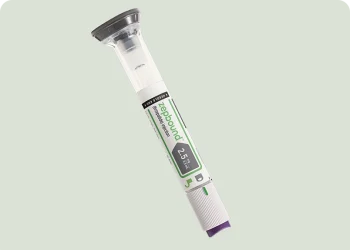
The approved GLP-1 and dual-agonist medicines have the strongest outcome evidence in this area. Wegovy® and Zepbound® are the products labeled for weight reduction; Ozempic®, Rybelsus® and Mounjaro® are approved but are not weight-loss-labeled products. Visceral fat generally responds to overall fat loss, which is what these medicines produce. Serious risks and contraindications vary by product, and they require clinical supervision. See the GLP-1 hub.
Several treatable conditions determine how readily abdominal fat comes off. Insulin resistance, thyroid dysfunction, untreated sleep apnea, medications that promote weight gain, and the hormonal changes of perimenopause and menopause all affect the picture — and several are addressable in ways that make everything else work better. This is why an assessment comes before a product.
Resistance training, adequate protein and a clinically appropriate rate of loss are what protect strength while fat comes off. Note that lean mass is not the same as skeletal muscle — it includes body water, organs, connective tissue and bone — and that body-composition scanning estimates fat and fat-free compartments rather than directly measuring skeletal muscle or visceral fat.
Controlled studies have not established that compounded sermorelin preserves skeletal muscle or lean mass during GLP-1 treatment, calorie restriction or weight loss.
Who This Is Not For — and Why It Matters Especially Here
Compounded sermorelin has no FDA-approved label, so there is no formal contraindication list to quote. Clinicians prescribing on this axis treat as absolute: a prior allergic reaction to sermorelin, pregnancy or planned near-term pregnancy or breastfeeding, active malignancy, significant hypothalamic-pituitary structural disease, and acute critical illness or recent major surgery.
One of the relative exclusions is directly relevant to this page: diabetes, prediabetes and insulin resistance. Growth hormone impairs insulin sensitivity. That makes disordered glucose regulation both a reason for individual assessment before starting and something watched during treatment — worsening insulin resistance is a recognized reason to stop.
Sit with what that means for a fat-loss goal. The axis marketed hardest for abdominal fat is one whose monitoring includes checking that glucose regulation has not deteriorated. The systematic review of growth hormone in healthy older adults found problems with glucose metabolism among the adverse effects, alongside the roughly 2 kg of fat loss. Those are not separate findings; they are the same physiology. Anyone pursuing visceral fat specifically — the endpoint most likely to come with metabolic risk already attached — is in the group where this matters most.
Uncontrolled thyroid disease, significant liver or kidney disease, and cancer in remission are likewise treated as calling for individual assessment. Sermorelin is also prohibited by the World Anti-Doping Agency, a disqualifier under any anti-doping code regardless of prescription status. Full list and the monitoring that accompanies it: dosing and monitoring.
Red Flags
- "Selectively targets belly fat" — no systemic weight-management medicine has been shown to let you choose where fat is lost
- A specific dosing range attributed to "studies" with no citation — currently present on a page ranking in the top five for this term
- Evidence from growth-hormone-deficient patients presented as evidence for adults without a deficiency — the most common move in this category, and the hardest to spot
- A percentage weight loss quoted for sermorelin — no controlled adult outcome trial supports one
- An injectable peptide shipped directly to you for self-treatment, with no prescriber and no documented clinical pathway — see peptide sourcing and quality
- Any program that sells you a molecule before it evaluates why the weight is there
What You Can Do About It
Get the drivers assessed before buying a product. Abdominal fat that will not shift can have contributors that testing may identify — insulin resistance, thyroid function, sleep, medication effects, or perimenopausal change. Assessment will not always find one, and finding one does not always explain everything.
If a GLP-1 medication is appropriate, use the approved pathway, with a clinician managing titration and side effects.
Judge any peptide proposal by the evidence for that substance, in your population, for your goal. The question to ask is not whether growth hormone affects fat metabolism — it does. It is whether this preparation has been shown to do what is being claimed, in people like you.
Track body composition rather than scale weight alone, while understanding what those estimates can and cannot tell you.
Get Started with JumpstartMD
JumpstartMD was founded in 2007 by Stanford-trained physicians, and our weight-loss outcomes have been published in the peer-reviewed literature. You are seen face-to-face by licensed clinicians — in person at 14 California locations, or online across California.
Every visit includes body-composition assessment and clinical review, and treatment follows from what the assessment finds rather than from a product decided in advance.
Book FREE Consultation
Share your details and a JumpstartMD team member will reach out shortly. Or call 408.478.3496 for your free, no-obligation consultation.
Share your details and a JumpstartMD team member will reach out when we open.
Related Articles
- Sermorelin — mechanism, evidence and current regulatory status
- Sermorelin vs tesamorelin
- Peptides for weight loss
- Sermorelin side effects
- Where peptides stand with the FDA
- GLP-1 weight loss hub
Frequently Asked Questions
Does sermorelin burn belly fat?
No controlled study has established that sermorelin reduces abdominal or visceral fat in adults without diagnosed growth hormone deficiency. It is sometimes prescribed with body-composition goals in mind, but those are intended treatment goals rather than established benefits, and the evidence usually cited for them comes from studies of growth hormone in growth-hormone-deficient patients — a different drug in a different population.
How much weight will you lose on sermorelin?
No published controlled trial supports a figure. Any specific percentage or timeline you find for sermorelin and weight loss is not derived from adult outcome data.
Is sermorelin like Ozempic?
Both are peptides, but they act on unrelated systems. Semaglutide mimics a gut hormone that regulates appetite and has large trials and an approved label behind it. Sermorelin prompts pituitary growth hormone release, is supplied as a compounded preparation, and has limited adult body-composition evidence.
What is the best peptide for losing belly fat?
The best-evidenced peptides for fat reduction are the ones already FDA-approved for weight reduction — semaglutide and tirzepatide are both peptides. Most substances marketed specifically as "fat-loss peptides" have no controlled human trial for that purpose.
How fast does sermorelin work for weight loss?
No reliable onset timeline has been established for adult body-composition outcomes. The small, decades-old controlled studies that exist were not designed to produce one, and their findings were mixed and tied to specified products, doses and populations.
Why am I gaining weight on sermorelin?
Growth hormone can cause fluid retention, which registers on the scale without a change in fat mass. New or worsening swelling, joint pain or hand numbness should be discussed with a clinician promptly.
Does sermorelin selectively target visceral fat?
No systemically administered weight-management medicine has been shown to let a patient choose where fat is lost. (Deoxycholic acid injection is approved for submental fat, but it is injected locally into that area and its label states use elsewhere is not established — a different thing entirely.) Claims of site-selective fat loss are not supported for sermorelin or for any other weight-management agent.
References
- U.S. Food and Drug Administration, "Determination That GEREF (Sermorelin Acetate) Injection... Were Not Withdrawn From Sale for Reasons of Safety or Effectiveness," Federal Register, vol. 78, pp. 14095-14096, Mar. 4, 2013. [Online]. Available: https://www.govinfo.gov/content/pkg/FR-2013-03-04/pdf/2013-04827.pdf [Accessed: Jul. 26, 2026]. ↩
- J. P. H. Wilding, R. L. Batterham, S. Calanna, M. Davies, L. F. Van Gaal, I. Lingvay, B. M. McGowan, J. Rosenstock, M. T. D. Tran, T. A. Wadden, et al., "Once-Weekly Semaglutide in Adults with Overweight or Obesity," The New England Journal of Medicine, vol. 384, no. 11, pp. 989-1002, Mar. 2021, [Online]. Available: https://doi.org/10.1056/NEJMoa2032183. PMID: 33567185. [Accessed: Jul. 26, 2026]. ↩
- A. M. Jastreboff, L. J. Aronne, N. N. Ahmad, S. Wharton, L. Connery, B. Alves, A. Kiyosue, S. Zhang, B. Liu, M. C. Bunck, et al., "Tirzepatide Once Weekly for the Treatment of Obesity," The New England Journal of Medicine, vol. 387, no. 3, pp. 205-216, Jul. 2022, [Online]. Available: https://doi.org/10.1056/NEJMoa2206038. PMID: 35658024. [Accessed: Jul. 26, 2026]. ↩
- Theratechnologies Inc., "EGRIFTA WR (tesamorelin) for injection, for subcutaneous use — Prescribing Information," rev. Mar. 2025 (DailyMed version 2, Aug. 3, 2026). [Online]. Available: https://dailymed.nlm.nih.gov/dailymed/drugInfo.cfm?setid=839334d3-8c1d-4c26-9036-2ab524a6ea75 [Accessed: Oct. 5, 2026]. ↩
- S. D. Friedman, L. D. Baker, S. Borson, J. E. Jensen, S. M. Barsness, S. Craft, G. R. Merriam, R. K. Otto, E. J. Novotny, M. V. Vitiello, "Growth hormone-releasing hormone effects on brain γ-aminobutyric acid levels in mild cognitive impairment and healthy aging," JAMA Neurology, vol. 70, no. 7, pp. 883-890, Jul. 2013, [Online]. Available: https://doi.org/10.1001/jamaneurol.2013.1425. PMID: 23689947. [Accessed: Jul. 26, 2026]. ↩
- D. E. Cummings, G. R. Merriam, "Age-related changes in growth hormone secretion: should the somatopause be treated?," Seminars in Reproductive Endocrinology, vol. 17, no. 4, pp. 311-325, 1999, [Online]. Available: https://doi.org/10.1055/s-2007-1016241. PMID: 10851571. [Accessed: Oct. 5, 2026]. ↩
- B. A. Bengtsson, S. Edén, L. Lönn, H. Kvist, A. Stokland, G. Lindstedt, I. Bosaeus, J. Tölli, L. Sjöström, O. G. Isaksson, "Treatment of adults with growth hormone (GH) deficiency with recombinant human GH," The Journal of Clinical Endocrinology & Metabolism, vol. 76, no. 2, pp. 309-317, Feb. 1993, [Online]. Available: https://doi.org/10.1210/jcem.76.2.8432773. PMID: 8432773. [Accessed: Oct. 5, 2026]. ↩
- S. Bourke, J. M. Morton, P. Williams, "Effect of JumpstartMD, a Commercial Low-Calorie Low-Carbohydrate Physician-Supervised Weight Loss Program, on 22,407 Adults," Journal of Obesity, vol. 2020, art. no. 8026016, Apr. 2020, [Online]. Available: https://doi.org/10.1155/2020/8026016. PMID: 32318289. PMCID: PMC7157789. [Accessed: Jul. 26, 2026]. ↩
- J. Falutz, S. Allas, J. C. Mamputu, D. Potvin, et al., "Long-term safety and effects of tesamorelin, a growth hormone-releasing factor analogue, in HIV patients with abdominal fat accumulation," AIDS, vol. 22, no. 14, pp. 1719-1728, Sep. 2008, [Online]. Available: https://doi.org/10.1097/QAD.0b013e32830a5058. PMID: 18690162. [Accessed: Jul. 26, 2026]. ↩
- P. Koutkia, B. Canavan, J. Breu, M. Torriani, J. Kissko, S. Grinspoon, "Growth hormone-releasing hormone in HIV-infected men with lipodystrophy: a randomized controlled trial," JAMA, vol. 292, no. 2, pp. 210-218, Jul. 2004, [Online]. Available: https://doi.org/10.1001/jama.292.2.210. PMID: 15249570. [Accessed: Jul. 26, 2026]. ↩