
In a Nutshell
Sermorelin raises growth hormone — that much is established. The adult outcomes it is marketed for, from sleep and recovery to body composition, are not.
Sermorelin is a growth hormone-releasing hormone (GHRH) analog — a 29-amino-acid peptide that prompts your pituitary gland to release more of your own growth hormone. That mechanism is the whole point of it, and it is what separates sermorelin from growth hormone replacement, which supplies external hormone directly, outside the pituitary's own regulation of release.
Sermorelin has a genuine FDA history, which most coverage gets wrong in one direction or the other. It was an FDA-approved prescription drug — marketed as GEREF under two separate applications, approved in 1990 and 1997. The manufacturer discontinued both products in 2008, and FDA withdrew the approvals effective June 18, 2009. In 2013, FDA formally determined that GEREF "[was] not withdrawn for reasons of safety or effectiveness" 1.
That determination is a matter of public record, and it is a meaningfully different situation from a substance that was never approved or was pulled over safety findings.
It also means sermorelin has more human safety data behind it than most peptides discussed on this hub. FDA reviewed it for two approvals, and it was used for years in children with growth hormone deficiency and as a diagnostic test in adults. The most common reported effect in that record was transient injection-site pain, redness or swelling 10. A six-month randomized, placebo-controlled trial in adults aged 60–85 adds direct adult data: 2 of the 100 participants withdrew for reasons likely related to the drug, one with an injection-site rash and one with general malaise. The drug and placebo were supplied by the manufacturer 11. FDA itself cautions that the approved-use record does not transfer directly to adults: the children were on daily injections, and the adults were given a single diagnostic dose 10. The side effects page sets out the record in full.
What it does not mean: sermorelin is not currently an FDA-approved product you can be prescribed off a shelf. It is supplied as a compounded preparation, and FDA does not review compounded drugs for safety, efficacy or quality before they reach patients. The original approvals were also for pediatric growth hormone deficiency and as a diagnostic agent — not for adult wellness, recovery or body composition, which is how it is used today.
Sermorelin is the peptide most likely to be included first in a JumpstartMD peptide therapy program: it is common, well tolerated, and in our clinicians' experience often effective. But the starting point is the person, not the peptide. After assessment, your clinician matches the peptide to your goals and needs. For other goals, such as tissue healing and recovery or skin and hair, your clinician may discuss other options, such as BPC-157 or GHK-Cu, whose human evidence is more limited.
The FDA History, Accurately
This comes up constantly — "why is sermorelin not FDA approved?" is among the most-searched questions about it — and the accurate answer is more interesting than either version circulating online.
| GEREF (diagnostic) | GEREF (treatment) | |
|---|---|---|
| Application | NDA 19-863 | NDA 20-443 |
| Holder | EMD Serono | EMD Serono |
| Initially approved | December 28, 1990 | September 26, 1997 |
| Indication | Evaluating the pituitary somatotroph's ability to secrete growth hormone | Idiopathic growth hormone deficiency in children with growth failure |
| Discontinued | Notified July 11, 2008 | Notified December 2, 2008 |
| Approval withdrawn | Effective June 18, 2009 | Effective June 18, 2009 |
Following a citizen petition (Docket No. FDA-2012-P-1071), FDA published a determination on March 4, 2013 (78 FR 14095) that both products were not withdrawn from sale for reasons of safety or effectiveness — a finding made under 21 CFR 314.161, which has the practical effect of allowing FDA to approve abbreviated new drug applications referencing them, should any be submitted 1.
Two honest caveats, because this is where marketing tends to overreach:
- FDA determined the withdrawals were not for safety or effectiveness reasons. FDA did not make a finding endorsing any particular commercial rationale. The widely-repeated "discontinued due to declining demand" explanation comes from secondary sources, not from FDA
- The approvals covered pediatric GHD and diagnostic use. Adult use for recovery, sleep, body composition or healthy aging is not what was approved, and is not supported by those approvals
How Sermorelin Works
Your pituitary gland releases growth hormone in pulses, mostly during deep sleep, under the control of two opposing signals: GHRH, which stimulates release, and somatostatin, which suppresses it. Growth hormone output declines progressively with age — a well-documented physiological change.
Sermorelin is an analog of the biologically active fragment of GHRH. It binds the same pituitary receptors and prompts release of your own stored growth hormone.
The clinically important consequence is that your feedback loops stay in the circuit — somatostatin still responds when growth hormone rises, which does not happen when growth hormone is injected directly.
That distinction is real, but it is often overstated. Retained feedback may moderate the response. It does not guarantee that growth hormone or IGF-1 stay within range, and it does not by itself establish lower long-term risk. The clearest illustration comes from tesamorelin — a different GHRH analog, not interchangeable with sermorelin, but one with an approved label: in its trial population, 36% of treated patients had IGF-1 above three standard deviations at 26 weeks, per FDA's medical review of EGRIFTA 10. Intact feedback and markedly elevated IGF-1 can coexist.
That is why clinical and laboratory monitoring remain necessary rather than optional. See sermorelin vs HGH.
Because release is pulsatile and sleep-linked, dosing is typically timed to work with that rhythm rather than against it — covered on the dosing and administration page.
What Sermorelin Is Used For
In adult practice, sermorelin is prescribed or marketed with the aim of improving:
- Sleep quality, particularly depth of sleep — the phase during which most natural growth hormone release occurs
- Recovery from training and physical demand
- Lean body composition, alongside resistance training and adequate protein
- Body composition changes associated with aging, as part of a broader plan
These are proposed or marketed uses whose adult benefits remain unestablished, and it is worth being direct about the evidence position.
What the Evidence Supports — and What It Doesn't
Evidence tier: B for the underlying mechanism; C for most adult wellness outcomes.
| Claim | Evidence position |
|---|---|
| Stimulates endogenous growth hormone release | Well established — this is the mechanism the 1990 diagnostic approval rests on |
| Preserves physiological feedback vs direct HGH | Mechanistically sound and clinically accepted |
| Effective for pediatric growth hormone deficiency | The basis of the 1997 approval |
| Improves sleep quality in adults | Physiologically plausible, supported by the GH–slow-wave-sleep relationship; limited controlled adult data |
| Improves body composition in adults | Plausible; limited controlled trial evidence for sermorelin specifically in this population |
| Slows aging / extends lifespan | Not supported |
| Produces substantial weight loss | Not supported — see below |
Anyone presenting adult wellness outcomes for sermorelin as trial-proven is going beyond what has been published. What is genuinely established is the mechanism; the adult outcome data is thinner than the marketing suggests.
Sermorelin Is Not a Weight-Loss Drug
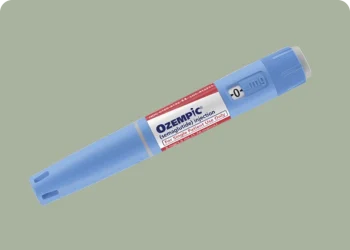
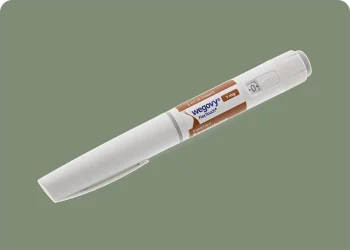
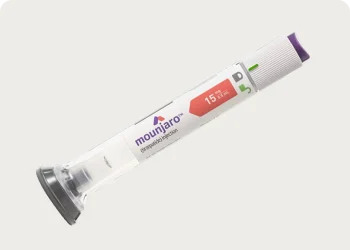
Two of the most-searched questions about sermorelin are "is sermorelin like Ozempic?" and "how much weight will you lose on sermorelin?" — so this deserves a direct answer.
No, and considerably less than you may have read.
Sermorelin and GLP-1 medications do entirely different things. GLP-1s act on appetite regulation and gastric emptying, with large randomized trials behind them — roughly 15% mean body-weight reduction for semaglutide at 68 weeks, roughly 21% for tirzepatide at 72 weeks. Sermorelin acts on growth hormone signaling, and has nothing remotely comparable.
Sermorelin is sometimes used with the aim of supporting lean-mass preservation while fat loss happens through other means, though direct controlled evidence for that outcome in this adult population is limited. That is a genuine and underrated goal, particularly given that a meaningful share of weight lost on GLP-1 medications can be lean mass rather than fat, as the STEP 1 body-composition sub-study found 7. But it is a different objective from weight loss, and conflating them sets up disappointment.
If fat loss is your goal, start with GLP-1 medications for weight loss.
Who Sermorelin Is Not For
Sermorelin is not appropriate for everyone, and this list is why prescribing follows assessment rather than a questionnaire.
There is no FDA-approved label for compounded sermorelin, so there is no official contraindication list to quote — tesamorelin has one because it is an approved finished product, and sermorelin's GEREF approvals were withdrawn in 2009. What follows is the position taken by clinicians prescribing on this axis: a clinical judgment, not a regulatory document. The split between the two lists is itself clinical, and it matters.
Absolute — not a candidate for this therapy:
- A prior allergic reaction to sermorelin, particularly anaphylaxis
- Pregnancy, a planned near-term pregnancy, or breastfeeding
- Active malignancy — growth hormone signaling and cell proliferation are linked. This is not a balance-of-risks conversation
- Significant hypothalamic-pituitary structural disease or an intracranial lesion
- Acute critical illness or recent major surgery
Relative — individual assessment rather than a blanket rule:
- Cancer in remission, including at five years — appropriately handled in collaboration with the treating oncologist rather than decided in isolation
- Diabetes, prediabetes or insulin resistance, uncontrolled or untreated — growth hormone impairs insulin sensitivity, which is also why glucose regulation is watched during treatment and can itself be a reason to stop
- Uncontrolled or untreated thyroid disease, whether under- or over-active
- Significant liver or kidney disease
Separately, and independent of clinical suitability: athletes under anti-doping codes. Sermorelin is named on the WADA Prohibited List (S2, growth hormone releasing factors and their analogues) and is prohibited regardless of prescription status. Confirm with your governing body.
A full medication review matters too — sermorelin interacts with several drug classes, covered on the side effects page.
What to Expect
Growth hormone acts through downstream signaling rather than producing immediate effects, so any change would be gradual. No controlled adult evidence establishes a reliable onset timeline for sleep, recovery, energy or lean mass, and reported experiences are uncontrolled. Where body composition changes occur they develop over months, and only alongside adequate training, protein and sleep.
Sermorelin is not a substitute for those inputs. It supports a signaling pathway; it does not replace the stimulus that pathway responds to.
Response varies, and some people do not respond meaningfully. That is a normal clinical outcome and a reason for objective monitoring rather than relying on subjective impressions — at JumpstartMD, body composition is tracked with InBody® scanning at visits. InBody results are estimates of fat and fat-free mass under standardized conditions — they do not directly measure skeletal muscle, and they cannot establish that sermorelin caused any change observed during a program that also includes nutrition, training and other treatment.
Red Flags — Contact Your Clinician
Call 911 now for difficulty breathing, facial or throat swelling, fainting, severe chest pain, confusion, or a sudden severe headache with weakness, speech difficulty or vision loss. Seek same-day assessment for fever with spreading injection-site redness, warmth, pus, red streaking or rapidly increasing swelling. Arrange prompt evaluation for anything else below.
Specifically:
- Persistent headaches, visual changes, or nausea — evaluate for pituitary-related effects
- New or worsening joint pain, or swelling in the hands and feet — fluid retention is a recognized growth hormone effect
- Numbness or tingling in the hands — possible carpal tunnel-type symptoms
- Symptoms of high blood sugar — increased thirst, frequent urination, blurred vision
- Fever, spreading redness, swelling or pus at an injection site
- Difficulty breathing, facial or throat swelling, widespread hives — call 911
Get Started with JumpstartMD
If you are considering sermorelin, the part that determines whether it is appropriate is not the peptide — it is the assessment that comes before it.
JumpstartMD was founded in 2007 by Stanford-trained physicians, and our programs are built around labs, hormones and body composition, with outcomes published in the peer-reviewed literature. You are seen face-to-face by licensed clinicians — in person at 14 California locations, or online across California.
Every plan begins with 60-biomarker lab screening and InBody® body composition scanning, repeated at visits. For sermorelin specifically, that matters in three ways: contraindication screening happens before anything is prescribed; your full medication list is reviewed for interactions; and lean mass is measured objectively, so changes are tracked against measurement rather than impression — while noting that a measured change cannot by itself be attributed to sermorelin.
Sermorelin is supplied as a compounded preparation, not an FDA-approved finished drug: GEREF was historically approved for diagnostic use and pediatric growth hormone deficiency — not adult sleep, recovery, body-composition or healthy-aging goals — and controlled evidence for those adult outcomes remains limited.
Peptide care is offered through a paid membership, subject to clinical evaluation. Contact JumpstartMD for membership details and pricing.
Clinician-guided peptide therapy may be considered after an individualized clinical evaluation. Certain therapies may use compounded medications, which are not FDA-approved, and evidence, risks and expected outcomes vary by treatment. See peptide therapy.
Book FREE Consultation
Share your details and a JumpstartMD team member will reach out shortly. Or call 408.478.3496 for your free, no-obligation consultation.
Share your details and a JumpstartMD team member will reach out when we open.
Related Articles
- Sermorelin Side Effects and Safety — the full safety picture and drug interactions
- Sermorelin Dosing and Administration — timing, storage, injection technique
- Sermorelin vs HGH — why stimulating your own hormone differs from replacing it
- Sermorelin vs Ipamorelin — how the two secretagogues compare
- Are Peptides Legal in the US? — the wider regulatory picture
- GLP-1 Medications for Weight Loss — if fat loss is the actual goal
Frequently Asked Questions
What does Sermorelin do to you?
Sermorelin activates the same pituitary GHRH receptors your body's own growth hormone-releasing hormone uses, stimulating growth hormone release. Because your feedback loops remain intact, the response may be moderated — but that does not guarantee levels stay within range, which is why monitoring is part of treatment. In adults it is prescribed or marketed with the aim of improving sleep quality, recovery, lean body composition and energy — proposed uses whose adult benefits remain unestablished.
Why is Sermorelin not FDA approved?
It was. Sermorelin was approved as GEREF under two applications — as a diagnostic agent in 1990 and for pediatric growth hormone deficiency in 1997. EMD Serono discontinued both products in 2008 and FDA withdrew the approvals effective June 18, 2009. In March 2013 FDA formally determined the products were not withdrawn for reasons of safety or effectiveness. Sermorelin today is supplied as a compounded preparation, which FDA does not review before it reaches patients.
Is Sermorelin like Ozempic?
No. They work through entirely different mechanisms — Ozempic (semaglutide) acts on appetite regulation and gastric emptying; sermorelin acts on growth hormone release. GLP-1 medications have large randomized trials showing substantial weight loss. Sermorelin does not, and is not a weight-loss medication.
How much weight will you lose on Sermorelin?
Sermorelin is not a weight-loss drug and should not be chosen as one. It is marketed for body composition — used with the aim of preserving lean mass, an effect that has not been established in controlled adult studies — rather than for scale weight. If weight loss is the goal, the FDA-approved GLP-1 medications have far stronger evidence.
Is Sermorelin safer than TRT?
They are different treatments for different problems and are not directly comparable. Testosterone replacement treats diagnosed testosterone deficiency; sermorelin acts on the growth hormone axis. Sermorelin does preserve natural feedback in a way direct hormone replacement does not, but "different mechanism" is not the same as "safer" — the right comparison depends on what your labs and symptoms actually show. See low testosterone care.
What should you not mix with Sermorelin?
Several classes matter, including glucocorticoids, thyroid medication, and drugs affecting insulin or blood glucose. This is a conversation to have with a clinician who has your full medication list — see the side effects and interactions page.
Is Sermorelin the same as HGH?
No. HGH is growth hormone itself, administered directly, which suppresses or down-regulates your own production. Sermorelin stimulates your pituitary to produce more of your own, with feedback regulation intact. See sermorelin vs HGH.
How long does Sermorelin take to work?
Effects are gradual because they act through downstream signaling. No controlled adult trial has established an onset timeline. Reported experiences are uncontrolled; where body composition changes occur they develop over months and only alongside adequate training, protein and sleep. Response varies, and some people do not respond meaningfully.
References
- U.S. Food and Drug Administration, "Determination That GEREF (Sermorelin Acetate) Injection, 0.5 Milligrams Base/Vial and 1.0 Milligrams Base/Vial, and GEREF (Sermorelin Acetate) Injection, 0.05 Milligrams Base/Amp, Were Not Withdrawn From Sale for Reasons of Safety or Effectiveness," Federal Register, vol. 78, pp. 14095-14096, Mar. 4, 2013. Docket No. FDA-2012-P-1071. [Online]. Available: https://www.govinfo.gov/content/pkg/FR-2013-03-04/pdf/2013-04827.pdf [Accessed: Jul. 25, 2026]. ↩
- U.S. Food and Drug Administration, "Novartis Pharmaceuticals Corp. et al.; Withdrawal of Approval of 92 New Drug Applications and 49 Abbreviated New Drug Applications," Federal Register, vol. 74, no. 95, pp. 23407-23412, May 19, 2009. Docket No. FDA-2009-N-0211, FR Doc. E9-11628. [Online]. Available: https://www.govinfo.gov/content/pkg/FR-2009-05-19/html/E9-11628.htm (PDF: https://www.govinfo.gov/content/pkg/FR-2009-05-19/pdf/E9-11628.pdf) [Accessed: Oct. 5, 2026]. ↩
- U.S. Food and Drug Administration, "Compounding and the FDA: Questions and Answers." [Online]. Available: https://www.fda.gov/drugs/human-drug-compounding/compounding-and-fda-questions-and-answers [Accessed: Jul. 25, 2026]. ↩
- C. Dieguez, M. López, F. Casanueva, "Hypothalamic GHRH," Reviews in Endocrine & Metabolic Disorders, vol. 26, no. 3, pp. 297-303, Jun. 2025, [Online]. Available: https://doi.org/10.1007/s11154-025-09951-y. PMID: 39913072. [Accessed: Jul. 25, 2026]. ↩
- D. E. Cummings, G. R. Merriam, "Age-related changes in growth hormone secretion: should the somatopause be treated?," Seminars in Reproductive Endocrinology, vol. 17, no. 4, pp. 311-25, 1999, [Online]. Available: https://doi.org/10.1055/s-2007-1016241. PMID: 10851571. [Accessed: Jul. 25, 2026]. ↩
- E. Van Cauter, L. Plat, "Physiology of growth hormone secretion during sleep," The Journal of Pediatrics, vol. 128, no. 5 Pt 2, pp. S32-7, May 1996, [Online]. Available: https://doi.org/10.1016/s0022-3476(96)70008-2. PMID: 8627466. [Accessed: Jul. 25, 2026]. ↩
- J. P. H. Wilding, R. L. Batterham, S. Calanna, M. Davies, L. F. Van Gaal, I. Lingvay, B. M. McGowan, J. Rosenstock, M. T. D. Tran, T. A. Wadden, et al., "Once-Weekly Semaglutide in Adults with Overweight or Obesity," The New England Journal of Medicine, vol. 384, no. 11, pp. 989-1002, Mar. 2021, [Online]. Available: https://doi.org/10.1056/NEJMoa2032183. PMID: 33567185. [Accessed: Jul. 25, 2026]. ↩
- A. M. Jastreboff, L. J. Aronne, N. N. Ahmad, S. Wharton, L. Connery, B. Alves, A. Kiyosue, S. Zhang, B. Liu, M. C. Bunck, et al., "Tirzepatide Once Weekly for the Treatment of Obesity," The New England Journal of Medicine, vol. 387, no. 3, pp. 205-216, Jul. 2022, [Online]. Available: https://doi.org/10.1056/NEJMoa2206038. PMID: 35658024. [Accessed: Jul. 25, 2026]. ↩
- S. Bourke, J. M. Morton, P. Williams, "Effect of JumpstartMD, a Commercial Low-Calorie Low-Carbohydrate Physician-Supervised Weight Loss Program, on 22,407 Adults," Journal of Obesity, vol. 2020, art. no. 8026016, Apr. 2020, [Online]. Available: https://doi.org/10.1155/2020/8026016. PMID: 32318289. PMCID: PMC7157789. [Accessed: Jul. 26, 2026]. ↩
- U.S. Food and Drug Administration, Center for Drug Evaluation and Research, "Medical Review, NDA 22-505 (EGRIFTA / tesamorelin)," 2010. [Online]. Available: https://www.accessdata.fda.gov/drugsatfda_docs/nda/2010/022505Orig1s000MedR.pdf [Accessed: Jul. 27, 2026]. ↩
- M. V. Vitiello, K. E. Moe, G. R. Merriam, G. Mazzoni, D. H. Buchner, R. S. Schwartz, "Growth hormone releasing hormone improves the cognition of healthy older adults," Neurobiology of Aging, vol. 27, no. 2, pp. 318-323, Feb. 2006, [Online]. Available: https://doi.org/10.1016/j.neurobiolaging.2005.01.010. PMID: 16399214. [Accessed: Jul. 26, 2026]. ↩