
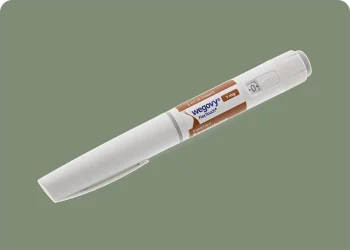

In a Nutshell
These two are more alike than their separate reputations suggest.
Both are GHRH analogs — both act on the same pituitary receptor your own growth hormone-releasing hormone uses, and both stimulate the pituitary to release your own growth hormone rather than supplying growth hormone directly.
The differences are regulatory, and they do not favor the one you will more often be offered.
Tesamorelin holds a current FDA approval. It is marketed as Egrifta, and the indication is reduction of excess abdominal fat in adults with HIV-associated lipodystrophy 1 — a specific metabolic complication of HIV and its treatment. That approval is real, current, and narrow.
Sermorelin's approvals were withdrawn in 2009. GEREF was approved in 1990 as a diagnostic agent and in 1997 for pediatric growth hormone deficiency 2. Both were discontinued, and FDA determined in 2013 that they were not withdrawn for reasons of safety or effectiveness 2. Today's sermorelin is supplied as a compounded preparation.
So on formal regulatory standing, tesamorelin is ahead — it has a live approval; sermorelin has a historical one. That is worth stating plainly.
What neither has: evidence for the adult wellness goals both are marketed for.
Sermorelin is supplied as a compounded preparation, not an FDA-approved finished drug. GEREF was historically approved for diagnostic use and pediatric growth hormone deficiency — not adult sleep, recovery, body-composition or healthy-aging goals — and controlled evidence for those adult outcomes remains limited.
Side by Side
| Sermorelin | Tesamorelin | |
|---|---|---|
| Class | GHRH analog | GHRH analog |
| Receptor | GHRH receptor | GHRH receptor |
| Mechanism | Stimulates pituitary GH release | Stimulates pituitary GH release |
| FDA approval history | Previously approved (GEREF, 1990 & 1997) | Currently approved (Egrifta) |
| Current approval | None — supplied compounded | HIV-associated lipodystrophy, visceral fat |
| Published prescribing information | No current label | Yes |
| Studied for adult wellness use | Not established. Small, decades-old GHRH(1-29) studies exist with mixed findings | Not established. Controlled adult trials exist outside the approved indication — including a 12-month RCT in abdominally obese adults with reduced GH secretion 11 |
| Evidence tier | B historical / C adult wellness | A approved indication / C general use |
| Regulatory standing | Compounded; not FDA-approved. Adult outcome evidence limited | Approved, but for a population most inquirers do not belong to |
Why the Comparison Is Asked at All
Almost always because of belly fat.
Tesamorelin's approval is for visceral abdominal fat, and that phrase travels. "Tesamorelin is FDA-approved for visceral fat" is the claim you will encounter. The accurate version is "tesamorelin is FDA-approved for visceral fat in adults with HIV-associated lipodystrophy" — and the qualifier is the entire population studied.
HIV-associated lipodystrophy involves a distinctive pattern of fat redistribution driven by the infection and its treatment. Visceral fat accumulation in the general population is driven by insulin resistance, hormonal change, diet, sleep and activity. The fat sits in the same anatomical place; the process putting it there is not the same, and an effect demonstrated in one has not been demonstrated in the other.
The closest tesamorelin has come to the general population is a 12-month randomized, placebo-controlled trial of 60 abdominally obese adults with reduced growth hormone secretion, in which tesamorelin reduced visceral fat (−35 cm² vs placebo) without affecting subcutaneous fat or glucose 11. That is controlled evidence outside HIV — in a selected group defined by low GH output, measuring fat compartments rather than weight, and not an approved use. It narrows the gap; it does not close it.
Two further points from the approval program itself: visceral fat reaccumulated once treatment stopped — the 52-week extension reported the reduction sustained on continued dosing but explicitly found that the effects "do not last beyond the duration of treatment" 10 — and the label states that long-term cardiovascular safety has not been established 1.
For sermorelin, the position is simpler — there is no approval for any fat-related indication, historical or current, and controlled evidence that compounded sermorelin reduces visceral fat in adults has not been established. See Does Sermorelin Burn Belly Fat?.
Is Sermorelin Safer Than Tesamorelin?
This is among the most-asked questions on this comparison, and the honest answer inverts the assumption behind it.
Tesamorelin's safety profile is documented. Sermorelin's is inferred.
One point of precision, because this page insists elsewhere that product identity matters: "Egrifta" is now two distinct products. EGRIFTA WR and EGRIFTA SV differ in vial strength, dose, diluent and reconstitution, and are not substitutable for one another. The safety information below is drawn from the current approved labeling.
Because Egrifta has a current label, its risks are characterized: contraindications in pregnancy, active malignancy, hypersensitivity, and conditions disrupting the hypothalamic-pituitary axis; warnings covering persistent IGF-1 elevation, glucose intolerance and diabetes, diabetic retinopathy progression, fluid retention, acute critical illness, injection-site reactions, and interactions involving CYP450-metabolized drugs and glucocorticoids 1.
A documented risk profile reads as though the drug is riskier. It is not evidence that it is. It is evidence that somebody was required to look, and to publish what they found.
For compounded sermorelin there is no current label, and no equivalent characterization of chronic adult use. Absence of documented adverse effects is not a demonstrated safety advantage — it reflects the absence of the studies that would document them.
There is also a form-and-route point that applies to both, and it is the same standard this hub applies to every other peptide it covers. Historical GEREF evidence concerned specified sermorelin acetate products, formulations, routes, doses, populations and indications. It does not establish bioequivalence, quality, safety, efficacy, stability or administration requirements for every current compounded preparation. Tesamorelin's label likewise describes the approved product, not every substance sold under the name.
Does Tesamorelin Work Better?
For its approved indication, in the population it was studied in, tesamorelin has trial evidence of a kind sermorelin has never had — a current approval resting on a defined program. That is not the same as sermorelin having none: small, decades-old controlled adult studies of GHRH(1-29) do exist, including a six-month placebo-controlled trial reporting selected cognitive improvements. They are product-specific, and they establish nothing about today's compounded preparation.
The gap is wider than the approval alone suggests. Tesamorelin has also been tested in a randomized controlled trial outside its indication: 152 adults aged 55 to 87, 66 of them with mild cognitive impairment, with a favorable effect on a composite cognitive measure reported after 20 weeks 6. Whatever one makes of that result, it is larger and more recent than the historical sermorelin cognition trial: that study randomized 100 healthy adults aged 60 to 85, of whom 89 completed, and was published in 2006 9. Its drug and placebo were supplied without charge by Serono, which manufactured GEREF, and two of its authors held consulting or research relationships with the company.
The tesamorelin cognition trial is frequently cited as though it were sermorelin evidence, because its title refers to "growth hormone-releasing hormone" — the class both molecules belong to — rather than naming the drug. If you encounter a cognition claim attached to sermorelin, this is very likely the study behind it, and it tested the other molecule.
The cognition trial is not the only example. Tesamorelin has also been studied against placebo in non-alcoholic fatty liver disease, again outside its approved indication 7. Sermorelin's own randomized record is thinner and narrower — a six-month cognition study in healthy older adults, and a twelve-week body-composition study in 31 men with HIV-associated lipodystrophy in which absolute visceral fat did not reach significance 8. Both molecules have been tested in adults; the difference is depth, breadth and how recently.
For the goals people actually ask about — general visceral fat, body composition, recovery, sleep, aging — neither has been established, and no controlled trial has compared them head to head on outcomes that matter to a patient rather than on serum growth hormone.
Both are sometimes prescribed with those goals in mind. Those are intended treatment goals, not established benefits. No reliable onset timeline has been established for either.
"Which works better" cannot be answered from the evidence that exists. What can be said is which has been studied, in whom, for what.
Can You Take Them Together?
Combining two GHRH analogs acting on the same receptor has no established rationale. Their pharmacology overlaps rather than targeting complementary pathways — complementary pathways being the argument usually made for pairing a GHRH analog with a ghrelin-receptor agonist instead. See CJC-1295 and Ipamorelin.
No controlled trial has established a rationale, an additive benefit or a safety profile for the combination. Stacking two agents that raise IGF-1 through the same pathway compounds the same monitoring concerns without a demonstrated benefit to justify it. Any such decision belongs with a prescribing clinician who has assessed you.
What About "the Strongest GH Peptide"?
A recurring search, and a misleading frame.
Greater growth hormone release is not automatically a better clinical outcome. Effects associated with growth hormone excess are dose-related, and the more moderate pituitary-mediated response of a GHRH analog is a mechanistic difference, not a demonstrated clinical advantage — retained feedback does not guarantee levels stay within range. In the tesamorelin approval program, a substantial share of treated patients developed markedly elevated IGF-1 1.
Ranking these by potency answers a question the evidence does not support asking.
Who Sermorelin Is Not For
Compounded sermorelin has no FDA-approved label, so there is no formal contraindication list to quote. Clinicians prescribing on this axis treat as absolute: a prior allergic reaction to sermorelin, particularly anaphylaxis; pregnancy, planned near-term pregnancy or breastfeeding; active malignancy; significant hypothalamic-pituitary structural disease or an intracranial lesion; and acute critical illness or recent major surgery.
Treated as relative — individual assessment rather than a blanket rule: cancer in remission, including at five years and handled with the treating oncologist; diabetes, prediabetes or insulin resistance; uncontrolled thyroid disease; and significant liver or kidney disease.
Separately: sermorelin is prohibited by the World Anti-Doping Agency, a disqualifier under any anti-doping code regardless of prescription status.
Full list and the monitoring that accompanies it: dosing and monitoring.
Red Flags
- "Tesamorelin is FDA-approved for visceral fat" stated without the HIV-associated lipodystrophy qualifier — technically sourced, substantively misleading
- A page claiming sermorelin is "safer" than tesamorelin on the basis that it has fewer documented warnings
- Either presented as a weight-loss treatment — neither is
- Either shipped direct for self-treatment with no prescriber or clinical pathway, or supplied as "research grade"
- Either used while competing under an anti-doping code — growth hormone secretagogues are prohibited in sport regardless of prescription status
Which Is Appropriate?
Neither is appropriate on the strength of a comparison table.
Both act on the growth hormone axis. The prior question is whether that axis is what is driving your symptoms — and for fatigue, poor recovery and changing body composition, it often is not. Thyroid function, iron status, testosterone, sleep quality, insulin resistance and a training or nutrition gap are all common contributors to these presentations, and each is measurable.
Exclusions are not shared between these two, and presenting one list would misrepresent both.
Tesamorelin has a current approved label, so its contraindications are formally defined: pregnancy, active malignancy, hypersensitivity, and disruption of the hypothalamic-pituitary axis, with separate warnings and monitoring requirements. Read them from the prescribing information for the exact formulation — EGRIFTA WR and EGRIFTA SV are distinct products and are not substitutable.
Compounded sermorelin has no equivalent approved label, so no comparable list exists to quote. Pregnancy, a malignancy history, disordered glucose regulation, pituitary or hypothalamic disease, and interacting treatments each call for individual specialist assessment against the specific preparation — not for borrowing tesamorelin's list, which was written for a different product, population and indication.
Separately and for both: competing under an anti-doping code prohibits growth hormone secretagogues, which covers both. That is an eligibility question, not a medical contraindication.
Get Started with JumpstartMD
JumpstartMD was founded in 2007 by Stanford-trained physicians. Our programs are built around labs, hormones and body composition, delivered by licensed clinicians you see face-to-face — in person at 14 California locations or online across California — beginning with 60-biomarker lab screening and InBody® body composition scanning, repeated at visits. InBody scans are done in clinic; online members can book one at any of the 14 locations.
That panel can identify some of the contributors behind these symptoms — thyroid dysfunction, glucose dysregulation, iron or nutrient abnormalities, relevant hormonal findings — and can indicate when sleep testing, a medication review or specialist referral is warranted. It cannot diagnose or exclude every cause, and it cannot guarantee that a single explanation will be found. Laboratory testing and body-composition estimates may inform safety and continuation decisions; they do not establish that any therapy caused an observed change, and bioelectrical impedance estimates body compartments rather than directly measuring skeletal muscle or visceral fat.
If visceral fat is the concern, the interventions with substantial human evidence are those producing overall fat loss — including the approved GLP-1 medications. See GLP-1 Medications for Weight Loss.
Can you get sermorelin or tesamorelin on prescription?
The approved product, Egrifta, is indicated for HIV-associated lipodystrophy and prescribed in that context. Sermorelin has no currently marketed FDA-approved product and is supplied as a compounded preparation, prescribed by a clinician after assessment.
Peptide care is offered through a paid membership, subject to clinical evaluation. Contact JumpstartMD for membership details and pricing.
Clinician-guided peptide therapy may be considered after an individualized clinical evaluation. Certain therapies may use compounded medications, which are not FDA-approved, and evidence, risks and expected outcomes vary by treatment. See peptide therapy.
Book FREE Consultation
Share your details and a JumpstartMD team member will reach out shortly. Or call 408.478.3496 for your free, no-obligation consultation.
Share your details and a JumpstartMD team member will reach out when we open.
Related Articles
- Sermorelin: What It Is and How It Works — the main guide
- Tesamorelin: What the Approval Actually Covers
- Does Sermorelin Burn Belly Fat?
- Sermorelin vs Ipamorelin — the other GH-axis comparison
- Are Peptides Legal in the US?
Frequently Asked Questions
Is tesamorelin better than sermorelin?
On regulatory standing, yes — tesamorelin holds a current FDA approval as Egrifta and has a published label; sermorelin's approvals were withdrawn in 2009 and today's preparation is compounded. On clinical effect for the adult wellness goals both are marketed for, neither has been established, and no controlled trial has compared them head to head on patient outcomes.
Is sermorelin safer than tesamorelin?
Not demonstrably. Tesamorelin's risks are documented because an approved product requires a label; compounded sermorelin has no equivalent characterization of chronic adult use. Fewer documented warnings reflects fewer studies, not a demonstrated safety advantage.
Does sermorelin work better than tesamorelin for belly fat?
Neither has been shown to reduce visceral fat in the general population. Tesamorelin's approval covers visceral abdominal fat in adults with HIV-associated lipodystrophy specifically; visceral fat reaccumulated after treatment stopped in that program; and sermorelin has no approval for any fat-related indication.
Can I take sermorelin and tesamorelin at the same time?
There is no established rationale for combining two GHRH analogs acting on the same receptor, and no controlled trial has evaluated the combination. Any such decision belongs with a prescribing clinician who has assessed you.
What is the strongest growth hormone peptide?
This frames the question unhelpfully. Greater growth hormone release is not automatically a better outcome — effects associated with growth hormone excess are dose-related, and none of these agents has controlled evidence for the adult goals they are marketed for.
Is tesamorelin FDA approved and sermorelin not?
Yes. Tesamorelin is currently approved as Egrifta for HIV-associated lipodystrophy. Sermorelin was approved as GEREF in 1990 and 1997; those approvals were withdrawn in 2009, and FDA determined in 2013 that the withdrawal was not for reasons of safety or effectiveness. That determination concerns why the products left the market — it is not evidence of effectiveness for adult wellness use, or of the quality of any present-day compounded preparation.
References
- Theratechnologies Inc., "EGRIFTA WR (tesamorelin for injection), for subcutaneous use — Prescribing Information," Initial U.S. Approval 2010, revised Mar. 2025. DailyMed, U.S. National Library of Medicine, [Online]. Available: https://dailymed.nlm.nih.gov/dailymed/drugInfo.cfm?setid=839334d3-8c1d-4c26-9036-2ab524a6ea75 [Accessed: Oct. 5, 2026]. ↩
- U.S. Food and Drug Administration, "Determination That GEREF (Sermorelin Acetate) Injection... Were Not Withdrawn From Sale for Reasons of Safety or Effectiveness," Federal Register, vol. 78, pp. 14095-14096, Mar. 4, 2013. [Online]. Available: https://www.govinfo.gov/content/pkg/FR-2013-03-04/pdf/2013-04827.pdf [Accessed: Jul. 26, 2026]. ↩
- J. Falutz, S. Allas, K. Blot, D. Potvin, et al., "Metabolic effects of a growth hormone-releasing factor in patients with HIV," New England Journal of Medicine, vol. 357, no. 23, pp. 2359-2370, Dec. 2007, [Online]. Available: https://doi.org/10.1056/NEJMoa072375. PMID: 18057338. [Accessed: Jul. 26, 2026]. ↩
- C. Dieguez, M. López, F. Casanueva, "Hypothalamic GHRH," Reviews in Endocrine and Metabolic Disorders, vol. 26, pp. 297-303, Jun. 2025, [Online]. Available: https://doi.org/10.1007/s11154-025-09951-y. PMID: 39913072. PMCID: PMC12137398. [Accessed: Jul. 26, 2026]. ↩
- U.S. Food and Drug Administration, "Certain Bulk Drug Substances for Use in Compounding that May Present Significant Safety Risks." [Online]. Available: https://www.fda.gov/drugs/human-drug-compounding/certain-bulk-drug-substances-use-compounding-may-present-significant-safety-risks [Accessed: Jul. 26, 2026]. ↩
- L. D. Baker, S. M. Barsness, S. Borson, G. R. Merriam, S. D. Friedman, S. Craft, M. V. Vitiello, "Effects of growth hormone-releasing hormone on cognitive function in adults with mild cognitive impairment and healthy older adults: results of a controlled trial," Archives of Neurology, vol. 69, no. 11, pp. 1420-1429, Nov. 2012, [Online]. Available: https://doi.org/10.1001/archneurol.2012.1970. PMID: 22869065. [Accessed: Jul. 26, 2026]. ↩
- U.S. National Library of Medicine, "Growth Hormone Releasing Hormone Analog to Improve Nonalcoholic Fatty Liver Disease and Associated Cardiovascular Risk," ClinicalTrials.gov identifier NCT03375788. [Online]. Available: https://clinicaltrials.gov/study/NCT03375788 [Accessed: Jul. 26, 2026]. ↩
- P. Koutkia, B. Canavan, J. Breu, M. Torriani, J. Kissko, S. Grinspoon, "Growth hormone-releasing hormone in HIV-infected men with lipodystrophy: a randomized controlled trial," JAMA, vol. 292, no. 2, pp. 210-218, Jul. 2004, [Online]. Available: https://doi.org/10.1001/jama.292.2.210. PMID: 15249570. [Accessed: Jul. 26, 2026]. ↩
- M. V. Vitiello, K. E. Moe, G. R. Merriam, G. Mazzoni, D. H. Buchner, R. S. Schwartz, "Growth hormone releasing hormone improves the cognition of healthy older adults," Neurobiology of Aging, vol. 27, no. 2, pp. 318-323, Feb. 2006, [Online]. Available: https://doi.org/10.1016/j.neurobiolaging.2005.01.010. PMID: 16399214. [Accessed: Jul. 26, 2026]. ↩
- J. Falutz, S. Allas, J. C. Mamputu, D. Potvin, et al., "Long-term safety and effects of tesamorelin, a growth hormone-releasing factor analogue, in HIV patients with abdominal fat accumulation," AIDS, vol. 22, no. 14, pp. 1719-1728, Sep. 2008, [Online]. Available: https://doi.org/10.1097/QAD.0b013e32830a5058. PMID: 18690162. [Accessed: Jul. 26, 2026]. ↩
- H. Makimura, M. N. Feldpausch, A. M. Rope, L. C. Hemphill, M. Torriani, H. Lee, S. K. Grinspoon, "Metabolic effects of a growth hormone-releasing factor in obese subjects with reduced growth hormone secretion: a randomized controlled trial," Journal of Clinical Endocrinology & Metabolism, vol. 97, no. 12, pp. 4769-4779, Dec. 2012, [Online]. Available: https://doi.org/10.1210/jc.2012-2794. PMID: 23015655. PMCID: PMC3513535. [Accessed: Oct. 5, 2026]. ↩