

In a Nutshell
The short answer: the best-evidenced peptides for weight loss are the ones already FDA-approved — semaglutide and tirzepatide.
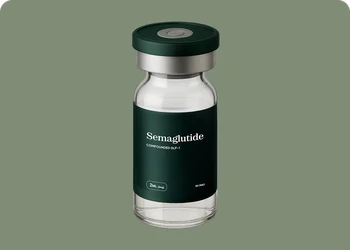
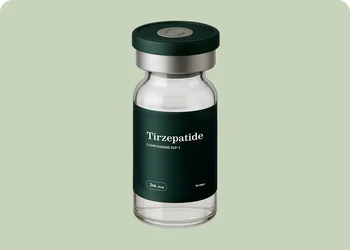
GLP-1 medications are peptides. Semaglutide is a peptide. Tirzepatide is a peptide. They went through large randomized controlled trials, they carry FDA-approved labels, and they produce weight loss measured in published outcomes: semaglutide 2.4 mg produced 14.9% mean weight loss at 68 weeks in STEP 1; tirzepatide produced mean reductions of roughly 15.0%, 19.5% and 20.9% at 5 mg, 10 mg and 15 mg respectively at 72 weeks in SURMOUNT-1 1, 2.
Every other peptide marketed for weight loss — AOD-9604, MOTS-c, tesamorelin for general use, growth hormone secretagogues — has substantially less evidence, and in most cases none in controlled human trials for weight loss at all.
So when someone searches "the best peptide for weight loss," the honest answer is that they may already have found it and not realized it was a peptide.
That is not a reason to dismiss the rest of the category. It is a reason to be clear about what each thing does — because several of these peptides address body composition, which is a different and genuinely important goal that scale weight does not capture. Peptides are nowhere near the top of the weight-loss ranking. Some can still complement an evidence-based program for people with the right indications, chiefly the growth-hormone secretagogues.
Are Peptides the Same as Ozempic?
This is among the most-searched questions in the category, and the answer is: Ozempic is a peptide, but most "peptides" marketed for weight loss are not like Ozempic.
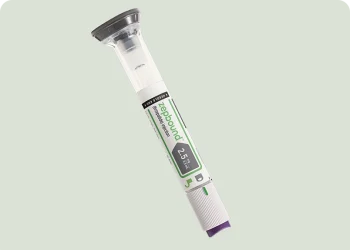
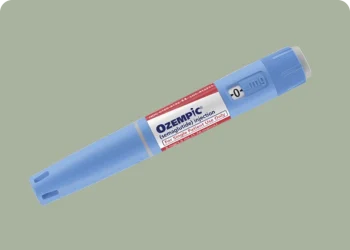
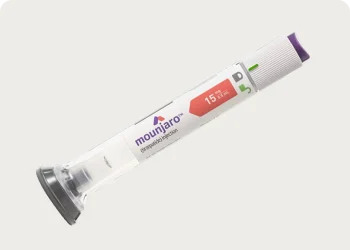
Semaglutide — the active ingredient in Ozempic® and Wegovy® — is a 31-amino-acid peptide that mimics GLP-1, a gut hormone regulating appetite and gastric emptying. Tirzepatide (Mounjaro®, Zepbound®) is a peptide acting on two receptors, GIP and GLP-1.
What makes them different from the peptides sold online is not their chemistry. It is that they were developed through clinical trials, reviewed by FDA, approved with a label, and are manufactured under pharmaceutical controls — none of which applies to a research-grade vial.
If a clinic offers you "peptides for weight loss" that are not GLP-1 medications, it is worth asking directly what evidence supports the specific substance for that purpose.
What the Evidence Shows, by Peptide
| Peptide | Marketed for | Evidence for weight loss | FDA status |
|---|---|---|---|
| Wegovy® (semaglutide) | Long-term weight reduction in eligible patients | STEP 1 — 14.9% mean at 68 weeks (2.4 mg) | Approved for weight reduction |
| Ozempic® / Rybelsus® (semaglutide) | Type 2 diabetes and product-specific cardiometabolic indications | — | Approved, but not labeled as weight-loss products |
| Zepbound® (tirzepatide) | Long-term weight reduction in eligible patients | SURMOUNT-1 — ~15.0% / 19.5% / 20.9% at 5 / 10 / 15 mg, 72 weeks | Approved for weight reduction |
| Mounjaro® (tirzepatide) | Type 2 diabetes | — | Approved, but not labeled as a weight-loss product |
| Liraglutide (Saxenda®) | Weight loss | RCT evidence, less effective than the above | Approved |
| Tesamorelin (Egrifta®) | Visceral fat | Approved for HIV-associated lipodystrophy only — not general weight loss | Approved, narrow indication |
| MOTS-c | Fat loss, metabolism | No published human RCT | Not approved |
| AOD-9604 | Fat metabolism | No convincing human efficacy evidence | Not approved |
| Sermorelin & other GH secretagogues | Body composition | Not a weight-loss treatment — see below | Not currently approved |
Weight Loss vs Body Composition — the Distinction That Matters
This is where the category earns its place, and where scale-watching misleads people.
Weight loss is what the scale measures. Body composition is what that weight is made of. They are not the same, and the difference has real consequences.
GLP-1 treatment reduces fat mass and can also reduce lean mass. Two clarifications matter here. Lean mass is not the same as skeletal muscle — it includes body water, organs, connective tissue and bone. And lean-mass reduction occurred in controlled trials with clinical supervision: supervision can monitor and mitigate it, but does not prevent it.
The evidence-aligned foundations for protecting strength and muscle are resistance training, adequate protein, and a clinically appropriate rate of weight loss.
Controlled studies have not established that compounded sermorelin preserves lean mass during GLP-1 treatment, prevents lean-mass loss during calorie restriction, improves functional outcomes, or reduces later regain. Where it is considered for that goal it should be described as an individualized and unproven adjunct — not as established lean-mass support.
That distinction is also why JumpstartMD tracks body composition with InBody® scanning at visits rather than relying on scale weight. A large drop on the scale can include both fat and lean tissue. Serial body-composition estimates, strength measures, nutrition and clinical context together help judge whether the result is a healthy one.
See muscle loss prevention on GLP-1s.
Where peptides can complement a weight-loss program
Peptides are not a substitute for the approved medicines, but some may have a supporting role for the right person:
- Growth-hormone secretagogues such as sermorelin are the most common. They are used alongside a GLP-1, training and nutrition with the aim of preserving or building lean mass while fat mass falls, against the midlife anabolic resistance that makes muscle harder to keep. Testosterone therapy is used with the same aim in people with low testosterone — see sermorelin vs TRT, or both
- MOTS-c and AOD-9604 are sometimes considered for selected metabolic profiles. Their evidence is thinner still — no published human trial supports MOTS-c for weight loss, and AOD-9604's oral obesity program did not show weight loss — so this is clinical judgment for an individual, not an established effect. See MOTS-c and AOD-9604
None of these is a weight-loss treatment in its own right, and the combinations have not been tested in controlled trials. Where one is used, it works best as a time-limited trial with a defined goal, tracked with body-composition measurement and stopped if it is not helping.
The growth-hormone axis cuts both ways on metabolic health
There is a detail here that the marketing for this category consistently omits, and it belongs on a page about weight loss.
Growth hormone impairs insulin sensitivity. The systematic review of growth hormone in healthy older adults found problems with glucose metabolism among the adverse effects — alongside roughly 2 kg of fat loss 9. Those findings are not independent of each other; they are the same physiology seen from two sides.
That is why, on this axis, uncontrolled diabetes, prediabetes and insulin resistance are treated as reasons for individual assessment before starting, and why worsening insulin resistance is a recognized reason to stop. A therapy pursued for abdominal fat is one whose monitoring includes confirming that glucose regulation has not deteriorated — and the people most drawn to it are frequently the people whose glucose regulation is already the concern.
This is a different situation from the GLP-1 medications discussed above, which improve glycemic control and are approved on outcomes that include it. Reading across from one to the other, as "peptides for weight loss" invites, gets this exactly backwards. See sermorelin and belly fat and dosing and monitoring.
Do Peptides Really Work for Weight Loss?
Splitting the question properly:
GLP-1 peptide medications: yes, with among the strongest evidence in obesity medicine — large trials, published outcomes, approved labels, known side-effect profiles. See the GLP-1 hub.
Other peptides marketed for weight loss: not demonstrated. For most, no controlled human trial has tested them for weight loss at all. Absence of evidence is not proof they do nothing — but it is a thin basis for spending money and injecting something.
Peptides for body composition support: plausible, evidence still limited. The mechanism is sound and the goal is legitimate; controlled outcome data in this population is thinner than marketing implies. For the right person, a growth-hormone secretagogue can be a reasonable complement to a GLP-1 program, considered as a supervised trial rather than a promised result.
Red Flags
- Weight-loss peptides shipped direct for self-treatment with no prescriber or clinical pathway — typically research-grade, labeled not for human use. See how to tell if a peptide is legitimate
- "Compounded semaglutide" from an unnamed source — the compounded GLP-1 landscape has its own regulatory history worth understanding; see compounded semaglutide safety
- Any peptide marketed as "better than Ozempic" without trial data supporting the claim
- Programs selling a peptide stack rather than assessing you — the assessment is what determines what is appropriate
Seek prompt medical care for severe or persistent abdominal pain, persistent vomiting with signs of dehydration, or symptoms of low blood sugar (shakiness, sweating, confusion) — particularly if you take insulin or a sulfonylurea.
What You Can Do About It
Start with what is driving the weight, not with a product. Thyroid function, insulin resistance, sleep quality and apnea, medications that promote weight gain, and perimenopausal hormonal change all affect how readily weight comes off — and several are treatable in ways that make everything else work better.
If a GLP-1 is appropriate, use the approved pathway. It has the evidence and a well-characterized — not risk-free — safety profile, with a clinician managing titration and side effects. Serious risks and contraindications vary by product.
Protect lean mass while losing fat. Adequate protein, resistance training, and a titration pace that does not outrun what your body can adapt to. This is the part most programs neglect and it is the part that determines whether results hold.
Track body composition, not just weight. Serial estimates under consistent conditions add information the scale cannot — while noting they estimate fat and fat-free compartments rather than directly measuring skeletal muscle.
Get Started with JumpstartMD
JumpstartMD was founded in 2007 by Stanford-trained physicians, and our weight-loss outcomes have been published in the peer-reviewed literature. You are seen face-to-face by licensed clinicians — in person at 14 California locations, or online across California.
Every plan begins with 60-biomarker lab screening and InBody® body composition scanning, repeated at visits — so that changes in fat and fat-free mass are estimated and tracked rather than assumed, and so the thyroid, metabolic and hormonal factors affecting your results are identified rather than guessed at.
We offer FDA-approved semaglutide and tirzepatide products — Ozempic®, Wegovy®, Zepbound®, Mounjaro®, Rybelsus®. The labeled indication differs by brand, and any off-label prescribing decision is made individually by the treating clinician.
Alongside these we offer non-GLP-1 and no-medication plans, with clinician-managed titration, contraindication screening before any prescription, and a step-down plan to protect results after the medication phase. Medication pricing is personalized: you pay for the dose prescribed rather than a flat monthly medication fee. Health coaching and nutrition guidance are included in membership.
Sermorelin is supplied as a compounded preparation, not an FDA-approved finished drug: GEREF was historically approved for diagnostic use and pediatric growth hormone deficiency — not adult sleep, recovery, body-composition or healthy-aging goals — and controlled evidence for those adult outcomes remains limited.
Peptide care is offered through a paid membership, subject to clinical evaluation. Contact JumpstartMD for membership details and pricing.
Clinician-guided peptide therapy may be considered after an individualized clinical evaluation. Certain therapies may use compounded medications, which are not FDA-approved, and evidence, risks and expected outcomes vary by treatment. See peptide therapy.
Book FREE Consultation
Share your details and a JumpstartMD team member will reach out shortly. Or call 408.478.3496 for your free, no-obligation consultation.
Share your details and a JumpstartMD team member will reach out when we open.
Related Articles
- GLP-1 Medications for Weight Loss — the full hub on the evidence-backed pathway
- Expected Weight Loss Timeline — what the trial data actually shows month by month
- Muscle Loss Prevention on GLP-1s — protecting lean mass while losing fat
- Sermorelin — mechanism, evidence and current regulatory status
- MOTS-c — the metabolic peptide, and what the evidence shows
- How to Tell If a Peptide Is Legitimate
Frequently Asked Questions
Do peptides really work for weight loss?
The FDA-approved GLP-1 peptide medications do, with large randomized trials behind them — roughly 15% mean body-weight reduction for semaglutide at 68 weeks and roughly 21% for tirzepatide at 72 weeks. Other peptides marketed for weight loss mostly have no controlled human trial evidence for that purpose.
Are peptides the same as Ozempic?
Ozempic (semaglutide) is itself a peptide, so in chemical terms yes. But most peptides sold as "weight loss peptides" lack the same regulatory and manufacturing assurances — they have not been through clinical trials, are not FDA-approved, and are frequently supplied as research-grade products with none of the manufacturing and distribution controls that apply to approved medicines, and no reliable assurance of identity, potency or sterility.
What is the best peptide for weight loss?
On current evidence, tirzepatide and semaglutide — both peptides, both FDA-approved, both with large published trials. Which is appropriate for you depends on your health history, other medications, insurance and how you respond, which is a clinical decision.
Does sermorelin cause weight loss?
Sermorelin is not a weight-loss treatment and should not be chosen as one. It is marketed for body composition — used with the aim of preserving lean mass, an effect that has not been established in controlled adult studies — rather than for scale weight. See sermorelin.
What is the downside of taking peptides for weight loss?
For approved GLP-1 medications, side effects are well characterized — mostly gastrointestinal and worst during titration — though product-specific warnings also cover pancreatitis, gallbladder disease, dehydration-related kidney injury, hypoglycemia in combination with insulin or sulfonylureas, and thyroid C-cell tumor risk. For unapproved peptides the downsides are different: unknown efficacy, unknown safety, and for research-grade products, no assurance of what is in the vial. See the downsides of peptide therapy.
Are peptides for weight loss safe?
Approved GLP-1 medications have substantially better-characterized safety profiles than unapproved peptides. They still carry important contraindications and potentially serious adverse effects, so appropriateness depends on the specific product and your medical history. Unapproved weight-loss peptides have not been characterized, and unregulated products add risks of contamination and incorrect dosing independent of the substance.
Can peptides help with belly fat specifically?
Visceral fat responds to overall fat loss, and GLP-1 medications reduce it as part of that. Tesamorelin is FDA-approved for visceral fat but only in HIV-associated lipodystrophy — not for general use. Claims that other peptides target belly fat specifically are not supported by controlled human evidence.
References
- J. P. H. Wilding, R. L. Batterham, S. Calanna, M. Davies, L. F. Van Gaal, I. Lingvay, B. M. McGowan, J. Rosenstock, M. T. D. Tran, T. A. Wadden, et al., "Once-Weekly Semaglutide in Adults with Overweight or Obesity," The New England Journal of Medicine, vol. 384, no. 11, pp. 989-1002, Mar. 2021, [Online]. Available: https://doi.org/10.1056/NEJMoa2032183. PMID: 33567185. [Accessed: Jul. 25, 2026]. ↩
- A. M. Jastreboff, L. J. Aronne, N. N. Ahmad, S. Wharton, L. Connery, B. Alves, A. Kiyosue, S. Zhang, B. Liu, M. C. Bunck, et al., "Tirzepatide Once Weekly for the Treatment of Obesity," The New England Journal of Medicine, vol. 387, no. 3, pp. 205-216, Jul. 2022, [Online]. Available: https://doi.org/10.1056/NEJMoa2206038. PMID: 35658024. [Accessed: Jul. 25, 2026]. ↩
- M. Taylor (reviewed by P. Cohen), "Peptides: What they are, potential benefits, and safety concerns," Harvard Health Publishing, Harvard Medical School, Jul. 7, 2026. [Online]. Available: https://www.health.harvard.edu/medications-and-treatments/peptides-what-they-are-potential-benefits-and-safety-concerns [Accessed: Oct. 5, 2026]. ↩
- Novo Nordisk, "WEGOVY (semaglutide) injection and tablets prescribing information," rev. Jun. 2026 (Initial U.S. Approval: 2017), DailyMed. [Online]. Available: https://dailymed.nlm.nih.gov/dailymed/drugInfo.cfm?setid=ee06186f-2aa3-4990-a760-757579d8f77b [Accessed: Oct. 5, 2026]. ↩
- Theratechnologies Inc., "EGRIFTA WR (tesamorelin for injection) prescribing information," rev. Mar. 2025 (Initial U.S. Approval: 2010), DailyMed, U.S. National Library of Medicine. [Online]. Available: https://dailymed.nlm.nih.gov/dailymed/drugInfo.cfm?setid=839334d3-8c1d-4c26-9036-2ab524a6ea75 [Accessed: Oct. 5, 2026]. ↩
- I. J. Neeland, J. Linge, A. L. Birkenfeld, "Changes in lean body mass with glucagon-like peptide-1-based therapies and mitigation strategies," Diabetes, Obesity and Metabolism, vol. 26, suppl. 4, pp. 16-27, Sep. 2024, [Online]. Available: https://doi.org/10.1111/dom.15728. PMID: 38937282. [Accessed: Oct. 5, 2026]. ↩
- N. Eisa, O. Barood, "Lean Mass Changes With Incretin Therapy Versus Lifestyle Intervention: A Systematic Review and Meta-Analysis of Randomised Controlled Trials," Diabetes, Obesity and Metabolism, vol. 28, no. 6, pp. 4818-4827, Jun. 2026, [Online]. Available: https://doi.org/10.1111/dom.70666. PMID: 41877354. [Accessed: Oct. 5, 2026]. ↩
- S. Bourke, J. M. Morton, P. Williams, "Effect of JumpstartMD, a Commercial Low-Calorie Low-Carbohydrate Physician-Supervised Weight Loss Program, on 22,407 Adults," Journal of Obesity, vol. 2020, art. no. 8026016, Apr. 2020, [Online]. Available: https://doi.org/10.1155/2020/8026016. PMID: 32318289. PMCID: PMC7157789. [Accessed: Jul. 26, 2026]. ↩
- H. Liu, D. M. Bravata, I. Olkin, S. Nayak, B. Roberts, A. M. Garber, A. R. Hoffman, "Systematic review: the safety and efficacy of growth hormone in the healthy elderly," Annals of Internal Medicine, vol. 146, no. 2, pp. 104-115, Jan. 2007, [Online]. Available: https://doi.org/10.7326/0003-4819-146-2-200701160-00005. PMID: 17227934. [Accessed: Jul. 26, 2026]. ↩