





BMI Calculator
What's your BMI?
BMI (Body Mass Index) is a quick screening tool that uses your height and weight to estimate body fat and flag whether your weight may affect your health. Enter your height and weight to see your number and where it falls.
What is BMI (Body Mass Index)?
Body Mass Index (BMI) is a quick screening number that compares your weight to your height to estimate whether your weight may be affecting your health. It's a screen, not a diagnosis — a high or low BMI is a prompt to look closer, not a verdict. Clinicians use it as a starting point because, across large populations, BMI tracks reasonably well with the risk of weight-related conditions like type 2 diabetes, heart disease, and high blood pressure. It's also one of the criteria for prescription weight-loss treatment.
How is BMI calculated?
BMI is your weight in kilograms divided by the square of your height in metres. This calculator does the conversion for you:
Metric BMI = weight (kg) ÷ height² (m²)
Imperial BMI = [weight (lb) ÷ height² (in²)] × 703
Your result falls into one of these categories (for adults aged 20 and over):1
| Category | BMI range |
|---|---|
| Underweight | Below 18.5 |
| Healthy weight | 18.5 – 24.9 |
| Overweight | 25.0 – 29.9 |
| Obesity (Class 1) | 30.0 – 34.9 |
| Obesity (Class 2) | 35.0 – 39.9 |
| Obesity (Class 3) | 40.0 and above |
What your BMI category means
- Healthy weight (18.5–24.9): generally the lowest risk of weight-related chronic disease.2
- Overweight (25–29.9): a somewhat higher risk of high blood pressure, insulin resistance, and heart disease — especially with excess belly fat.3
- Obesity (30+): a rising risk of type 2 diabetes, cardiovascular disease, sleep apnea, and more as the class increases.5
- Underweight (below 18.5): can carry its own risks, from nutrient deficiencies to weakened immunity and bone loss.
Healthy weight range by height
As a quick reference, here's the weight range that falls in the healthy BMI band (18.5–24.9) at common heights:
| Height | Healthy weight (BMI 18.5–24.9) |
|---|---|
| 5'0" (152 cm) | 95–128 lb |
| 5'2" (157 cm) | 101–136 lb |
| 5'4" (163 cm) | 108–145 lb |
| 5'6" (168 cm) | 115–154 lb |
| 5'8" (173 cm) | 122–164 lb |
| 5'10" (178 cm) | 129–174 lb |
| 6'0" (183 cm) | 137–184 lb |
| 6'2" (188 cm) | 144–194 lb |
What BMI doesn't tell you
BMI is useful, but blunt. It doesn't capture:
- Muscle vs fat. BMI can't tell them apart, so a muscular, lean athlete can read "overweight" despite low body fat.4
- Where fat is stored. Belly (visceral) fat is more strongly tied to health risk than fat elsewhere — two people with the same BMI can carry very different risk.
- Your metabolic health. Blood pressure, blood sugar, cholesterol, and inflammation aren't in the formula.
- Sex, age, and ethnicity. At the same BMI, women carry more body fat than men, and some groups — Asian populations, for example — face weight-related risk at lower BMIs.
- Your fitness and habits. A fit person with a higher BMI can be healthier than an unfit person with a lower one.
How to use your BMI
Treat your BMI as a starting point for a closer look, not a final answer. If you're in the healthy range, keep an eye on the markers BMI misses — blood pressure, cholesterol, blood sugar, energy. If you're in the overweight or obesity range, it's a signal worth acting on: pair it with a simple waist measurement (a waist over about 35 inches for women or 40 inches for men flags higher abdominal-fat risk) and a conversation about your labs and history.
BMI and weight-loss treatment
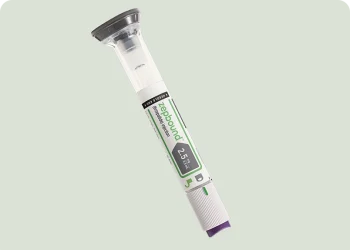
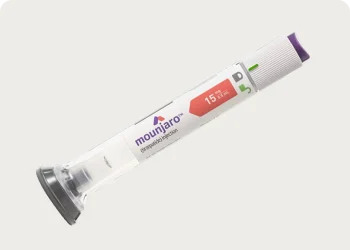
BMI is also one of the gates for medical weight loss. In general, prescription weight-loss medications — including GLP-1s like semaglutide and tirzepatide — may be appropriate at a BMI of 30 or higher, or 27 or higher with a weight-related condition such as type 2 diabetes or high blood pressure. But eligibility is a clinical decision based on your full picture — the clinician-led team at JumpstartMD can tell you where you stand.
What BMI misses
BMI is a quick screen, not a diagnosis — and it helps to know what it can't see. It uses only height and weight, so it can't tell muscle from fat: a muscular person can land in the "overweight" range while carrying very little fat, and someone at a "normal" BMI can still carry too much. It also says nothing about where fat sits — and it's visceral fat, the fat around your organs, that matters most for metabolic health.
At JumpstartMD we use BMI as one starting data point, alongside body composition, waist measurement, blood markers, and your overall metabolic health. The goal isn't a number on a chart; it's improving how your body actually works. If your BMI surprises you in either direction, that's a reason to get the fuller picture — not to rely on this one figure.
See the bigger picture
BMI is just one number. Estimate the calories you burn with our TDEE calculator, plan a deficit with the calorie deficit calculator, protect muscle with the protein calculator, and stay hydrated with the water intake calculator.
This BMI calculator provides a general estimate and is not a diagnosis. BMI does not measure body composition directly and may not accurately reflect the health of people with high muscle mass, pregnant or breastfeeding women, children, older adults, athletes, or specific race/ethnic groups. It does not determine eligibility for any medication or treatment. Talk with a JumpstartMD clinician for guidance tailored to you.
References
- World Health Organization. Obesity: Preventing and Managing the Global Epidemic. WHO Technical Report Series 894. Geneva: WHO; 2000. ↩
- National Heart, Lung, and Blood Institute. Clinical Guidelines on the Identification, Evaluation, and Treatment of Overweight and Obesity in Adults. 1998. ↩
- Centers for Disease Control and Prevention. About Adult BMI. 2024. ↩
- Nuttall FQ. Body mass index: obesity, BMI, and health: a critical review. Nutr Today. 2015;50(3):117–128. ↩
- Prospective Studies Collaboration. Body-mass index and cause-specific mortality in 900,000 adults. Lancet. 2009;373(9669):1083–1096. ↩
Frequently asked questions
How is BMI calculated?
BMI is your weight in kilograms divided by the square of your height in metres (kg/m²). In pounds and inches it's weight ÷ height² × 703. This calculator does the conversion for you — just enter your height and weight.
What is a healthy BMI?
For most adults, a BMI between 18.5 and 24.9 is considered the healthy-weight range. 25–29.9 is overweight and 30 or above is classified as obesity. These are general screening categories, not a diagnosis.
Is BMI accurate?
BMI is a quick screening tool, not a measure of body composition. It can overestimate body fat in people with a lot of muscle and underestimate it in others, and it doesn't account for where fat is stored. It's a useful starting point, but your clinician looks at the fuller picture.
What should I do if my BMI is high?
A higher BMI is a signal worth acting on, but it isn't the whole story. JumpstartMD's clinician-led team can review your BMI alongside your labs, history, and goals and build a personalized plan — including medical weight-loss options if they're right for you.
Why can BMI be misleading for muscular people or athletes?
BMI only uses height and weight, so it counts muscle the same as fat. Because muscle is denser than fat, a lean, muscular athlete can land in the 'overweight' BMI range despite having low body fat. That's why BMI is a screening tool, not a diagnosis — pairing it with a waist measurement and body-composition or metabolic markers gives a truer picture.
What BMI do you need to qualify for weight-loss medication?
Prescription weight-loss medications, including GLP-1s like semaglutide and tirzepatide, are generally considered at a BMI of 30 or above, or 27 or above if you have a weight-related condition such as type 2 diabetes, high blood pressure, or high cholesterol. Eligibility is ultimately a clinical decision — JumpstartMD's clinicians can confirm where you stand.
Your BMI is a starting point — not the plan
JumpstartMD's clinician-led team looks past the number to build a weight-loss plan around your body, your labs, and your goals.