
In a Nutshell
GLP-1 medications are the most effective weight-loss drugs ever brought to market. They work by mimicking a natural gut hormone — glucagon-like peptide-1 — that your body releases after you eat 1, slowing how fast your stomach empties, prompting insulin release only when blood sugar is high, and quieting hunger and "food noise" in the brain. In the pivotal trials, semaglutide (Wegovy®) produced a mean −14.9% of body weight at 68 weeks 1, and tirzepatide (Zepbound®) produced −20.9% at 72 weeks at its highest dose 2. In the first and only large head-to-head trial, SURMOUNT-5, tirzepatide led semaglutide 20.2% to 13.7% 3.
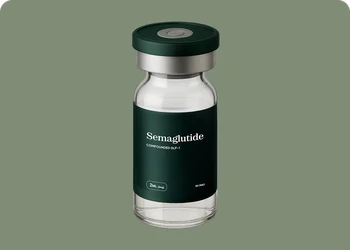
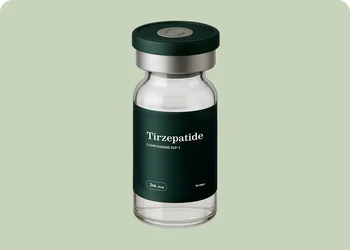
There are really only two molecules behind every brand name you've heard: semaglutide (sold as Wegovy®, Ozempic®, and Rybelsus®) and tirzepatide (sold as Zepbound® and Mounjaro®). For weight management specifically, the FDA-approved products are Wegovy and Zepbound; Ozempic and Mounjaro are approved for type 2 diabetes despite containing the same active ingredients. As of late 2025, semaglutide is also available as a once-daily oral tablet for weight management.
The single most important thing to understand is that these medications treat the biology of appetite while you take them — they do not permanently reset it. When the drug stops, hunger returns and weight tends to come back 5, 6. That reframes GLP-1 therapy as a long-term, supervised treatment for a chronic condition — not a quick course — and it is why dose titration, muscle preservation, side-effect management, and a planned step-down matter as much as the prescription itself.
Quick Answer: The Main GLP-1 Weight-Loss Medications
The medications most people are asking about, and what to expect from each:
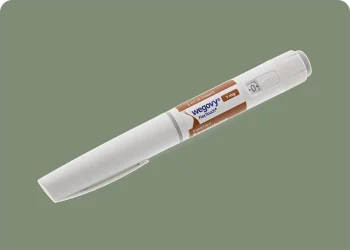
- Wegovy® (semaglutide injection) — FDA-approved for chronic weight management; mean −14.9% at 68 weeks in STEP 1 1. Also approved to reduce heart attack and stroke risk in adults with established heart disease plus overweight or obesity 4.
- Wegovy® (oral semaglutide tablet, 25 mg daily) — the first oral semaglutide approved for weight management, FDA-approved December 2025 10. A once-daily pill alternative to the weekly injection.
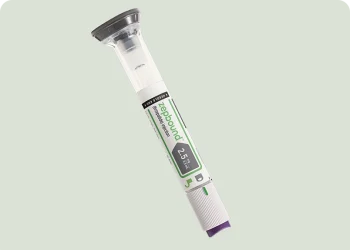
- Zepbound® (tirzepatide injection) — FDA-approved for chronic weight management; mean −20.9% at 72 weeks at 15 mg in SURMOUNT-1 2, and the only medication approved to treat moderate-to-severe obstructive sleep apnea in adults with obesity 8, 11.
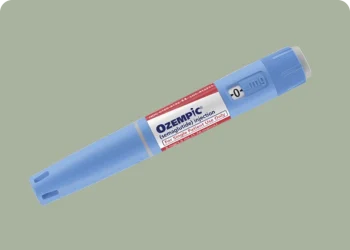
- Ozempic® (semaglutide injection) — FDA-approved for type 2 diabetes and cardiovascular risk reduction in diabetes, not weight loss; weight-loss use is off-label 12.
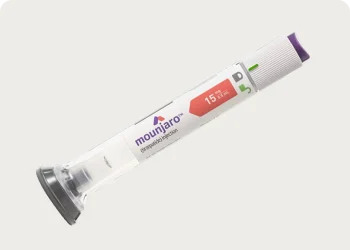
- Mounjaro® (tirzepatide injection) — FDA-approved for type 2 diabetes, not weight loss; weight-loss use is off-label 13.
- Rybelsus® (oral semaglutide, 14 mg daily) — FDA-approved for type 2 diabetes only, not weight loss. It is not the oral version of Wegovy.
Each of these is covered in depth on a dedicated, clinician-reviewed page; the taxonomy further down maps all 18 guides by topic. For the most common follow-up question — which molecule to choose — start with semaglutide vs. tirzepatide.
At a Glance: GLP-1 Medications by Mechanism, Result, and Dosing
| Medication | Active drug & class | FDA-approved for | Headline trial result | Typical dosing |
|---|---|---|---|---|
| Wegovy® (injection) | Semaglutide — GLP-1 agonist | Chronic weight management; cardiovascular risk reduction; MASH liver disease 9 | −14.9% body weight at 68 wks (STEP 1) 1 | Once-weekly injection, titrated to 2.4 mg over ~16 wks |
| Wegovy® (oral tablet) | Oral semaglutide — GLP-1 agonist | Chronic weight management (approved Dec 2025) 10 | Same molecule, oral route | Once-daily 25 mg tablet |
| Zepbound® | Tirzepatide — dual GIP/GLP-1 agonist | Chronic weight management; moderate-to-severe OSA in obesity 11 | −20.9% at 72 wks (SURMOUNT-1, 15 mg) 2; 20.2% vs 13.7% over semaglutide (SURMOUNT-5) 3 | Once-weekly injection, titrated to ≤15 mg over up to ~20 wks |
| Ozempic® | Semaglutide — GLP-1 agonist | Type 2 diabetes; CV and kidney risk reduction in T2D 12 | Weight loss is off-label | Once-weekly injection, up to 2.0 mg |
| Mounjaro® | Tirzepatide — dual GIP/GLP-1 agonist | Type 2 diabetes 13 | Weight loss is off-label | Once-weekly injection, up to 15 mg |
| Rybelsus® | Oral semaglutide — GLP-1 agonist | Type 2 diabetes (not weight loss) | Not a weight-management product | Once-daily 14 mg tablet |
Trial figures are group averages and projections, not promises; individual results vary widely. See the expected weight-loss timeline.
The GLP-1 Drug Family: Two Molecules, Many Names
The brand-name confusion in this category is real, and it matters for both safety and cost. Here is the family tree.
The semaglutide family (single GLP-1 agonist)
Semaglutide activates one receptor — the GLP-1 receptor — mimicking a gut hormone that slows stomach emptying, triggers glucose-dependent insulin release, and reduces appetite 1. It is sold as Wegovy® (for weight management, injection and now an oral 25 mg tablet 9, 10), Ozempic® (for type 2 diabetes 12), and Rybelsus® (oral semaglutide for type 2 diabetes). Because Wegovy and Ozempic are the same molecule, taking them together is never appropriate — that is double-dosing, not a stronger regimen.
The tirzepatide family (dual GIP/GLP-1 agonist)
Tirzepatide does everything semaglutide does plus activates a second incretin receptor, GIP (glucose-dependent insulinotropic polypeptide), which appears to enhance appetite and energy regulation and may explain its larger average weight loss 2, 3. It is sold as Zepbound® (for weight management and obstructive sleep apnea 11) and Mounjaro® (for type 2 diabetes 13).
Oral options and what's new
For years GLP-1s for weight loss meant a weekly injection. That is changing: the Wegovy oral tablet (25 mg daily) became the first oral semaglutide approved for weight management in December 2025 10, and additional once-daily GLP-1 pills are reaching the market. Oral options expand access but carry the same class effects and the same need for supervision.
Non-GLP-1 and no-medication alternatives
GLP-1s are powerful but not the only path. Older anti-obesity medications, non-GLP-1 prescriptions, and structured lifestyle programs remain appropriate for many people — especially those with contraindications to incretin therapy. The right starting point is a clinical assessment, not a default to the most-advertised drug. JumpstartMD offers GLP-1, non-GLP-1, and no-medication plans depending on what your evaluation shows.
How GLP-1 Medications Work
Most of what these drugs do traces to one fact: GLP-1 receptors sit in several systems at once. The medications act in three places simultaneously — the stomach (slower emptying, so you feel full sooner), the pancreas (insulin release only when blood sugar is high, which is why they carry a low intrinsic risk of hypoglycemia on their own), and the brain (less hunger and quieter cravings) 1. In a controlled study, people on semaglutide ate roughly 24% less food across a day, with fewer cravings and a reduced pull toward high-fat foods 1.
That same slowed digestion is also why the most common side effects are gastrointestinal, and why other swallowed medications can be absorbed differently. For the full anatomy of the mechanism, see how GLP-1 medications work.
The benefits also reach beyond the scale. In the SELECT trial, semaglutide cut major cardiovascular events — heart attack, stroke, or cardiovascular death — by about 20% in adults with overweight or obesity and established heart disease but without diabetes 4. That finding is why Wegovy now carries a cardiovascular indication.
What Results to Expect
Weight loss on a GLP-1 is not linear. It typically starts slowly during the weeks the dose is being escalated, accelerates through the middle months, then slows and plateaus around month 12 to 15 as the body settles at a lower set point — a sign the medication is working, not failing. In STEP 5, semaglutide held an average −15.2% at two years, so the plateau is a durable new baseline rather than a temporary dip 7.
Trial averages also hide an enormous range. Roughly 1 in 6 people are "slow responders" who lose little in the first three months yet still reach a meaningful result by the end of the year, and real-world results tend to run lower than trial results — largely because people stop early or never reach an effective dose. Both gaps are precisely what supervision closes. The full month-by-month picture, by medication and dose, is in the expected weight-loss timeline.
Explore the Topics: All 18 Guides by Cluster
This hub covers GLP-1 weight loss across eight clinical clusters. Each topic below has its own dedicated, clinician-reviewed guide. Use this as a map — read the summary of whatever fits your question, then click through for the detail.
Mechanism & Choice
- How GLP-1 medications work — the biology behind the appetite effect, broken down by stomach, pancreas, and brain, and why the effects reverse when you stop.
- Semaglutide vs. tirzepatide — the head-to-head: SURMOUNT-5 results (20.2% vs 13.7%), the full brand map, side-effect comparison, and how to switch safely (never combine two GLP-1s).
Results
- How much weight will you lose? A month-by-month timeline — trial-anchored expectations, the non-linear curve, the responder spread, and why a plateau is usually a good sign.
Side Effects & Safety
- GLP-1 side effects: what to expect — the full landscape by frequency, FDA-label rates for Wegovy and Zepbound, and the thyroid C-cell boxed warning. The triage page that routes you to the rest.
- Nausea and digestive side effects — how long nausea lasts (it tracks dose escalation and usually fades), plus practical relief for constipation, reflux, and vomiting.
- Serious side effects and red flags — how to tell ordinary GLP-1 nausea from pancreatitis, plus gallbladder, bowel, kidney, and pre-surgery warnings, sorted into ER-now / call-today / next-visit triage.
- Is compounded semaglutide safe? — counterfeits, the post-shortage regulatory state, and why vial-and-syringe products carry documented overdose risk.
- Do GLP-1s cause low blood sugar? — why the glucose-dependent mechanism makes hypoglycemia uncommon on its own, and when the risk is real (insulin or sulfonylureas).
- GLP-1s and mood / mental health — what the FDA and EMA reviews actually found on suicidality, why mood can still shift, and when to call your clinician.
- GLP-1 drug interactions — how slowed digestion changes absorption of pills like levothyroxine and oral contraceptives, plus NSAIDs, ACE inhibitors, insulin, and dehydration.
Body Composition
- Muscle loss prevention — why up to a quarter (tirzepatide) to 40% (semaglutide) of weight lost can be lean mass, and how protein and resistance training protect it. JumpstartMD's differentiator.
Dosing & Practical
- Dose titration: how and when doses change — the label schedules for Wegovy, Zepbound, Ozempic, and Mounjaro, missed-dose rules, and why the goal is the lowest effective dose, not the maximum.
Stopping & Maintenance
- Weight regain after stopping a GLP-1 — why roughly two-thirds of lost weight returns after stopping cold, why that's biology and not willpower, and how a taper and maintenance plan protect your results.
Access & Cost
- Who qualifies for GLP-1 weight loss medication — the BMI ≥30 (or ≥27 plus a comorbidity) label criteria, the OSA and cardiovascular indications, contraindications, and why insurance eligibility is stricter than the FDA label.
- Cost and insurance coverage in 2026 — list prices, manufacturer direct-pay programs, savings cards, where Medicare and Medicaid stand, and how prior authorization works.
- Clinically supervised GLP-1 care — what real clinical supervision includes, the documented harms of going without it, and how to evaluate any program.
Special Populations
- GLP-1s, pregnancy, and fertility — why labels say to stop at least 2 months before conceiving, the tirzepatide birth-control interaction, and the "Ozempic babies" fertility rebound.
- GLP-1s and menopause — why estrogen decline makes weight loss feel harder (and the data showing GLP-1s still work), plus coordinating treatment with bioidentical hormone therapy. See also our companion guide to menopause symptoms, causes, and treatment.
Who Qualifies, and How Treatment Is Evaluated
Under current FDA labeling, you qualify for a GLP-1 weight-loss medication through one of two routes: a BMI of 30 or higher, or a BMI of 27 or higher plus at least one weight-related condition such as high blood pressure, type 2 diabetes, abnormal cholesterol, obstructive sleep apnea, or cardiovascular disease 9, 11. The indications have also broadened: Zepbound is approved to treat moderate-to-severe obstructive sleep apnea in adults with obesity 8, 11, and Wegovy is approved to reduce cardiovascular events in adults with established heart disease plus excess weight 4.
But meeting label criteria is only the first of three gates. Insurance eligibility is frequently stricter than the FDA label, and clinical appropriateness — screening for a personal or family history of medullary thyroid cancer or MEN 2, pregnancy plans, prior pancreatitis, and interacting medications — is the part a two-minute online questionnaire cannot do. A proper intake includes labs, a full history, and a medication review. The details are in who qualifies for GLP-1 medication.
Safety: What's Common, What's Serious
The most common side effects are gastrointestinal — nausea, diarrhea, vomiting, and constipation — and they are usually mild to moderate, cluster in the weeks after starting or moving up a dose, and ease as the body adapts. In the trials, nausea affected about 44% of people on Wegovy and 28% on the top dose of Zepbound, and fewer than 1 in 13 stopped treatment because of side effects 1, 2. The medications also carry a boxed warning about thyroid C-cell tumors that makes certain people ineligible 9, 11.
Serious problems are far less common but should never be "waited out." The most important to recognize is acute pancreatitis, because its early symptoms overlap with routine queasiness — the key tell is that ordinary GLP-1 nausea comes in waves and improves after vomiting, while pancreatitis pain is constant, severe, and radiates to the back. The full safety triage, including gallbladder, bowel, kidney, and pre-surgery guidance, is in serious side effects and red flags.
When to Seek Care — Red Flags
The following are not ordinary side effects and warrant prompt medical attention:
- Severe, constant upper-abdominal pain radiating to the back, especially with vomiting that doesn't relieve it (possible pancreatitis)
- Pain in the upper-right abdomen, fever, or yellowing skin/eyes (possible gallbladder disease)
- Persistent vomiting with signs of dehydration — dizziness, very dark urine, or reduced urination (risk of kidney injury)
- Severe, persistent abdominal pain with bloating and an inability to pass stool or gas (possible bowel obstruction)
- Signs of a severe allergic reaction — swelling of the face, lips, or throat, or trouble breathing (call 911)
- Thoughts of harming yourself — call or text 988, the Suicide & Crisis Lifeline, 24/7
How JumpstartMD Treats Overweight and Obesity with GLP-1s
JumpstartMD was founded in 2007 by Stanford-trained physicians, with programs built around labs, hormones, and body composition — and peer-reviewed outcomes published in the Journal of Obesity. Care is delivered by licensed clinicians you see face-to-face — in person at 14 California locations or online across California — not an anonymous prescription mill.
What supervision looks like in practice starts with a 60-biomarker lab screening and InBody® body-composition scanning at the regular visit cadence. That body-composition focus is deliberate: up to 40% of the weight lost on a GLP-1 can be muscle without supervision, so tracking lean mass — not just the number on the scale — is how we make sure you lose fat, not strength. The World Health Organization's first global guideline on these medicines, issued in December 2025, frames them the same way: a GLP-1 should be delivered "within a chronic care model," as one element inside a larger clinical framework 14.
JumpstartMD offers the full range of FDA-approved medication options — Ozempic®, Wegovy®, Zepbound®, Mounjaro®, and Rybelsus® — alongside non-GLP-1 and no-medication plans, with flexible dosing, microdosing, and maintenance support. Every prescription comes with clinician-managed titration, contraindication screening before any medication, drug-interaction monitoring, restart protocols, and a step-down/taper plan to protect your results after the medication phase. Pricing is personalized — you pay for the dose prescribed, not a flat monthly medication fee — and health coaching and nutrition guidance are included in membership. When weight changes intersect with hormones, we coordinate medical weight loss with our menopause and hormone care in one plan.
If you're considering a GLP-1 — or already on one and want it managed properly — JumpstartMD offers a free, no-obligation consultation by phone or online form.
Book FREE Consultation
Share your details and a JumpstartMD team member will reach out shortly. Or call 408.478.3496 for your free, no-obligation consultation.
Share your details and a JumpstartMD team member will reach out when we open — or start online right now.
Frequently Asked Questions
Which GLP-1 medication causes the most weight loss?
In the only large head-to-head trial, SURMOUNT-5, tirzepatide (Zepbound®) produced a mean 20.2% weight loss at 72 weeks versus 13.7% for semaglutide (Wegovy®) 3. That matches the separate monotherapy trials, where tirzepatide reached −20.9% (SURMOUNT-1) and semaglutide −14.9% (STEP 1) 1, 2. "Best on average" is not "best for you," though — the right choice depends on your medical history, tolerability, insurance, and supply. See semaglutide vs. tirzepatide.
Is Ozempic the same as Wegovy?
They are the same molecule — semaglutide — at different approved doses and indications. Wegovy is FDA-approved for chronic weight management; Ozempic is approved for type 2 diabetes, so its use for weight loss is off-label 12. Because they are identical drugs, you should never take both at once. Mounjaro and Zepbound have the same relationship for tirzepatide.
Will I regain the weight if I stop?
Usually, yes, if you stop abruptly with no plan. In the STEP 1 extension, people regained about two-thirds of their lost weight within a year of stopping semaglutide 5, and SURMOUNT-4 showed the same rebound after stopping tirzepatide 6. This is biology — appetite hormones return to their prior set point — not a failure of willpower. A structured taper, preserved muscle, and durable habits built during treatment, plus a maintenance dose for many people, change the outcome. See weight regain after stopping a GLP-1.
Do GLP-1 medications cause cancer or thyroid tumors?
GLP-1 medications carry a boxed warning based on rodent studies showing thyroid C-cell tumors, and they are contraindicated in people with a personal or family history of medullary thyroid carcinoma or MEN 2 syndrome 9, 11. A causal link in humans has not been established, but the contraindication is firm — which is exactly why contraindication screening before prescribing matters. See who qualifies.
Do GLP-1 medications cause depression or suicidal thoughts?
In January 2026, the FDA completed a multi-year investigation — a meta-analysis of 91 placebo-controlled trials involving 107,910 patients plus a real-world cohort of more than 2.2 million — and found no increased risk of suicidal ideation, depression, or other psychiatric events, and asked manufacturers to remove the prior warning from the labels 15. The European Medicines Agency reached the same conclusion in 2024. Mood can still shift for individual reasons during rapid weight change, so report changes to your clinician rather than stopping on your own. See GLP-1s and mood.
How much do GLP-1 medications cost?
At list price, brand-name GLP-1s run roughly $1,000 to $1,350 per month as of June 2026 — but almost nobody pays that. With commercial insurance that covers the drug, manufacturer savings cards can bring Wegovy or Zepbound to about $25 per fill; without coverage, the manufacturers' direct-pay programs sell them for roughly $199 to $449 a month depending on dose. Medicare still doesn't cover them for weight loss alone, and Medicaid varies by state. Figures change monthly — see cost and insurance coverage.
Is compounded semaglutide a safe way to save money?
It carries real risks. Compounded drugs do not undergo FDA review for quality, potency, or sterility, and most come in multi-dose vials drawn into a syringe by hand — the FDA has documented overdoses of 5 to 20 times the intended dose from that step, some requiring hospitalization. With the semaglutide and tirzepatide shortages resolved, the legal basis for mass-compounding has largely ended. The full picture is in is compounded semaglutide safe.
Can I take a GLP-1 if I want to get pregnant?
Not while trying to conceive or during pregnancy. FDA labels advise stopping at least 2 months before a planned pregnancy to let the drug clear, and tirzepatide can reduce the effectiveness of oral birth control, so backup contraception is recommended for 4 weeks after starting and after each dose increase. Weight loss can also restore ovulation, making pregnancy more likely than expected. Plan this with your clinician before starting — see GLP-1s, pregnancy, and fertility.
Editorial Standards
This page was written by JumpstartMD's medical content team and medically reviewed by a JumpstartMD physician for clinical accuracy, alignment with current obesity-medicine guidance and FDA labeling, and consistency with our treatment protocols. We cite primary sources — peer-reviewed trials, FDA prescribing information and safety communications, and professional and government health agencies. Because the GLP-1 regulatory and pricing landscape changes quickly, time-sensitive figures are date-stamped, and we update content when guidelines change.
Reviewed by: Last updated: Next review:
References
- J. P. H. Wilding, R. L. Batterham, S. Calanna, M. Davies, L. F. Van Gaal, I. Lingvay, B. M. McGowan, J. Rosenstock, M. T. D. Tran, T. A. Wadden, S. Wharton, K. Yokote, N. Zeuthen, R. F. Kushner; STEP 1 Study Group, "Once-weekly semaglutide in adults with overweight or obesity," New England Journal of Medicine, vol. 384, no. 11, pp. 989-1002, Mar. 18, 2021, [Online]. Available: https://doi.org/10.1056/NEJMoa2032183. PMID: 33567185. [Accessed: Jun. 10, 2026]. ↩
- A. M. Jastreboff, L. J. Aronne, N. N. Ahmad, S. Wharton, L. Connery, B. Alves, A. Kiyosue, S. Zhang, B. Liu, M. C. Bunck, A. Stefanski; SURMOUNT-1 Investigators, "Tirzepatide once weekly for the treatment of obesity," New England Journal of Medicine, vol. 387, no. 3, pp. 205-216, Jul. 21, 2022, [Online]. Available: https://doi.org/10.1056/NEJMoa2206038. PMID: 35658024. [Accessed: Jun. 10, 2026]. ↩
- L. J. Aronne, N. Sattar, D. B. Horn, et al., "Tirzepatide as compared with semaglutide for the treatment of obesity," New England Journal of Medicine, vol. 393, no. 1, pp. 26-36, Jul. 3, 2025, [Online]. Available: https://doi.org/10.1056/NEJMoa2416394. PMID: 40353578. [Accessed: Jun. 10, 2026]. ↩
- A. M. Lincoff, K. Brown-Frandsen, H. M. Colhoun, J. Deanfield, S. S. Emerson, S. Esbjerg, et al.; SELECT Trial Investigators, "Semaglutide and cardiovascular outcomes in obesity without diabetes," New England Journal of Medicine, vol. 389, no. 24, pp. 2221-2232, Dec. 14, 2023, [Online]. Available: https://doi.org/10.1056/NEJMoa2307563. PMID: 37952131. [Accessed: Jun. 10, 2026]. ↩
- J. P. H. Wilding, R. L. Batterham, M. Davies, et al., "Weight regain and cardiometabolic effects after withdrawal of semaglutide: the STEP 1 trial extension," Diabetes, Obesity and Metabolism, vol. 24, no. 8, pp. 1553-1564, Aug. 2022, [Online]. Available: https://doi.org/10.1111/dom.14725. PMID: 35441470. [Accessed: Jun. 10, 2026]. ↩
- L. J. Aronne, N. Sattar, D. B. Horn, H. E. Bays, S. Wharton, W.-Y. Lin, et al., "Continued treatment with tirzepatide for maintenance of weight reduction in adults with obesity: the SURMOUNT-4 randomized clinical trial," JAMA, vol. 331, no. 1, pp. 38-48, Jan. 2, 2024, [Online]. Available: https://doi.org/10.1001/jama.2023.24945. PMID: 38078870. [Accessed: Jun. 10, 2026]. ↩
- W. T. Garvey, R. L. Batterham, M. Bhatta, et al., "Two-year effects of semaglutide in adults with overweight or obesity: the STEP 5 trial," Nature Medicine, vol. 28, no. 10, pp. 2083-2091, Oct. 2022, [Online]. Available: https://doi.org/10.1038/s41591-022-02026-4. PMID: 36216945. [Accessed: Jun. 10, 2026]. ↩
- A. Malhotra, R. R. Grunstein, I. Fietze, T. E. Weaver, S. Redline, A. Azarbarzin, et al.; SURMOUNT-OSA Investigators, "Tirzepatide for the treatment of obstructive sleep apnea and obesity," New England Journal of Medicine, vol. 391, no. 13, pp. 1193-1205, Sep. 26, 2024, [Online]. Available: https://doi.org/10.1056/NEJMoa2404881. PMID: 38912654. [Accessed: Jun. 10, 2026]. ↩
- Novo Nordisk, "Highlights of Prescribing Information: Wegovy (semaglutide) injection, for subcutaneous use," U.S. Food and Drug Administration, 2025. [Online]. Available: https://www.accessdata.fda.gov/drugsatfda_docs/label/2025/215256s024lbl.pdf. [Accessed: Jun. 10, 2026]. ↩
- Novo Nordisk, "Highlights of Prescribing Information: Wegovy (semaglutide) tablets, for oral use," U.S. Food and Drug Administration, NDA 218316, 2025. [Online]. Available: https://www.accessdata.fda.gov/drugsatfda_docs/label/2025/218316Orig1s000lbl.pdf. [Accessed: Jun. 10, 2026]. ↩
- Eli Lilly and Company, "Highlights of Prescribing Information: Zepbound (tirzepatide) injection, for subcutaneous use," U.S. Food and Drug Administration, 2024. [Online]. Available: https://www.accessdata.fda.gov/drugsatfda_docs/label/2024/217806s013lbl.pdf. [Accessed: Jun. 10, 2026]. ↩
- Novo Nordisk, "Highlights of Prescribing Information: Ozempic (semaglutide) injection, for subcutaneous use," U.S. Food and Drug Administration, 2023. [Online]. Available: https://www.accessdata.fda.gov/drugsatfda_docs/label/2023/209637s020s021lbl.pdf. [Accessed: Jun. 10, 2026]. ↩
- Eli Lilly and Company, "Highlights of Prescribing Information: Mounjaro (tirzepatide) injection, for subcutaneous use," U.S. Food and Drug Administration, 2024. [Online]. Available: https://www.accessdata.fda.gov/drugsatfda_docs/label/2024/215866s010s015s022lbl.pdf. [Accessed: Jun. 10, 2026]. ↩
- World Health Organization, "WHO issues global guideline on the use of GLP-1 medicines in treating obesity," Dec. 1, 2025, [Online]. Available: https://www.who.int/news/item/01-12-2025-who-issues-global-guideline-on-the-use-of-glp-1-medicines-in-treating-obesity. [Accessed: Jun. 10, 2026]. ↩
- U.S. Food and Drug Administration, "FDA requests removal of suicidal behavior and ideation warning from glucagon-like peptide-1 receptor agonist (GLP-1 RA) medications," FDA Drug Safety Communication, Jan. 2026, [Online]. Available: https://www.fda.gov/drugs/drug-safety-communications/fda-requests-removal-suicidal-behavior-and-ideation-warning-glucagon-peptide-1-receptor-agonist-glp. [Accessed: Jun. 10, 2026]. ↩