In a Nutshell
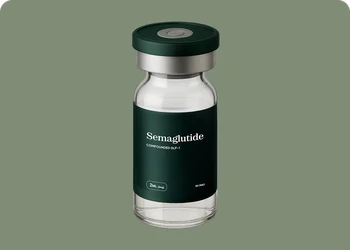
"Compounded semaglutide" is not a single product, and that is the core of the safety problem. Some compounded versions came from licensed pharmacies operating legally during a federal drug shortage; others are gray-market or counterfeit products sold online with little oversight. Compounded drugs do not undergo FDA review for safety, quality, or effectiveness, so potency, sterility, and even the active ingredient can vary from vial to vial 2.
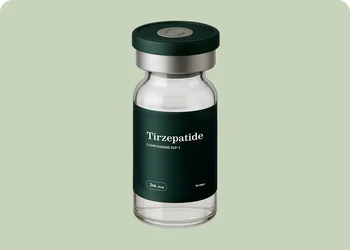
The legal landscape has also changed. The FDA declared the tirzepatide shortage resolved in December 2024 and the semaglutide shortage resolved in February 2025, removing the main basis that had let pharmacies mass-compound these drugs 3. As of June 2026, routine "essentially-a-copy" compounding is no longer permitted, and the FDA has proposed to block outsourcing facilities from compounding them from bulk powder 4.
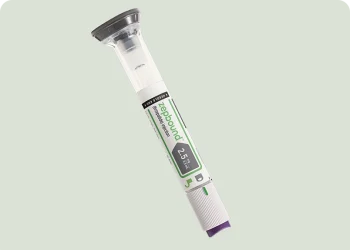
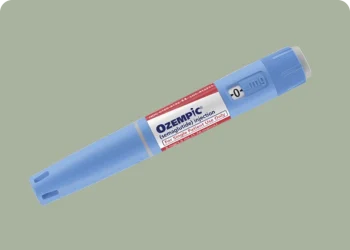
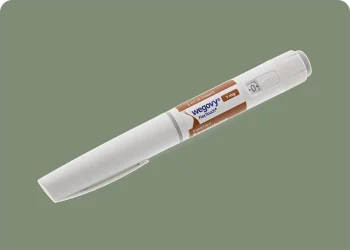
The biggest day-to-day danger, though, is dosing. FDA-approved semaglutide (Wegovy®, Ozempic®) comes in prefilled pens dialed in milligrams; most compounded semaglutide comes in multi-dose vials you draw into a syringe yourself. The FDA has documented overdoses of 5 to 20 times the intended dose from this step, some requiring hospitalization 1. That risk disappears when a clinician prescribes a standardized, FDA-approved product and supervises your dose and titration. This page — part of our guide to GLP-1 medications for weight loss — explains what a cheap online option actually costs you, and why clinically supervised care is the safer path.
Compounded vs. Counterfeit vs. FDA-Approved: Three Different Things
These terms get used interchangeably online, but they are not the same, and the distinction matters for your safety.
| FDA-approved | Compounded | Counterfeit | |
|---|---|---|---|
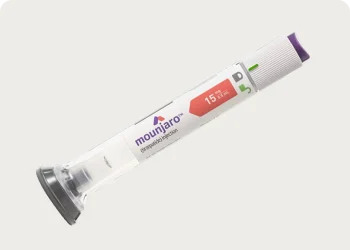
| Examples | Ozempic®, Wegovy®, Rybelsus® (semaglutide); Mounjaro®, Zepbound® (tirzepatide) | Pharmacy-mixed semaglutide in vials | Fake products mimicking brand packaging |
| FDA premarket review | Yes — safety, quality, efficacy | No 2 | No — illegal |
| Active ingredient | Verified semaglutide base | May use unapproved salt forms 2 | Unknown; sometimes none, sometimes harmful |
| Dose form | Prefilled pen, dialed in mg | Usually multi-dose vial + syringe | Often fake "pens" with non-sterile needles 5 |
| Legal status (June 2026) | Fully legal | Largely restricted post-shortage 3 | Always illegal |
FDA-approved products are made by the original manufacturers (Novo Nordisk and Eli Lilly) and reviewed before sale. Compounded products are mixed by a pharmacy for an individual patient — legal in specific circumstances, but not FDA-reviewed. Counterfeit products are fakes: criminals copy genuine labels and lot numbers to pass off unknown substances as the real drug. A product can be both compounded and sourced from an unverified seller, which stacks the risks.
The 2026 Regulatory Picture: Why Compounding Largely Ended
During 2022–2024, semaglutide and tirzepatide were on the FDA drug shortage list. Federal law lets compounding pharmacies — state-licensed 503A pharmacies and registered 503B outsourcing facilities — copy a drug in shortage, which is why compounded GLP-1s became so widely available.
That window has closed. The FDA resolved the tirzepatide shortage in December 2024 and the semaglutide shortage in February 2025 3. With the shortages over, the legal basis for routine compounding ended, and the FDA set wind-down deadlines:
- Tirzepatide: enforcement discretion for 503A pharmacies ended February 18, 2025, and for 503B facilities March 19, 2025 3.
- Semaglutide: for 503A pharmacies it ended April 22, 2025, and for 503B facilities May 22, 2025 3.
A compounding-industry group sued to keep the products available, but the courts denied its preliminary-injunction requests in 2025, so the deadlines held 3. Then, on April 30, 2026, the FDA went further and proposed to exclude semaglutide, tirzepatide, and liraglutide from the 503B "bulks list," finding no clinical need to compound them from bulk powder; the comment period runs through June 30, 2026 4, 8.
The takeaway for June 2026: a website still selling cheap "compounded semaglutide" without a legitimate clinical relationship is in a gray-to-illegal zone, with no shortage justification left. This area moves fast — confirm current status with a licensed clinician before relying on any compounded source.
How to Spot Counterfeit Semaglutide
Counterfeiters target semaglutide for predictable reasons — high demand, supply pressure, and high cost (see cost and insurance coverage). Both the FDA and WHO have issued formal alerts.
Confirmed counterfeit Ozempic lots in the U.S. supply chain (verified June 2026):
- Lot NAR0074 (serial 430834149057) — FDA counterfeit warning on December 21, 2023; the seized fakes included counterfeit pens, cartons, inserts, and non-sterile counterfeit needles 5.
- Lot PAR0362 — FDA was notified on April 3, 2025 of several hundred counterfeit units and seized them April 9, 2025; this is a real Novo Nordisk lot number, which is what makes the fake convincing 5.
- Lot PAR1229 — FDA seized counterfeit units labeled with this authentic lot number, distinguishable by the placement of the EXP/LOT text on the pen label 5.
The World Health Organization issued a global Medical Product Alert on June 19, 2024 about falsified Ozempic detected in Brazil, the U.K., and the U.S., noting rising reports of falsified semaglutide across all regions since 2022 6.
Practical checks before you ever inject:
- Check the lot number against the FDA's alerts — but note fakes reuse real lot numbers, so a match isn't proof of authenticity.
- Inspect packaging for differences in font, text placement (such as the EXP/LOT location), and print quality.
- Inspect the needles — genuine Ozempic ships with NovoFine® needles; mismatched or loose needles are a warning sign.
- Verify the pharmacy is state-licensed, and for online sellers, accredited by the National Association of Boards of Pharmacy (NABP). Be wary of any site that ships without a prescription or prices far below market.
- Report suspicious products to FDA MedWatch (1-800-FDA-1088) rather than injecting them.
If you bought semaglutide online without a prescription, assume you can't verify it, and talk to a clinician before using it.
The Hidden Danger of Vial-and-Syringe Dosing
One of the most common questions people ask is how to measure compounded semaglutide in a syringe. The honest, safety-first answer: this is precisely the step that has sent patients to the hospital, and it belongs with a clinician — not a do-it-yourself chart from the internet. This article will not provide a self-dosing formula, because the calculation itself is where the danger lives.
Here is why. FDA-approved semaglutide is dosed in milligrams and delivered by a prefilled pen — you dial the dose and the device measures it. Most compounded semaglutide comes in a multi-dose vial at a concentration that varies between products, so the patient must convert a milligram dose into syringe "units" or milliliters and draw it up by hand. Three things routinely go wrong 1:
- Confusing units of measurement — mixing up "units," milliliters, and milligrams.
- Applying the wrong concentration — using a chart written for one vial strength on a more concentrated vial, which can produce a five-fold to twenty-fold overdose 1.
- Skipping ahead in titration without medical guidance.
On July 26, 2024, the FDA issued a compounding risk alert after reports of overdoses from these dosing errors, some requiring hospitalization 1. In a majority of cases, patients had withdrawn more than the prescribed dose — in some instances 5 to 20 times more than intended — with effects including severe nausea, vomiting, abdominal pain, fainting, dehydration, acute pancreatitis, and gallstones 1. Many had no prior experience drawing medication from a vial 1.
This is the heart of JumpstartMD's position: the answer to "how do I measure this myself?" is that you shouldn't have to. A standardized, prefilled, FDA-approved product removes the math entirely, and clinician-managed dose titration means the right dose is prescribed, demonstrated, and adjusted to your tolerance — so an arithmetic slip never becomes a serious adverse event.
What About Salt Forms, Potency, and Sterility?
Even setting counterfeits and dosing math aside, compounded semaglutide raises three quality questions the FDA has flagged:
- Unapproved salt forms. Some compounders have used semaglutide sodium or semaglutide acetate — which the FDA states are different active ingredients from the semaglutide base in approved drugs, have not been shown safe or effective, and have no lawful basis for use in compounding 2.
- Potency variability. Without FDA premarket review, strength can differ between batches — you may get more or less drug than the label says 2.
- Sterility and cold-chain. Injectables must be sterile and semaglutide must stay cold; gray-market products shipped without temperature control can degrade, and counterfeit needles can't be confirmed sterile 5.
By contrast, clinicians reach for brand-name agents first because their benefits were established in large trials using a known, consistent product — semaglutide 2.4 mg produced a mean −14.9% body weight loss at 68 weeks in the STEP 1 trial 7. You can only count on results like that if the medicine in the vial is actually the medicine on the label.
Is This Normal? When to Call Your Clinician
If you've already used a compounded or online-sourced GLP-1, that doesn't mean something is wrong — but it's worth a conversation. Call your clinician if:
- You can't verify the source, concentration, or active ingredient of a product you're using.
- You're being asked to calculate and draw your own doses and feel unsure about the math.
- Your symptoms feel stronger than expected for your dose (intense nausea, vomiting, or dehydration can signal too much drug).
- You bought a product based on an online questionnaire alone, with no labs, history review, or contraindication screening.
A clinician can confirm whether what you're taking is appropriate, transition you to an FDA-approved product, and screen for contraindications — such as a personal or family history of medullary thyroid cancer — that a checkbox form often misses.
Red Flags — Seek Care Now
Go to an emergency department or call 911 if, after taking any semaglutide product — especially a compounded or unverified one — you experience:
- Severe, persistent abdominal pain, particularly radiating to the back (possible acute pancreatitis).
- Relentless vomiting with dehydration (dizziness, very little urine, racing heart) — a known overdose presentation 1.
- Fainting or near-fainting.
- Severe allergic reaction — swelling of the face, lips, or throat, or trouble breathing.
- Injection-site infection — spreading redness, warmth, pus, or fever (a concern with non-sterile counterfeit needles) 5.
If you suspect you took far more than your intended dose, contact Poison Control (1-800-222-1222) or seek emergency care immediately — don't "wait it out."
What You Can Do About It
You don't have to choose between affordability and safety, or gamble on an unverified vial. From simplest to most protective:
- Use an FDA-approved product whenever possible. Ozempic®, Wegovy®, Mounjaro®, Zepbound®, and Rybelsus® are made to a verified standard and dosed by prefilled pen, removing the self-measurement risk.
- Buy only through a legitimate clinical relationship. Manufacturer direct-to-patient programs and licensed pharmacies — not anonymous websites — are the safe channels.
- Never self-calculate doses from a vial. If handed a vial and syringe, ask the prescriber to confirm the concentration and exact dose in writing, or ask whether a prefilled pen is an option.
- Verify before you inject — check lot numbers, packaging, needles, and pharmacy licensure, and report anything suspicious to MedWatch.
- Get supervised care for the whole plan, not just a prescription. Dose, titration, side-effect management, muscle preservation, and a step-down plan to protect results all matter — and none come in a vial bought online.
Get Started with JumpstartMD
If you've been tempted by a cheap online "compounded semaglutide" offer — or you're already using one and aren't sure it's safe — that uncertainty is exactly what a real medical program is built to remove.
JumpstartMD was founded in 2007 by Stanford-trained physicians, with programs built around labs, hormones, and body composition and peer-reviewed outcomes published in the Journal of Obesity. You're seen face-to-face by a licensed clinician — in person at our 14 California locations or online across California — not processed through an anonymous questionnaire. Every plan starts with a 60-biomarker lab screening and InBody® body composition scanning at each visit, because up to 40% of the weight lost on GLP-1s can be muscle without supervision, and we track lean mass so you lose fat, not strength. InBody scans are done in clinic; online members can book one at any of the 14 locations.
We prescribe FDA-approved medications — Ozempic®, Wegovy®, Zepbound®, Mounjaro®, and Rybelsus® — alongside non-GLP-1 and no-medication options, with flexible dosing, microdosing, and maintenance support. That means standardized, prefilled products and clinician-managed titration: contraindication screening before any prescription, drug-interaction monitoring, restart protocols, and a step-down/taper plan to protect your results. No do-it-yourself vials, no self-calculated doses, no guessing whether what's in the syringe matches the label.
Pricing is personalized — you pay for the dose prescribed, not a flat monthly fee — and health coaching and nutrition guidance are included in membership. If you want GLP-1 treatment done safely and verifiably, book a free, no-obligation consultation by phone or through our online form.
Book FREE Consultation
Share your details and a JumpstartMD team member will reach out shortly. Or call 408.478.3496 for your free, no-obligation consultation.
Share your details and a JumpstartMD team member will reach out when we open — or start online right now.
Related Articles
- Clinically Supervised GLP-1 Care — what clinical oversight includes, and why it's the alternative to gray-market self-dosing.
- GLP-1 Dose Titration — how clinicians set and adjust doses safely, the opposite of self-calculating from a vial.
- Serious Side Effects and Red Flags — recognizing pancreatitis and other emergencies, including overdose presentations.
- Cost and Insurance Coverage — the price pressures that push people toward compounded products, and legitimate ways to lower cost.
- Who Qualifies for GLP-1 Medication — why a questionnaire isn't a clinical assessment.
- Semaglutide vs. Tirzepatide — the FDA-approved options and how they compare.
Frequently Asked Questions
Is compounded semaglutide safe?
It depends entirely on the source, which you often can't verify. Compounded semaglutide is not FDA-reviewed for safety, quality, or effectiveness, so potency, sterility, and even the active ingredient can vary 2. Add the documented risk of self-dosing overdoses from multi-dose vials 1, and the safest choice is an FDA-approved product prescribed and supervised by a licensed clinician.
How do you measure compounded semaglutide in a syringe?
Safety-first answer: you shouldn't have to, and we won't publish a self-dosing formula — because measuring it yourself is the step the FDA has linked to hospitalizations. Compounded vials come at varying concentrations, so converting a milligram dose into syringe units invites errors; the FDA documented overdoses of 5 to 20 times the intended dose, often from confusing units/milliliters/milligrams or applying a chart meant for a weaker vial to a stronger one 1. FDA-approved pens dial the dose in milligrams and measure it for you. If you're ever handed a vial and syringe, have your prescriber confirm the concentration and dose in writing — or ask for a prefilled pen instead.
Is compounded semaglutide still legal in 2026?
The legal basis largely ended when the shortages resolved (tirzepatide December 2024, semaglutide February 2025), with compounder wind-down deadlines passing in early-to-mid 2025 3. In April 2026, the FDA proposed to exclude semaglutide, tirzepatide, and liraglutide from the 503B bulks list, with comments open through June 30, 2026 4. Confirm current status with a licensed clinician — this area changes quickly.
How can I tell if my Ozempic is counterfeit?
Check the lot number against FDA alerts — confirmed counterfeit lots include NAR0074 (Dec 2023), PAR0362 (Apr 2025), and PAR1229 (Dec 2025), though counterfeiters reuse real lot numbers, so a match isn't proof of authenticity 5. Inspect packaging for font and text-placement differences, confirm the needles are genuine NovoFine®, and verify your pharmacy is licensed 5. The WHO has also flagged falsified semaglutide internationally 6. Report anything suspicious to FDA MedWatch (1-800-FDA-1088) and don't inject it.
Why does buying semaglutide online without a prescription matter?
Because no one is screening you or standing behind the product. A legitimate prescriber reviews your history, runs labs, checks for contraindications like a personal or family history of medullary thyroid cancer, and monitors you over time. A site that ships after a quick form skips all of that — and you can't confirm the vial's concentration, sterility, or even that it contains real semaglutide. See clinically supervised GLP-1 care for what proper oversight looks like.
References
- U.S. Food and Drug Administration, "FDA alerts health care providers, compounders and patients of dosing errors associated with compounded injectable semaglutide products," Jul. 26, 2024, [Online]. Available: https://www.fda.gov/drugs/human-drug-compounding/fda-alerts-health-care-providers-compounders-and-patients-dosing-errors-associated-compounded. [Accessed: Jun. 10, 2026]. ↩
- U.S. Food and Drug Administration, "FDA's Concerns with Unapproved GLP-1 Drugs Used for Weight Loss," [Online]. Available: https://www.fda.gov/drugs/postmarket-drug-safety-information-patients-and-providers/fdas-concerns-unapproved-glp-1-drugs-used-weight-loss. [Accessed: Jun. 10, 2026]. ↩
- U.S. Food and Drug Administration, "FDA clarifies policies for compounders as national GLP-1 supply begins to stabilize," May 2025, [Online]. Available: https://www.fda.gov/drugs/drug-alerts-and-statements/fda-clarifies-policies-compounders-national-glp-1-supply-begins-stabilize. [Accessed: Jun. 10, 2026]. ↩
- U.S. Food and Drug Administration, "FDA Proposes to Exclude Semaglutide, Tirzepatide, and Liraglutide on 503B Bulks List," Apr. 30, 2026, [Online]. Available: https://www.fda.gov/news-events/press-announcements/fda-proposes-exclude-semaglutide-tirzepatide-and-liraglutide-503b-bulks-list. [Accessed: Jun. 10, 2026]. ↩
- U.S. Food and Drug Administration, "FDA warns consumers not to use counterfeit Ozempic (semaglutide) found in U.S. drug supply chain," updated 2025, [Online]. Available: https://www.fda.gov/drugs/drug-alerts-and-statements/fda-warns-consumers-not-use-counterfeit-ozempic-semaglutide-found-us-drug-supply-chain. [Accessed: Jun. 10, 2026]. ↩
- World Health Organization, "Medical Product Alert N°2/2024: Falsified OZEMPIC (semaglutide)," Jun. 19, 2024, [Online]. Available: https://www.who.int/news/item/19-06-2024-medical-product-alert-n-2-2024--falsified-ozempic-(semaglutide). [Accessed: Jun. 10, 2026]. ↩
- J. P. H. Wilding, R. L. Batterham, S. Calanna, et al., "Once-weekly semaglutide in adults with overweight or obesity (STEP 1)," New England Journal of Medicine, vol. 384, no. 11, pp. 989-1002, Mar. 2021, [Online]. Available: https://doi.org/10.1056/NEJMoa2032183. PMID: 33567185. [Accessed: Jun. 10, 2026]. ↩
- Federal Register, "List of Bulk Drug Substances for Which There Is a Clinical Need Under Section 503B of the Federal Food, Drug, and Cosmetic Act," document 2026-08552, May 1, 2026, [Online]. Available: https://www.federalregister.gov/documents/2026/05/01/2026-08552/list-of-bulk-drug-substances-for-which-there-is-a-clinical-need-under-section-503b-of-the-federal. [Accessed: Jun. 10, 2026]. ↩