
In a Nutshell
AOD-9604 is not FDA-approved, and it is not an untested peptide — it was commercially developed as an oral obesity drug and failed to produce significant weight loss in a 502-randomized (536 enrolled) trial.
AOD-9604 is a fragment of human growth hormone — the portion associated with fat metabolism, separated from the parts that drive growth and affect blood sugar. The concept was elegant: the fat-loss benefit of growth hormone without the rest of it.
It is marketed today for fat loss and metabolic support. What is rarely mentioned is that AOD-9604 is not sitting in a research gap — it was commercially developed as an oral obesity drug and failed. In a 502-randomized (536 enrolled) phase 2B trial, oral AOD-9604 did not produce statistically significant weight loss versus placebo, and the sponsor terminated obesity development because the results did not support commercial viability.
The route matters. That failure concerns oral AOD-9604. Today's market sells injected products, for which FDA identified no human efficacy or safety data. So the current position is not that the failed history has been superseded — it is a failed oral program plus a new, unvalidated route.
That history matters more than an evidence gap would. A substance nobody has studied might work. A substance that was studied for the exact purpose it is now sold for, and did not deliver, is a different proposition.
FDA's advisory committee also voted against recommending AOD-9604 for the 503A Bulks List at its meeting of December 4, 2024 1, and it appears on FDA's nominated-but-withdrawn list 2.
What AOD-9604 Is
Human growth hormone is a 191-amino-acid protein with several distinct activities. Research in the 1990s indicated that its effects on fat metabolism were associated with a short region near the C-terminus, separable from the effects on growth and glucose metabolism.
AOD-9604 ("Anti-Obesity Drug 9604") is a synthetic version of that fragment — designed to stimulate lipolysis and inhibit fat accumulation without growth hormone's effects on insulin sensitivity or tissue growth.
The design rationale was sound. In animal models it showed effects on fat metabolism. The difficulty came later.
What the Evidence Shows
Evidence tier: C.
| Claim commonly made | What the evidence supports |
|---|---|
| Promotes fat loss | Clinical development did not produce results sufficient for approval |
| Doesn't affect blood sugar like HGH | Preclinical design rationale only. No clinically meaningful glucose-safety advantage established in humans, and none for injected compounded products |
| Boosts metabolism | Not established in controlled human outcomes |
| Safe because it's "just a fragment of a natural hormone" | Not a safety argument — see below |
The last row deserves attention because the reasoning appears constantly across this category. "It is derived from something your body makes" is not evidence of safety. Fragments can behave differently from the parent molecule, and a synthetic peptide administered by injection is not the same as an endogenous hormone released under physiological control.
The Regulatory Position
AOD-9604 appears on FDA's list of bulk substances "nominated but withdrawn" — previously Category 2 2. The nominator later withdrew the nomination, but FDA elected to continue evaluating the free-base and acetate forms on its own initiative — which is why the substance still came before the committee. None of this is FDA clearance, and none of it by itself makes a substance eligible for compounding — eligibility runs through one of three statutory routes (USP/NF monograph, component of an FDA-approved drug, or the 503A Bulks List), and every other 503A requirement still applies.
FDA's stated concern: compounded AOD-9604 "may pose significant risk for immunogenicity for certain routes of administration and may have complexities with regard to peptide-related impurities and API characterization," FDA "has identified no, or only limited, safety-related information," and the agency "has also identified serious adverse events that may be associated with AOD-9604, though causality is not clear" 2.
That last clause is worth reading carefully — FDA is noting adverse events without asserting causation, which is a more careful statement than either the agency's critics or the peptide's promoters usually convey.
FDA's advisory committee considered AOD-9604 on December 4, 2024 and voted against recommending it 1. See Are Peptides Legal in the US?.
Safety and What Is Unknown
- Human safety data: limited, per FDA's own characterization 2
- Adverse events identified, causality unclear 2
- Immunogenicity: FDA's standard concern for this class
- Long-term effects and interactions: unstudied
- Pregnancy and breastfeeding: no data; not appropriate
- Product risk: most in circulation is research-grade — see peptide sourcing and quality
Red Flags — Seek Care Now
- Fever, spreading redness, swelling or pus at an injection site
- Difficulty breathing, facial or throat swelling, widespread hives — call 911
- Chest pain or palpitations
Tell any treating clinician what you have used.
On Dosing
This page does not provide dosing protocols. Historical oral and intravenous trial doses do not establish a subcutaneous regimen, and no validated subcutaneous protocol exists.
What You Can Do About It
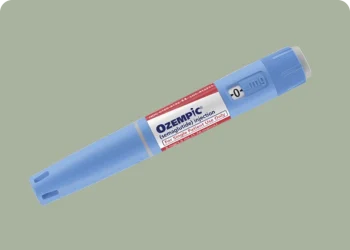
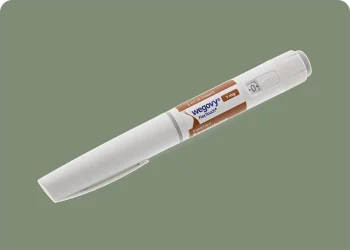
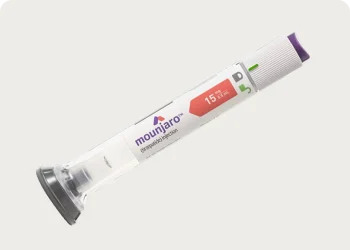
If fat loss is the goal, the treatments with substantial trial evidence are the approved GLP-1 medications — semaglutide 2.4 mg produced 14.9% mean reduction at 68 weeks; tirzepatide produced roughly 15.0%, 19.5% and 20.9% at 5 mg, 10 mg and 15 mg respectively at 72 weeks. That is the comparison AOD-9604 has to be measured against, and it is not close.
Beyond medication, the drivers worth assessing are measurable: thyroid function, insulin resistance, sleep quality and apnea, medications that promote weight gain, and hormonal change in midlife. See peptides for weight loss and the GLP-1 hub.
Get Started with JumpstartMD
JumpstartMD was founded in 2007 by Stanford-trained physicians, with weight-loss outcomes published in the peer-reviewed literature. You are seen face-to-face by licensed clinicians — in person at 14 California locations or online across California — beginning with 60-biomarker lab screening and InBody® body composition scanning, repeated at visits so lean mass is tracked rather than assumed. InBody scans are done in clinic; online members can book one at any of the 14 locations.
Can you get AOD-9604 on prescription?
AOD-9604 is not an FDA-approved drug. FDA's advisory committee voted against it in 2024, and its own clinical development did not produce results supporting approval.
If the symptom or goal that led you here has not been evaluated, our clinicians can assess the relevant causes and evidence-based options — that assessment does not assume another peptide is the answer. Peptide care is offered through a paid membership, subject to clinical evaluation. Contact JumpstartMD for membership details and pricing.
Clinician-guided peptide therapy may be considered after an individualized clinical evaluation. Certain therapies may use compounded medications, which are not FDA-approved, and evidence, risks and expected outcomes vary by treatment. See peptide therapy.
Book FREE Consultation
Share your details and a JumpstartMD team member will reach out shortly. Or call 408.478.3496 for your free, no-obligation consultation.
Share your details and a JumpstartMD team member will reach out when we open.
Related Articles
- Peptides for Weight Loss: What Actually Works
- GLP-1 Medications for Weight Loss — the evidence-backed pathway
- MOTS-c — the other metabolic peptide
- Are Peptides Legal in the US?
Frequently Asked Questions
What is AOD-9604 used for?
It is marketed for fat loss and metabolic support, based on being a fragment of human growth hormone associated with fat metabolism. It is not FDA-approved, and its commercial development as an obesity drug did not produce results sufficient to bring it to market.
Does AOD-9604 work for weight loss?
The clinical development program did not deliver results supporting approval, which is a more informative outcome than an absence of studies. FDA's advisory committee voted against recommending it in December 2024.
Is AOD-9604 FDA approved?
No. It appears on FDA's nominated-but-withdrawn list, and FDA's advisory committee voted against recommending it for the 503A Bulks List on December 4, 2024.
Is AOD-9604 safe?
FDA states it has identified no or only limited safety-related information, and has identified serious adverse events that may be associated with it, though causality is not clear. That is an unusual combination — limited data plus an unexplained signal.
Is AOD-9604 better than HGH for fat loss?
The design intent was to isolate growth hormone's fat-metabolism effect without its other actions. Whether that translates into meaningful fat loss in humans was tested and not established. Separately, HGH is federally restricted for weight loss and anti-aging use — see sermorelin vs HGH.
References
- U.S. Food and Drug Administration, Center for Drug Evaluation and Research, "Final Summary Minutes of the Pharmacy Compounding Advisory Committee Meeting, December 4, 2024," [Online]. Available: https://www.fda.gov/media/185642/download [Accessed: Oct. 5, 2026]. ↩
- U.S. Food and Drug Administration, "Certain Bulk Drug Substances for Use in Compounding that May Present Significant Safety Risks." [Online]. Available: https://www.fda.gov/drugs/human-drug-compounding/certain-bulk-drug-substances-use-compounding-may-present-significant-safety-risks [Accessed: Jul. 25, 2026]. ↩
- U.S. Food and Drug Administration, "FDA Briefing Document, Pharmacy Compounding Advisory Committee Meeting, December 4, 2024 — AOD-9604-Related Bulk Drug Substances (AOD-9604 (free base) and AOD-9604 acetate)," §II.C–D, [Online]. Available: https://www.fda.gov/media/183584/download [Accessed: Oct. 5, 2026]. ↩
- F. M. Ng, J. Sun, L. Sharma, R. Libinaka, W. J. Jiang, R. Gianello, "Metabolic studies of a synthetic lipolytic domain (AOD9604) of human growth hormone," Hormone Research, vol. 53, no. 6, pp. 274-278, 2000, [Online]. Available: https://doi.org/10.1159/000053183. PMID: 11146367. [Accessed: Oct. 5, 2026]. ↩