
At a glance
- Survodutide, code name BI 456906, is an investigational peptide that activates two hormone receptors, the glucagon receptor and the GLP-1 receptor 1, 2, 3.
- It is not FDA-approved: Drugs@FDA lists no approved survodutide product as of November 6, 2026 4. It is an investigational drug studied in phase 3 trials, two still recruiting 2, 5, 6, 7, 8.
- Studied in people for weight loss in adults with obesity or overweight, with or without type 2 diabetes, and for fatty liver disease 1, 2, 5, 6.
- Given in the trials as an injection under the skin, once weekly, except two twice-weekly groups in one phase 2 trial 1, 2, 5, 9.
- JumpstartMD does not prescribe survodutide.
What is survodutide?
Survodutide is an investigational peptide drug 3. Boehringer Ingelheim develops it under license from Zealand Pharma 2, 10. It is a dual agonist: one molecule that switches on two hormone receptors, the glucagon receptor and the GLP-1 receptor 1, 2.
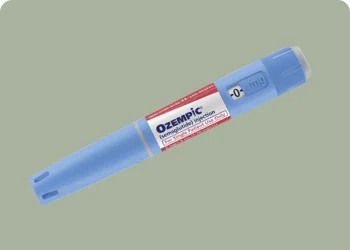
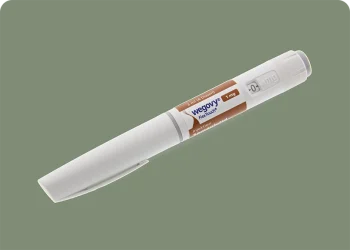
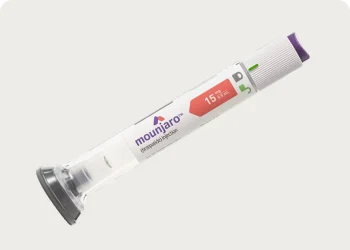
GLP-1, glucagon-like peptide-1, is an incretin hormone, which prompts the pancreas to release insulin after a meal 11. Semaglutide acts on the GLP-1 receptor, and tirzepatide acts on the GLP-1 and GIP receptors; survodutide pairs GLP-1 with glucagon instead 11, 2. Its trials have used the code name BI 456906 12.
Is survodutide FDA-approved?
Survodutide is not FDA-approved: Drugs@FDA lists no approved survodutide product as of November 9, 2026 4. It is an investigational drug studied in phase 3 trials, two still recruiting 2, 5, 6, 7, 8. The manufacturer's own release of April 28, 2026 says it "has not been approved for use" and that its "efficacy and safety has not been established" 10. No approved product means no FDA label: the prescribing and safety information an approved drug carries does not exist for survodutide 4.
Boehringer Ingelheim says FDA granted survodutide Fast Track designation in May 2021 and Breakthrough Therapy designation in September 2024, both for MASH with moderate or advanced fibrosis 10. A designation is not an approval. FDA describes Breakthrough Therapy designation as "a process designed to expedite the development and review of drugs" for a serious condition 13. It applies where early evidence suggests a substantial improvement over available therapy 13. The company's release gives no filing date; it says further trial results are expected during 2026 10.
See the FDA status of every peptide, updated weekly.
How does survodutide work?
Survodutide acts on two receptors, the glucagon receptor and the GLP-1 receptor 1, 2. Drugs that act on the GLP-1 receptor stimulate insulin release after food, delay stomach emptying, and curb glucagon release when blood sugar is high 11. The glucagon arm's contribution is proposed. The SYNCHRONIZE-MASLD authors write that glucagon receptor activity in the liver includes "increased fatty acid oxidation, which may enhance liver fat clearance" 2. They add that the mechanisms "remain to be fully elucidated" 2.
The two receptors have opposing effects on blood sugar, so the balance between them matters 2. In laboratory assays survodutide activates the human GLP-1 receptor about eight times more strongly than the glucagon receptor 2. The phase 2 MASH trial tested the hypothesis that the pair "may be more effective than GLP-1 receptor agonism alone" for MASH 1.
What does the research show?
Studied in people: a randomized, double-blind, placebo-controlled phase 2 trial, 387 adults with obesity or overweight and without diabetes, weight change at 46 weeks 12. Mean weight fell by 6.2% to 14.9% across the four survodutide groups, against 2.8% with placebo 12. Only 60% of participants completed the 46 weeks, a share similar in the survodutide and placebo groups 12.
Studied in people: SYNCHRONIZE-1, a randomized, double-blind phase 3 trial, 725 adults with obesity or overweight and without diabetes, weight change at 76 weeks 5. Mean weight fell by 12.2% and 13.0% in the two survodutide groups, against 5.4% with placebo 5. That is the trial's primary analysis, which counts the effect of participants who stopped early 5. Weight loss of at least 5% was reached by 72.6% and 71.9% of the two survodutide groups, against 46.3% on placebo 5. Boehringer Ingelheim's release of April 28, 2026 reports up to 16.6% against 3.2% by a different analysis, the "efficacy estimand"; those are the company's figures, not the journal's primary result 10.
Studied in people: SYNCHRONIZE-2, a randomized, double-blind phase 3 trial, 752 adults with obesity or overweight and type 2 diabetes, weight change at 76 weeks 6. Mean weight fell by 8.2% and 9.8% in the two survodutide groups, against 3.9% with placebo 6. Glycated hemoglobin, a measure of average blood sugar, fell by 0.9 and 0.8 percentage points from a baseline of 7.4%, against 0.2 points on placebo 6. ClinicalTrials.gov records both SYNCHRONIZE trials as completed, each designed to run 76 weeks 14, 15.
Studied in people: SYNCHRONIZE-MASLD, a randomized, double-blind, placebo-controlled phase 3 trial, 216 adults with obesity and at-risk fatty liver disease, liver fat and weight at 48 weeks 2. MASLD, metabolic dysfunction-associated steatotic liver disease, is fat in the liver together with a metabolic risk factor 2. "At-risk" in this trial meant signs of liver inflammation or scarring on noninvasive tests, or biopsy-confirmed MASH 2.
By the treatment-regimen analysis, 68.5% of the survodutide group cut liver fat by at least 30%, against 28.6% on placebo, and weight fell by 8.7% against 1.4% 2. The paper's other analysis, the efficacy estimand, gives 84.2% against 24.3% for liver fat and 12.2% against 1.0% for weight 2. Participants came from the United States and Spain only, and 41% of the survodutide group and 40% of the placebo group stopped treatment early 2, 16.
Studied in people: a randomized, placebo-controlled phase 2 trial, 293 adults with biopsy-confirmed MASH and fibrosis stage F1 to F3, liver biopsy at 48 weeks 1. MASH, metabolic dysfunction-associated steatohepatitis, is the progressive form of MASLD, with inflammation and liver cell injury 2. Improvement in MASH without worsening of fibrosis occurred in 43% to 62% across the three survodutide groups, against 14% on placebo 1. Fibrosis improved by at least one stage in 34% to 36% of survodutide participants, against 22% on placebo 1.
Studied in people: a randomized, double-blind phase 2 trial, 413 adults with type 2 diabetes on metformin, blood sugar at 16 weeks, with an open-label semaglutide arm 9. Glycated hemoglobin fell by 0.9 to 1.7 percentage points across the survodutide groups; one lower survodutide group matched semaglutide, 1.46 against 1.47 points 9. The higher survodutide groups lost more weight than the semaglutide group, up to 8.7% against 5.3% 9. The abstract gives no placebo figure for either measure, and the comparison is one 16-week trial with an unblinded semaglutide arm 9.
The published trials ran 76 weeks at most, and none was designed to test heart attacks, strokes or deaths 1, 2, 5, 6, 12, 9. SYNCHRONIZE-MASLD counted adjudicated major cardiovascular events, 2 against 1 2. SYNCHRONIZE-CVOT, a cardiovascular safety trial of 5,530 adults with obesity or overweight, is recorded as completed in June 2026; its results appear in no source opened for this page 17. Two phase 3 MASH trials, LIVERAGE and LIVERAGE-Cirrhosis, are recruiting about 1,800 and 1,590 adults, with primary completion dates in 2031 and 2029 7, 8.
What are the side effects?
Gastrointestinal effects dominate every survodutide trial. In SYNCHRONIZE-1, adults with obesity or overweight and without diabetes, gastrointestinal adverse events affected 80.9% and 89.7% of the two survodutide groups, against 47.9% on placebo 5. No deaths were reported 5.
In SYNCHRONIZE-2, adults with obesity or overweight and type 2 diabetes, the figures were 72.8% and 77.7%, against 38.6% 6. Both papers describe these events as mostly mild to moderate 5, 6. In the phase 2 obesity trial, adverse events of any kind affected 91% of survodutide recipients and 75% of placebo recipients 12.
In the phase 2 MASH trial, 293 adults with MASH and fibrosis, nausea affected 66% of survodutide participants against 23% on placebo 1. Diarrhea affected 49% against 23%, and vomiting 41% against 4% 1. Serious adverse events occurred in 8% with survodutide and 7% with placebo 1.
In SYNCHRONIZE-MASLD, 216 adults with obesity and at-risk MASLD, adverse events led 23.3% of the survodutide group to stop treatment, against 10.0% on placebo 2. Gastrointestinal events caused most of those stops 2. Serious adverse events occurred in 9.6% with survodutide and 11.4% with placebo; one placebo participant died and none on survodutide 2. Heart rate rose by a mean 3.6 beats per minute with survodutide at week 52, against 0.8 with placebo 2. The trial's adjudicators confirmed no case of drug-induced liver injury, acute pancreatitis, pancreatic cancer or thyroid cancer in the survodutide group; one survodutide participant had gallstones and gallbladder inflammation 2.
FDA has approved no survodutide product, so no FDA label exists to quote on safety 4.
In sport
Survodutide is not named on WADA's 2026 Prohibited List 18. WADA is the World Anti-Doping Agency. Neither its peptide-hormone section S2 nor its metabolic-modulator section S4 names survodutide, and the list mentions neither glucagon nor GLP-1 18. Section S0 of the list prohibits at all times "any pharmacological substance which is not addressed by any of the subsequent sections of the List and with no current approval by any governmental regulatory health authority for human therapeutic use (e.g. drugs under pre-clinical or clinical development or discontinued, designer drugs, substances approved only for veterinary use)" 18. FDA's record is the only regulator's record read here, and it shows no approval 4; this page draws no conclusion on whether S0 covers survodutide.
What JumpstartMD offers
JumpstartMD does not prescribe survodutide. Our peptide library covers it so you have the facts on its FDA status and the evidence, current as of November 9, 2026.
Book FREE Consultation
Share your details and a JumpstartMD team member will reach out shortly. Or call 408.478.3496 for your free, no-obligation consultation.
Share your details and a JumpstartMD team member will reach out when we open.
Disclaimer
Compounded medications are not FDA-approved, and FDA does not review their safety, effectiveness, or quality before they are marketed. A licensed clinician decides after an evaluation whether a peptide is appropriate for you, and not every patient will qualify.
Frequently Asked Questions
Is survodutide the same as semaglutide or tirzepatide?
Can I get survodutide from JumpstartMD?
No. JumpstartMD does not prescribe it, and no FDA-approved survodutide product exists as of November 6, 2026 4.
When will survodutide be approved?
No opened source gives a date. Boehringer Ingelheim's release of April 28, 2026 calls it investigational and expects further trial results during 2026 10. FDA describes the Breakthrough Therapy designation the company reports as a process to "expedite the development and review" of a drug, not as an approval 10, 13.
References
- A. J. Sanyal et al., "A Phase 2 Randomized Trial of Survodutide in MASH and Fibrosis," New England Journal of Medicine, vol. 391, no. 4, pp. 311-319, Jul. 2024, doi: 10.1056/nejmoa2401755. [Accessed: Nov. 9, 2026]. ↩
- L. M. Kaplan et al., "Survodutide in adults with obesity and metabolic dysfunction-associated steatotic liver disease: SYNCHRONIZE-MASLD, a randomized, double-blind, placebo-controlled phase 3 trial," Nature Medicine, vol. 32, no. 8, pp. 2948-2958, Aug. 2026, doi: 10.1038/s41591-026-04479-3. [Accessed: Nov. 9, 2026]. ↩
- T. Zimmermann et al., "BI 456906: Discovery and preclinical pharmacology of a novel GCGR/GLP-1R dual agonist with robust anti-obesity efficacy," Molecular Metabolism, vol. 66, art. no. 101633, Dec. 2022, doi: 10.1016/j.molmet.2022.101633. [Accessed: Nov. 10, 2026]. ↩
- U.S. Food and Drug Administration, "Drugs@FDA: FDA-Approved Drugs," searched for survodutide, no approved product, data updated Nov. 6, 2026. [Online]. Available: https://www.accessdata.fda.gov/scripts/cder/daf/ [Accessed: Nov. 9, 2026]. ↩
- C. W. le Roux et al., "Survodutide Once Weekly for the Treatment of Adults with Obesity," New England Journal of Medicine, vol. 395, no. 8, pp. 776-787, Aug. 2026, doi: 10.1056/NEJMoa2600751. [Accessed: Nov. 9, 2026]. ↩
- S. Wharton et al., "Survodutide Once Weekly in Adults with Obesity and Type 2 Diabetes," New England Journal of Medicine, published online Oct. 1, 2026, doi: 10.1056/NEJMoa2607219. [Accessed: Nov. 9, 2026]. ↩
- ClinicalTrials.gov, "LIVERAGE: A Study to Test Whether Survodutide Helps People With a Liver Disease Called NASH/MASH Who Have Moderate or Advanced Liver Fibrosis," NCT06632444, Boehringer Ingelheim, status Recruiting, last update posted Oct. 28, 2026. [Online]. Available: https://clinicaltrials.gov/study/NCT06632444 [Accessed: Nov. 9, 2026]. ↩
- ClinicalTrials.gov, "LIVERAGE - Cirrhosis: A Study to Test Whether Survodutide Helps People With a Liver Disease Called NASH/MASH Who Have Cirrhosis," NCT06632457, Boehringer Ingelheim, status Recruiting, last update posted Oct. 28, 2026. [Online]. Available: https://clinicaltrials.gov/study/NCT06632457 [Accessed: Nov. 9, 2026]. ↩
- M. Blüher et al., "Dose-response effects on HbA1c and bodyweight reduction of survodutide, a dual glucagon/GLP-1 receptor agonist, compared with placebo and open-label semaglutide in people with type 2 diabetes: a randomised clinical trial," Diabetologia, vol. 67, no. 3, pp. 470-482, Mar. 2024, doi: 10.1007/s00125-023-06053-9. [Accessed: Nov. 9, 2026]. ↩
- Boehringer Ingelheim, "Boehringer Ingelheim's novel glucagon/GLP-1 dual agonist survodutide achieved significant weight loss of 16.6% delivering meaningful metabolic improvement in people with obesity or overweight in Phase III trial," press release (page title "Results from Phase III SYNCHRONIZE-1 obesity trial"), Ingelheim, Germany, and Ridgefield, CT, Apr. 28, 2026. [Online]. Available: https://www.boehringer-ingelheim.com/us/human-health/metabolic-diseases/results-phase-iii-synchronize-1-obesity-trial [Accessed: Nov. 9, 2026]. ↩
- L. Collins and R. A. Costello, "Glucagon-Like Peptide-1 Receptor Agonists," in StatPearls [Internet], Treasure Island, FL: StatPearls Publishing, updated Feb. 29, 2024. [Online]. Available: https://www.ncbi.nlm.nih.gov/books/NBK551568/ [Accessed: Nov. 9, 2026]. ↩
- C. W. le Roux et al., "Glucagon and GLP-1 receptor dual agonist survodutide for obesity: a randomised, double-blind, placebo-controlled, dose-finding phase 2 trial," The Lancet Diabetes & Endocrinology, vol. 12, no. 3, pp. 162-173, Mar. 2024, doi: 10.1016/S2213-8587(23)00356-X. [Accessed: Nov. 9, 2026]. ↩
- U.S. Food and Drug Administration, "Breakthrough Therapy," content current as of Jan. 4, 2018. [Online]. Available: https://www.fda.gov/patients/fast-track-breakthrough-therapy-accelerated-approval-priority-review/breakthrough-therapy [Accessed: Nov. 9, 2026]. ↩
- ClinicalTrials.gov, "A Study to Test Whether Survodutide (BI 456906) Helps People Living With Overweight or Obesity Who do Not Have Diabetes to Lose Weight (SYNCHRONIZE-1)," NCT06066515, Boehringer Ingelheim, status Completed, last update posted Mar. 12, 2026. [Online]. Available: https://clinicaltrials.gov/study/NCT06066515 [Accessed: Nov. 9, 2026]. ↩
- ClinicalTrials.gov, "A Study to Test Whether Survodutide (BI 456906) Helps People Living With Overweight or Obesity Who Also Have Diabetes to Lose Weight (SYNCHRONIZE-2)," NCT06066528, Boehringer Ingelheim, status Completed, last update posted Aug. 6, 2026. [Online]. Available: https://clinicaltrials.gov/study/NCT06066528 [Accessed: Nov. 9, 2026]. ↩
- L. M. Kaplan et al., "Author Correction: Survodutide in adults with obesity and metabolic dysfunction-associated steatotic liver disease: SYNCHRONIZE-MASLD, a randomized, double-blind, placebo-controlled phase 3 trial," Nature Medicine, vol. 32, no. 10, p. 3913, Oct. 2026, doi: 10.1038/s41591-026-04650-w. [Accessed: Nov. 9, 2026]. ↩
- ClinicalTrials.gov, "A Study to Test the Effect of Survodutide (BI 456906) on Cardiovascular Safety in People With Overweight or Obesity (SYNCHRONIZE-CVOT)," NCT06077864, Boehringer Ingelheim, status Completed, completion date Jun. 30, 2026, last update posted Oct. 29, 2026. [Online]. Available: https://clinicaltrials.gov/study/NCT06077864 [Accessed: Nov. 9, 2026]. ↩
- World Anti-Doping Agency, "The 2026 Prohibited List, International Standard," effective Jan. 1, 2026. [Online]. Available: https://www.wada-ama.org/en/prohibited-list [Accessed: Nov. 8, 2026]. ↩