

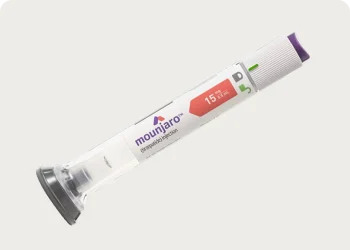

In a Nutshell
Elamipretide is FDA-approved as Forzinity for Barth syndrome only. That approval establishes nothing about the anti-aging, energy or weight-loss uses SS-31 is sold for.
SS-31 is unusual in this category: it is a real drug with a real approval, and that is precisely why the marketing around it is misleading.
Under its drug name elamipretide, SS-31 received FDA accelerated approval as Forzinity for the treatment of Barth syndrome — a rare inherited mitochondrial disease affecting primarily males — in adult and pediatric patients weighing at least 30 kg, to improve muscle strength 1, 2. It is the first FDA-approved treatment for Barth syndrome, which is a genuine milestone.
What that approval does not cover: energy, longevity, anti-aging, athletic performance, weight loss, or general "mitochondrial optimization" in people without Barth syndrome. Those are the uses it is marketed for, and none of them were studied in the trial that produced the approval.
An approval for an ultra-rare genetic disease is not evidence for a wellness application. When a seller cites "FDA approved" for SS-31, that claim is technically accurate and substantively misleading.
What SS-31 Is
SS-31 (elamipretide) is a small peptide that localizes to the inner mitochondrial membrane, where it interacts with cardiolipin — a phospholipid essential to the structure of that membrane and to the function of the electron transport chain that produces cellular energy.
In Barth syndrome, a genetic defect in the TAZ gene disrupts cardiolipin remodeling, impairing mitochondrial function and causing cardiomyopathy, muscle weakness and neutropenia. Elamipretide is designed to stabilize cardiolipin-containing membranes and improve mitochondrial function — which is why that specific disease was the right target for it.
The mechanism is real and well characterized. The question is whether it does anything useful in people whose mitochondria are working normally.
The Approval, in Detail
| Drug name | Elamipretide |
| Brand | Forzinity |
| Sponsor | Stealth BioTherapeutics |
| Approval type | Accelerated approval |
| Indication | Barth syndrome, adult and pediatric patients ≥30 kg |
| Approved to | Improve muscle strength |
| Randomized primary endpoints | Not met — not superior to placebo on 6-minute walk distance or Total Fatigue Score |
| Accelerated-approval basis | Knee extensor muscle strength — an intermediate endpoint, with increases observed only in the open-label extension |
| Confirmatory requirement | Continued approval may be contingent on verification of clinical benefit |
| Key trial | TAZPOWER |
First, what the trial actually showed. Forzinity was evaluated in a randomized, double-blind, placebo-controlled crossover trial in 12 subjects with genetically confirmed Barth syndrome, plus a 192-week open-label extension. The primary endpoints were six-minute walk distance and Total Fatigue Score — and elamipretide was not superior to placebo on either 2. Increases in knee extensor muscle strength were not observed during the randomized trial; they appeared during the uncontrolled open-label extension, and FDA accepted that as an intermediate endpoint reasonably likely to predict benefit 2.
That is the single most important fact about this approval, and it is why the page exists. A reader told only "approved on knee extensor strength" would reasonably assume a controlled trial demonstrated it. It did not.
Two further features matter for anyone reading wellness marketing about it.
It is an accelerated approval, granted on an intermediate endpoint — knee extensor muscle strength — rather than a definitive clinical outcome. Accelerated approvals carry a requirement for confirmatory evidence and can be withdrawn if it does not materialize. This is not a criticism; it is a standard and appropriate pathway for ultra-rare disease. But it is a more provisional status than "FDA approved" conveys on its own.
The population is extremely narrow. Barth syndrome affects a very small number of people worldwide. Nothing about the trial population resembles a healthy adult seeking more energy.
What This Does Not Support
Evidence tier for wellness use: C.
| Claim commonly made | What the evidence supports |
|---|---|
| Boosts cellular energy in healthy adults | Not studied |
| Improves endurance or athletic performance | Not studied in this population |
| Slows aging | Not supported |
| Helps with weight loss | No evidence |
| "FDA approved" | True — for Barth syndrome only, on an intermediate endpoint |
There is preclinical and early clinical research on elamipretide in other mitochondrial conditions, and that work is legitimate. But research interest in a broader area is not the same as demonstrated benefit, and it is a considerable distance from a healthy adult buying a vial online.
There is also a plausible-mechanism trap worth naming: if a therapy works by correcting a specific mitochondrial defect, it does not follow that it improves function where no such defect exists. Fixing something broken and enhancing something intact are different problems.
Why Is SS-31 So Expensive?
Forzinity is an FDA-approved prescription product — approved for Barth syndrome — made and distributed under an approved application. A product sold online as "SS-31" is not Forzinity, and has not been shown equivalent in identity, purity, potency, sterility or clinical performance — so comparing their prices per milligram compares two different things. Orphan-drug pricing reflects development costs, exclusivity, reimbursement and manufacturer decisions; attributing it to any single factor would overstate what we know.
Safety and What Is Unknown
For the approved use the label is specific: serious hypersensitivity to any ingredient is a contraindication; benzyl alcohol toxicity means it must not be used in neonates; injection-site reactions are the most common adverse reactions; and dose reduction is required in severe renal impairment 2.
For wellness use in healthy adults, essentially nothing is established: no long-term data, no dosing studies, no interaction studies in this population. Add the product-quality problem for anything obtained outside a pharmacy — see peptide sourcing and quality.
Pregnancy and lactation data are limited; neither is listed as a formal contraindication, so that decision belongs with the specialist managing the disease.
Red Flags — Seek Care Now
- Fever, spreading redness, swelling or pus at an injection site
- Difficulty breathing, facial or throat swelling, widespread hives — call 911
- Chest pain, palpitations or fainting — general symptoms warranting urgent assessment regardless of cause; not established Forzinity effects
Tell any treating clinician what you have used.
On Dosing
This page does not provide dosing protocols. Dosing for the approved indication is specified in the prescribing information and applies to Barth syndrome patients under specialist care. There is no established dose for wellness use because no such study has been done.
What You Can Do About It
If persistent fatigue or poor exercise tolerance brought you here, both deserve investigation rather than a mitochondrial supplement. Thyroid dysfunction, iron and vitamin deficiency, sleep disorders, medication effects, cardiac or respiratory disease and deconditioning are among the possible causes. Laboratory testing identifies some contributors and indicates when sleep, cardiac, pulmonary or specialist evaluation is needed — it cannot guarantee a cause will be found. Genuine primary mitochondrial disease is rare and is diagnosed, not self-treated.
Get Started with JumpstartMD
JumpstartMD was founded in 2007 by Stanford-trained physicians. Our programs are built around labs, hormones and body composition, delivered by licensed clinicians you see face-to-face — in person at 14 California locations or online across California — beginning with 60-biomarker lab screening and InBody® body composition scanning. Where fatigue has a measurable contributor, that assessment can identify some of them and indicate when further evaluation or specialist referral is needed — it cannot determine every cause from laboratory testing alone. InBody scans are done in clinic; online members can book one at any of the 14 locations.
Can you get SS-31 on prescription?
The approved product, Forzinity, is indicated for Barth syndrome and prescribed under specialist care. That approval does not support use for wellness, energy or longevity.
If the symptom or goal that led you here has not been evaluated, our clinicians can assess the relevant causes and evidence-based options — that assessment does not assume another peptide is the answer. Peptide care is offered through a paid membership, subject to clinical evaluation. Contact JumpstartMD for membership details and pricing.
Clinician-guided peptide therapy may be considered after an individualized clinical evaluation. Certain therapies may use compounded medications, which are not FDA-approved, and evidence, risks and expected outcomes vary by treatment. See peptide therapy.
Book FREE Consultation
Share your details and a JumpstartMD team member will reach out shortly. Or call 408.478.3496 for your free, no-obligation consultation.
Share your details and a JumpstartMD team member will reach out when we open.
Related Articles
- MOTS-c — the other mitochondrial peptide, with a very different regulatory position
- Are Peptides Legal in the US?
- The Downsides of Peptide Therapy
- Peptide Therapy: What It Is and Who It's For
Frequently Asked Questions
What is the use of SS-31 peptide?
As elamipretide (brand name Forzinity), SS-31 received FDA accelerated approval to improve muscle strength in patients with Barth syndrome, a rare inherited mitochondrial disease. It is marketed online for energy, endurance and anti-aging in healthy adults — uses that were not studied and are not covered by the approval.
Is SS-31 FDA approved?
Yes, but narrowly. Elamipretide is approved as Forzinity for Barth syndrome in patients weighing at least 30 kg, via accelerated approval based on knee extensor muscle strength. That is a genuine approval for a specific rare disease — not a general endorsement, and not applicable to wellness use.
Can SS-31 help with weight loss?
There is no evidence that it does. Weight loss was not an endpoint in the approval program, and there are no controlled trials of SS-31 for weight loss in any population.
How long should you take SS-31?
For the approved indication, duration is determined by the specialist managing that condition. For wellness use there is no evidence-based answer, because no such studies exist.
Why is SS-31 so expensive?
The approved product is an orphan drug for an ultra-rare disease, priced as rare-disease therapies are. Research-grade "SS-31" sold online is a different product from a different supply chain with no assurance of contents — the price difference reflects what you are actually buying.
Is SS-31 the same as MOTS-c?
No. Both relate to mitochondria but differently — SS-31 targets the inner mitochondrial membrane and cardiolipin; MOTS-c is a peptide encoded by mitochondrial DNA. Their regulatory positions also differ sharply: SS-31 has an approved form for a rare disease, while MOTS-c has none and no human exposure data identified by FDA.
References
- Pharmacy Times, "FDA Grants Accelerated Approval to Elamipretide, First Treatment for Barth Syndrome." [Online]. Available: https://www.pharmacytimes.com/view/fda-grants-accelerated-approval-to-elamipretide-first-treatment-for-barth-syndrome [Accessed: Jul. 25, 2026]. ↩
- Stealth BioTherapeutics Inc., "FORZINITY (elamipretide hydrochloride) injection, for subcutaneous use — Prescribing Information," Initial U.S. Approval 2025 (NDA 215244, accelerated approval, Sep. 19, 2025). DailyMed, U.S. National Library of Medicine, [Online]. Available: https://dailymed.nlm.nih.gov/dailymed/drugInfo.cfm?setid=146bf34c-76f2-48db-ac07-fb29cce2cd75 [Accessed: Oct. 5, 2026]. ↩
- W. R. Thompson, R. Manuel, A. Abbruscato, J. Carr, J. Campbell, B. Hornby, F. M. Vaz, H. J. Vernon, "Long-term efficacy and safety of elamipretide in patients with Barth syndrome: 168-week open-label extension results of TAZPOWER," Genetics in Medicine, vol. 26, no. 7, p. 101138, Jul. 2024, [Online]. Available: https://doi.org/10.1016/j.gim.2024.101138. PMID: 38602181. [Accessed: Jul. 25, 2026]. ↩
- C. Tung, F. Varzideh, E. Farroni, P. Mone, U. Kansakar, S. S. Jankauskas, G. Santulli, "Elamipretide: A Review of Its Structure, Mechanism of Action, and Therapeutic Potential," International Journal of Molecular Sciences, vol. 26, no. 3, Jan. 2025, [Online]. Available: https://doi.org/10.3390/ijms26030944. PMID: 39940712. [Accessed: Jul. 25, 2026]. ↩
- U.S. Food and Drug Administration, "Accelerated Approval Program." [Online]. Available: https://www.fda.gov/drugs/nda-and-bla-approvals/accelerated-approval-program [Accessed: Oct. 5, 2026]. ↩