
At a glance
- Exenatide is a synthetic peptide, a copy of exendin-4 from Gila monster venom, and a GLP-1 receptor agonist 1, 2.
- It is approved by FDA for type 2 diabetes, as an adjunct to diet and exercise, since 2005 1.
- It is given by injection under the skin 1.
- FDA lists its U.S. brands, Byetta, Bydureon and Bydureon BCise, and the one generic as discontinued; the manufacturer's dates were in October 2024 3, 4.
- JumpstartMD does not prescribe exenatide.
Evidence strength
- No published studies found
- Animal or lab only
- Early human studies
- Human trials
- Approved for a use
FDA approved exenatide for glucose control in type 2 diabetes, on randomized trials of hundreds of adults and 82 children 1.
What is exenatide?
Exenatide is a synthetic copy of exendin-4, a peptide first isolated from the venom of the Gila monster 2. It is a chain of 39 amino acids whose structure overlaps about half of GLP-1, a gut hormone that raises insulin release after meals 1, 2. Medicines that act like GLP-1 are called GLP-1 receptor agonists, and exenatide is one 1. GLP-1 breaks down quickly in the body, while exendin-4 is far more stable, which made it usable as a drug 2.
Is exenatide FDA-approved?
Yes. Exenatide is approved by FDA for type 2 diabetes, as an adjunct to diet and exercise, in adults and children aged 10 and older 1. It is a prescription medicine 1. It is not approved for type 1 diabetes, and the label lists no weight indication 1.
FDA's Drugs@FDA lists its U.S. brands, Byetta, Bydureon and Bydureon BCise, and the one generic, with marketing status 'Discontinued' 4. In FDA's glossary, 'discontinued' covers approved products no longer marketed, including some whose approvals were later withdrawn for reasons other than safety or efficacy 4. The manufacturer's discontinuation dates, October 25 and 28, 2024, are reported in a UnitedHealthcare notice of December 19, 2024 3.
FDA's record shows no exenatide product with an active marketing status, apart from a 2009 Byetta application FDA has not updated 4. Whether pharmacy stock remains is not something Drugs@FDA shows 4. Where a product is available, the route to it is a licensed clinician's prescription 1.
See the FDA status of every peptide, updated weekly.
How does exenatide work?
Exenatide binds and activates the GLP-1 receptor, shown in cells, and so acts as the body's GLP-1 does 1. It raises insulin release from the pancreas when blood glucose is high, lowers glucagon release when glucagon is inappropriately raised, and slows the emptying of the stomach 1. GLP-1 is an incretin, one of the gut hormones that drive insulin release after a meal 2. Furman's review also describes GLP-1 as suppressing appetite, an action the label's mechanism section does not record 1, 2.
What does the research show?
The evidence comes from controlled trials in people with type 2 diabetes, summarized on the FDA label 1. Studied in people: a randomized, open-label trial of 375 adults compared the extended-release form, Bydureon BCise, with the original Byetta over 28 weeks 1. HbA1c, the blood test the trials used to measure glucose control, fell by 1.39 points against 1.03 1. Forty percent of patients against 38 percent reached an HbA1c below 7 percent 1.
A second randomized trial of 364 adults on metformin compared Bydureon BCise with sitagliptin and placebo over 28 weeks 1. HbA1c fell by 1.07 points against 0.79 and 0.59 1. Body weight fell by about 1.4 kilograms on exenatide and rose by 0.4 on placebo 1.
Studied in people for heart safety: EXSCEL, a randomized, placebo-controlled trial of 14,752 adults, found no increase in major cardiovascular events over a median of 38.7 months 1. Studied in children: a randomized, placebo-controlled trial of 82 patients aged 10 to 17 found a greater fall in HbA1c than placebo over 24 weeks 1. HbA1c fell by 0.25 points on exenatide and rose by 0.45 on placebo, a difference of 0.71 points with a 95 percent confidence interval from 1.42 to 0 1. No published human trial of exenatide for weight management, or in people without diabetes, was found among this page's sources as of November 9, 2026.
The later GLP-1 drugs were tested for weight in separate trials, not head to head with exenatide, in people without diabetes and over longer periods 5, 6, 7. Exenatide's own trials were in type 2 diabetes, where body weight fell by about 1.4 kilograms over 28 weeks, so the figures sit side by side, not against each other 1.
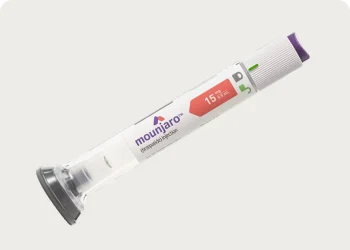
Liraglutide, in a 56-week double-blind trial of 3,731 adults with obesity or overweight, cut body weight by a mean 8.4 kilograms against 2.8 on placebo 5. Semaglutide cut weight 14.9 percent against 2.4 over 68 weeks in 1,961 adults, and tirzepatide 15 to 21 percent against 3.1 over 72 weeks in 2,539 adults 6, 7. Mounjaro, tirzepatide's type 2 diabetes label, approves it for glucose control and records falls of 6 to 8 kilograms against 1 on placebo over 40 weeks 8. A second label, Zepbound, approves tirzepatide for long-term weight reduction in adults with obesity or overweight 9.
What are the side effects?
In the pooled 28-week adult trials, 526 patients took Bydureon BCise 1. The most common adverse reactions were injection-site nodules (10.5 percent) and nausea (8.2 percent) 1. Headache, diarrhea, vomiting and injection-site itching were each reported by 3 to 5 percent 1. About 4 percent stopped treatment because of adverse reactions 1.
FDA's label carries a boxed warning at its head: exenatide extended-release caused thyroid C-cell tumors in rats, and whether it does so in humans is unknown 1. The label also warns of acute pancreatitis, low blood sugar when combined with insulin or insulin secretagogues, and acute kidney injury 1. It lists serious allergic reactions, low platelets, gallbladder disease, and pulmonary aspiration under anesthesia too 1.
In sport
Exenatide is not named on WADA's 2026 Prohibited List, and GLP-1 receptor agonists are not a listed class 10. WADA, the World Anti-Doping Agency, names neither exenatide nor its class in section S2 (peptide hormones) or S4 (metabolic modulators) 10.
What JumpstartMD offers
JumpstartMD does not prescribe exenatide. Our peptide library covers it so you have the facts on its FDA status and the evidence, current as of November 9, 2026.
Book FREE Consultation
Share your details and a JumpstartMD team member will reach out shortly. Or call 408.478.3496 for your free, no-obligation consultation.
Share your details and a JumpstartMD team member will reach out when we open.
Disclaimer
Compounded medications are not FDA-approved, and FDA does not review their safety, effectiveness, or quality before they are marketed. A licensed clinician decides after an evaluation whether a peptide is appropriate for you, and not every patient will qualify.
Frequently Asked Questions
Is exenatide still available in the United States?
Is exenatide approved for weight loss?
Where does exenatide come from?
It is a synthetic copy of exendin-4, a peptide isolated from Gila monster venom, which reached the market as Byetta in 2005 2.
References
- U.S. Food and Drug Administration, "Bydureon Bcise (exenatide synthetic): Prescribing information," 2024. [Online]. Available: https://www.accessdata.fda.gov/drugsatfda_docs/label/2024/209210s024lbl.pdf [Accessed: Nov. 9, 2026]. ↩
- B. L. Furman, "The development of Byetta (exenatide) from the venom of the Gila monster as an anti-diabetic agent," Toxicon : official journal of the International Society on Toxinology, vol. 59, no. 4, pp. 464-71, Mar. 2012, doi: 10.1016/j.toxicon.2010.12.016. [Accessed: Nov. 9, 2026]. ↩
- uhcprovider.com, "Discontinuation of Bydureon BCise and Byetta | UHCprovider.com." [Online]. Available: https://www.uhcprovider.com/en/resource-library/news/2024/discontinuation-bydureon-bcise-byetta.html (accessed Nov. 9, 2026). ↩
- U.S. Food and Drug Administration, "Drugs@FDA: FDA-Approved Drugs," NDA 021773, NDA 022200, NDA 209210 and ANDA 206697, marketing status "Discontinued"; NDA 021919, marketing status "Prescription"; and the Drugs@FDA Glossary, "Discontinued Drug Product." [Online]. Available: https://www.accessdata.fda.gov/scripts/cder/daf/index.cfm?event=overview.process&ApplNo=021773 (and ApplNo=022200, 209210, 206697, 021919; glossary at index.cfm?event=glossary.page) [Accessed: Nov. 9, 2026]. ↩
- X. Pi-Sunyer et al., "A Randomized, Controlled Trial of 3.0 mg of Liraglutide in Weight Management," New England Journal of Medicine, vol. 373, no. 1, pp. 11-22, Jul. 2015, doi: 10.1056/nejmoa1411892. [Accessed: Nov. 9, 2026]. ↩
- J. P. Wilding et al., "Once-Weekly Semaglutide in Adults with Overweight or Obesity," New England Journal of Medicine, vol. 384, no. 11, pp. 989-1002, Mar. 2021, doi: 10.1056/nejmoa2032183. [Accessed: Nov. 9, 2026]. ↩
- A. M. Jastreboff et al., "Tirzepatide Once Weekly for the Treatment of Obesity," New England Journal of Medicine, vol. 387, no. 3, pp. 205-216, Jul. 2022, doi: 10.1056/nejmoa2206038. [Accessed: Nov. 9, 2026]. ↩
- U.S. Food and Drug Administration, "Mounjaro (tirzepatide): Prescribing information," 2025. [Online]. Available: https://www.accessdata.fda.gov/drugsatfda_docs/label/2025/215866s031lbl.pdf [Accessed: Nov. 9, 2026]. ↩
- U.S. Food and Drug Administration, "Zepbound (tirzepatide): Prescribing information," 2026. [Online]. Available: https://www.accessdata.fda.gov/drugsatfda_docs/label/2026/217806s041lbl.pdf [Accessed: Nov. 9, 2026]. ↩
- World Anti-Doping Agency, "The 2026 Prohibited List, International Standard," effective Jan. 1, 2026. [Online]. Available: https://www.wada-ama.org/en/prohibited-list [Accessed: Nov. 8, 2026]. ↩