



Metformin vs. Ozempic
In a Nutshell
Metformin and Ozempic are different classes of type 2 diabetes medication that are often used together, not either/or: metformin is a low-cost oral pill taken daily and is the usual first-line drug, while Ozempic (semaglutide) is a more powerful once-weekly injection that adds substantial weight loss and proven heart and kidney protection.
Metformin lowers blood sugar modestly and is roughly weight-neutral; Ozempic lowers it more and drives meaningful weight loss — at a far higher price [1], [2], [3].
For most people newly diagnosed with type 2 diabetes, metformin comes first — it's cheap, safe, and well-proven.
Ozempic is typically added (or chosen earlier) when more blood-sugar lowering is needed, when weight loss is a priority, or when there is heart or kidney disease, where semaglutide has FDA-approved benefits that metformin does not [2], [3], [4], [5]. They work by completely different mechanisms and have different risks — which is exactly why they pair well.
Metformin vs. Ozempic at a glance
| Metformin | Ozempic | |
|---|---|---|
| Drug class | Biguanide | GLP-1 receptor agonist |
| Form | Oral tablet, once or twice daily | Once-weekly subcutaneous injection |
| Typical role | First-line for type 2 diabetes | More potent add-on / when weight or organ protection matters |
| HbA1c reduction | ~1–1.5 percentage points | ~1.5–1.8 percentage points |
| Weight effect | Weight-neutral to modest loss | Substantial weight loss |
| Heart / kidney benefit | Long safety record; not a primary outcome drug | Yes — ↓ cardiovascular events and ↓ kidney-disease progression |
| Approved for weight loss? | No | No (sibling Wegovy is) |
| Boxed warning | Lactic acidosis (rare) | Thyroid C-cell tumors (MTC/MEN2) |
| Common side effects | Diarrhea, nausea, abdominal upset (often transient); B12 deficiency long-term | Nausea, diarrhea, vomiting, constipation |
| Approx. cost (pre-insurance) | ~$4–$15/month (generic) | ~$1,000/month |
Are metformin and Ozempic the same kind of drug?
No — they are completely different classes of medication that lower blood sugar in different ways. Metformin is a biguanide, an oral pill that has been the foundation of type 2 diabetes treatment for decades. Ozempic is semaglutide, a once-weekly GLP-1 receptor agonist injection.
They are not interchangeable, and for many people they are used together rather than chosen one over the other [1], [2], [3].
What is metformin?
Metformin (brand name Glucophage, now almost always generic) is the standard first-line medication for type 2 diabetes. It is an inexpensive oral tablet taken once or twice daily, titrated up to a maximum of about 2,000–2,550 mg per day.
It mainly works by reducing the amount of glucose the liver releases and improving the body's sensitivity to insulin, and it lowers HbA1c by roughly 1 to 1.5 percentage points without causing low blood sugar on its own [1]. The American Diabetes Association continues to recommend it as a foundational option for most people starting treatment [3].
What is Ozempic?
Ozempic (semaglutide) is a once-weekly injection FDA-approved for type 2 diabetes — and, beyond blood sugar, to reduce the risk of major cardiovascular events in adults with type 2 diabetes and heart disease, and (as of 2025) to slow chronic kidney disease in type 2 diabetes [2], [4], [5].
It is a GLP-1 receptor agonist dosed from 0.25 mg up to 2 mg once weekly, and it lowers HbA1c by roughly 1.5 to 1.8 percentage points while producing meaningful weight loss. Ozempic is widely used off-label for weight loss but is not FDA-approved for it — that is the role of Wegovy, which contains the same drug at a higher dose [2], [6].
How they work
The two drugs act on entirely different pathways. Metformin lowers the liver's glucose output and improves insulin sensitivity in the body's tissues [1].
Ozempic mimics GLP-1, a gut hormone released after eating: it prompts insulin when blood sugar is high, slows stomach emptying, and reduces appetite — which is why it drives weight loss that metformin does not [2].
Because their mechanisms don't overlap, combining them produces additive blood-sugar lowering, which is one reason they are so often prescribed together.
Effectiveness: blood sugar and weight
Ozempic is the more powerful drug for both blood sugar and weight. Metformin lowers HbA1c by about 1 to 1.5 percentage points and is essentially weight-neutral — some people lose a few pounds, but it is not a weight-loss medication [1], [3].
Ozempic lowers HbA1c somewhat more (roughly 1.5 to 1.8 points) and produces substantial weight loss; at the higher (weight-management) dose, semaglutide produced a mean −14.9% of body weight in its obesity trial [2], [6].
If the goal is weight loss or maximal blood-sugar control, Ozempic clearly does more — but metformin's value is its safety, simplicity, and cost, not its raw potency.
They're often used together
This is the key point most comparisons miss: metformin and Ozempic are not rivals so much as teammates. Guidelines generally start most people with type 2 diabetes on metformin, then add a second agent when more control is needed.
A GLP-1 receptor agonist like semaglutide is specifically recommended when a person has cardiovascular disease, chronic kidney disease, or when weight management is a priority — often regardless of how well metformin is controlling blood sugar [3].
Many people end up on both: metformin as the inexpensive base, Ozempic for the extra blood-sugar lowering, weight loss, and organ protection.
Heart and kidney protection
Ozempic has dedicated outcome data that metformin does not. In the SUSTAIN-6 trial, semaglutide cut major adverse cardiovascular events by 26% versus placebo in people with type 2 diabetes, and in the FLOW trial it reduced major kidney-disease events by 24% [4], [5].
Metformin has a long track record and is considered safe for the heart, but it is not approved on the strength of a modern cardiovascular- or kidney-outcomes trial the way semaglutide is. For someone with type 2 diabetes plus heart or kidney disease, that proven protection is a major reason a clinician adds Ozempic [2], [3].
Dosing & administration
Metformin
An oral tablet, typically started at 500 mg once or twice daily with meals and titrated up over weeks to a maximum of about 2,000–2,550 mg per day; an extended-release version is taken once daily to ease stomach upset [1].
Ozempic
A once-weekly injection in a prefilled pen: 0.25 mg (start) → 0.5 → 1 → 2 mg maximum, stepped up about every 4 weeks to limit nausea [2].
Side effects & safety
Both are most likely to cause gastrointestinal side effects, especially early on. Metformin commonly causes diarrhea, nausea, and abdominal discomfort, which often fade with time or with the extended-release form; long-term use can lower vitamin B12, so levels are sometimes monitored [1].
Ozempic causes nausea, diarrhea, vomiting, and constipation that are usually worst just after starting or increasing the dose [2].
Serious risks & boxed warnings
Each carries a different boxed warning. Metformin's is for lactic acidosis — a rare but serious buildup of acid in the blood, more likely with significant kidney impairment, dehydration, excess alcohol, or serious illness [1].
Ozempic's is for thyroid C-cell tumors seen in rodents, and it can also cause pancreatitis, gallbladder disease, and low blood sugar when combined with insulin or a sulfonylurea [2].
Who should not take them (and key cautions)
Metformin is contraindicated when kidney function is significantly reduced (an eGFR below 30 mL/min/1.73 m²), and starting it is not recommended at an eGFR of 30–45; it is also paused around contrast-imaging procedures and major illness [1].
Ozempic is contraindicated with a personal or family history of medullary thyroid carcinoma (MTC) or MEN 2, and because semaglutide clears slowly it should be stopped at least 2 months before a planned pregnancy [2]. Tell your clinician your full history and kidney function before starting either.
Cost & insurance coverage
This is the starkest difference between them. Generic metformin costs only about $4 to $15 a month and is covered by virtually every plan.
Ozempic's list price is roughly $1,000 a month, and coverage depends heavily on a type 2 diabetes diagnosis; manufacturer savings programs and a supervised program like JumpstartMD's can change the real out-of-pocket cost [1], [2]. For many people, metformin's affordability is precisely why it stays in the regimen even after Ozempic is added.
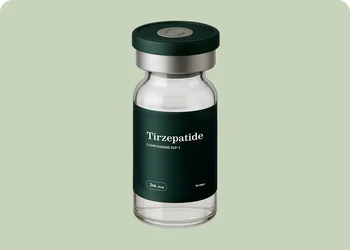
A note on compounded versions: compounded GLP-1 medications can be a lower-cost route, and the rules around them shifted as the recent shortages resolved [7]. Quality and physician oversight vary by source, so a compounded option should come from a licensed, supervised medical program using a reputable compounding pharmacy — not an anonymous online seller.
JumpstartMD prescribes and supervises these medications, including compounded options where appropriate.
Which is right for you?
- Newly diagnosed type 2 diabetes → metformin is usually the first step: effective, safe, and inexpensive [3].
- You need more blood-sugar control, weight loss, or organ protection → Ozempic adds potency, weight loss, and proven heart/kidney benefit [2], [4], [5].
- Cost is the deciding factor → metformin is a fraction of the price and remains a sensible foundation.
- Most people don't have to choose → the two are frequently taken together for additive benefit.
The right regimen depends on your blood sugar, weight, other conditions, kidney function, and budget — exactly what a supervised consultation sorts out. JumpstartMD physicians prescribe and manage both metformin and semaglutide, individually or together, including dosing and side-effect management.
Book FREE Consultation
Not sure which medication is right for you? JumpstartMD physicians prescribe and manage all of these. Share your details and a team member will reach out — or call 408.478.3496 for your free, no-obligation consultation.
Not sure which medication is right for you? JumpstartMD physicians prescribe and manage all of these. Share your details and a team member will reach out when we open — or get started online right now.
Frequently Asked Questions
Is Ozempic better than metformin?
For lowering blood sugar and especially for weight loss, Ozempic is more powerful, and it has proven heart- and kidney-protection benefits metformin lacks. But metformin is far cheaper, very safe, and the standard first step — and the two are often used together rather than one replacing the other. "Better" depends on your goals, other conditions, and budget.
Can you take metformin and Ozempic together?
Yes — this is a common and well-established combination. They work by different mechanisms, so taking both gives additive blood-sugar control, and Ozempic adds weight loss and organ protection on top of metformin's inexpensive baseline. Your clinician manages the doses and any side effects.
Does metformin cause weight loss like Ozempic?
Not really. Metformin is roughly weight-neutral — some people lose a few pounds, but it is not a weight-loss drug. Ozempic (and especially its higher-dose sibling Wegovy) produces substantial weight loss. If weight is the main goal, metformin alone usually isn't enough.
Which is safer, metformin or Ozempic?
Both have long enough use to be well understood, but their risks differ. Metformin's main serious risk is rare lactic acidosis, and it's limited by reduced kidney function; Ozempic carries a boxed warning for thyroid C-cell tumors and risks like pancreatitis. Which is safer for you depends on your kidney function and medical history, which a clinician reviews.
Is metformin cheaper than Ozempic?
By a wide margin. Generic metformin runs about $4–$15 a month, while Ozempic's list price is around $1,000 a month. Insurance and savings programs change Ozempic's real cost, but metformin is dramatically less expensive — a big reason it stays in the regimen.
Can metformin replace Ozempic?
Usually not, if Ozempic was prescribed for its stronger blood-sugar lowering, weight loss, or heart/kidney protection — metformin can't match those. They're better thought of as complementary. Never stop a prescribed medication without talking to your clinician.
References
- Bristol-Myers Squibb, "Highlights of Prescribing Information: Glucophage® (metformin hydrochloride) tablets and Glucophage® XR extended-release tablets," U.S. Food and Drug Administration. [Online]. Available: https://www.accessdata.fda.gov/drugsatfda_docs/label/2018/020357s034,021202s018lbl.pdf. [Accessed: Jun. 28, 2026]. ↩
- Novo Nordisk, "Highlights of Prescribing Information: Ozempic® (semaglutide) injection, for subcutaneous use," U.S. Food and Drug Administration. [Online]. Available: https://www.accessdata.fda.gov/drugsatfda_docs/label/2025/209637s025lbl.pdf. [Accessed: Jun. 28, 2026]. ↩
- American Diabetes Association Professional Practice Committee, "9. Pharmacologic approaches to glycemic treatment: Standards of Care in Diabetes—2025," Diabetes Care, vol. 48, no. Suppl. 1, pp. S181–S206, Jan. 2025. doi:10.2337/dc25-S009. PMID: 39651989. ↩
- S. P. Marso, S. C. Bain, A. Consoli, et al., "Semaglutide and cardiovascular outcomes in patients with type 2 diabetes (SUSTAIN-6)," New England Journal of Medicine, vol. 375, no. 19, pp. 1834–1844, Nov. 2016. doi:10.1056/NEJMoa1607141. PMID: 27633186. ↩
- V. Perkovic, K. R. Tuttle, P. Rossing, et al., "Effects of semaglutide on chronic kidney disease in patients with type 2 diabetes (FLOW)," New England Journal of Medicine, vol. 391, no. 2, pp. 109–121, Jul. 2024. doi:10.1056/NEJMoa2403347. PMID: 38785209. ↩
- J. P. H. Wilding, R. L. Batterham, S. Calanna, et al., "Once-weekly semaglutide in adults with overweight or obesity (STEP 1)," New England Journal of Medicine, vol. 384, no. 11, pp. 989–1002, Mar. 2021. doi:10.1056/NEJMoa2032183. PMID: 33567185. ↩
- U.S. Food and Drug Administration, "FDA clarifies policies for compounders as national GLP-1 supply begins to stabilize," FDA Drug Alerts and Statements, 2025. [Online]. Available: https://www.fda.gov/drugs/drug-alerts-and-statements/fda-clarifies-policies-compounders-national-glp-1-supply-begins-stabilize. [Accessed: Jun. 28, 2026]. ↩