
In a Nutshell
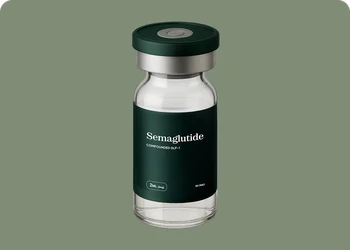
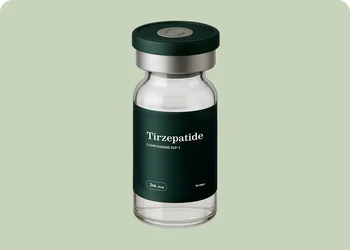
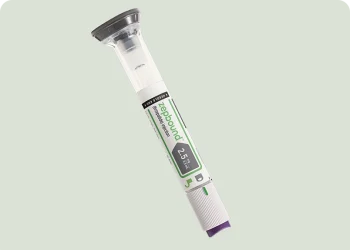
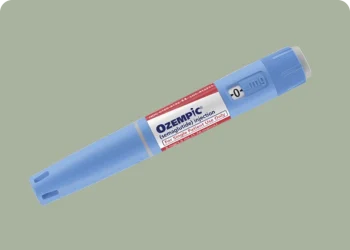
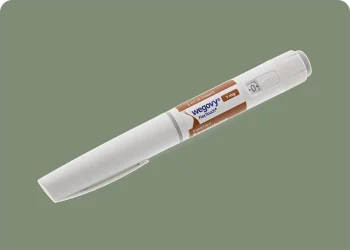
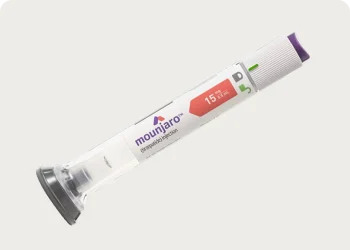
GLP-1 medications work by mimicking a natural gut hormone — glucagon-like peptide-1 — that your body releases after you eat 1. Drugs like semaglutide (Ozempic®, Wegovy®, Rybelsus®) and tirzepatide (Mounjaro®, Zepbound®) lock onto the same receptors that hormone uses and keep its signals switched on far longer than your own GLP-1 ever could. The result is a coordinated effect in three places at once: your stomach empties more slowly so you feel full sooner, your pancreas releases insulin only when blood sugar is actually high, and your brain turns down hunger and the constant background chatter about food that many people call "food noise" 1, 2, 6.
That combined action is why these medications produce weight loss that diet and willpower alone rarely match: in STEP 1, adults on semaglutide 2.4 mg lost a mean −14.9% of body weight at 68 weeks versus −2.4% on placebo 4, and in SURMOUNT-1, tirzepatide 15 mg produced −20.9% at 72 weeks 5. The crucial point up front: these drugs treat the biology of appetite while you take them — they do not permanently reset it. When the medication stops, the hormone signal stops, hunger returns, and weight tends to come back 7, 8, which is why GLP-1 treatment works best inside a supervised, long-term plan. Here is what is actually happening inside your body.
What GLP-1 Is and What the Drugs Copy
GLP-1 is a hormone made by specialized L-cells lining your small intestine. When food arrives, these cells release GLP-1 as part of the "incretin" system — the gut's way of signaling that a meal is on the way 1. Your own GLP-1 is powerful but extremely short-lived: an enzyme called DPP-4 breaks it down within about one to two minutes, so the natural signal is a quick pulse, not a sustained message 1.
GLP-1 receptor agonists (the drug class's technical name) are engineered versions built to resist DPP-4 and stay active for days. Semaglutide has a half-life of roughly one week, which is why it is dosed once weekly 2; tirzepatide's is around five days, also supporting once-weekly injection 3. Instead of a one-minute pulse, your receptors receive a steady signal around the clock — and that single change, turning a fleeting hormone into a long-acting one, is the foundation of everything these medications do.
The Stomach: Slower Emptying, Earlier Fullness
One of the most immediately noticeable effects is on gastric emptying — how fast food leaves your stomach. GLP-1 slows this process 1. Food stays in the stomach longer, stretching the stomach wall and stimulating the nerves that signal fullness to your brain, so you feel satisfied with smaller portions and stay full longer between meals.
This mechanism is also the direct cause of the most common side effects. Because the stomach empties more slowly, many people experience nausea, early fullness, reflux, or constipation, especially in the first weeks and after each dose increase 2, 3. These tend to ease as your body adapts and as a clinician titrates the dose gradually — see nausea and digestive side effects and dose titration. Slowed emptying is also why these drugs can change how quickly other oral medications are absorbed (drug interactions).
The Pancreas: Insulin Only When You Need It
GLP-1 acts on your pancreas to stimulate insulin and suppress glucagon — but only in a glucose-dependent way 1, 2. This is one of the most reassuring features of the drug class. "Glucose-dependent" means the medication prompts insulin release when your blood sugar is elevated, and that prompt fades as blood sugar returns to normal, while glucagon (the hormone that pushes your liver to release stored sugar) is dialed down 1.
The practical consequence: in people who do not also take insulin or a sulfonylurea, GLP-1 medications carry a low intrinsic risk of hypoglycemia (low blood sugar) because they essentially switch off once glucose is normal 2 — unlike older diabetes drugs that force insulin out regardless. The picture changes in combination with insulin or a sulfonylurea, which can cause lows and may need clinician-led dose adjustment (do GLP-1s cause low blood sugar). This same glucose-lowering action is why semaglutide and tirzepatide were first approved for type 2 diabetes before weight management.
The Brain: Less Hunger, Quieter "Food Noise"
The effect patients describe as most life-changing happens in the brain. GLP-1 receptors are present in several brain regions that govern appetite and reward, including the hypothalamus (the brain's appetite control center) 1. By activating these receptors, the medications reduce hunger, increase fullness, lower cravings, and weaken the pull of highly palatable, high-fat, high-sugar foods 1, 6.
In a controlled study of semaglutide, participants ate about 24% less food across a day of free-access meals, with less hunger, fewer cravings, better control of eating, and a reduced preference for high-fat foods versus placebo 6. Many describe this as the quieting of "food noise" — the intrusive mental loop about what and when to eat next. When that loop goes quiet, eating less stops feeling like a battle of willpower. This central effect, combined with slower stomach emptying, drives the large average weight losses seen in the expected weight-loss timeline.
Semaglutide vs. Tirzepatide: One Hormone Signal or Two
Not all GLP-1 medications are identical, and the difference comes down to how many hormone receptors they target.
- Semaglutide (Ozempic®, Wegovy®, Rybelsus®) is a single-agonist: it activates the GLP-1 receptor only 2.
- Tirzepatide (Mounjaro®, Zepbound®) is a dual agonist: it activates both the GLP-1 receptor and the GIP receptor 3. GIP (glucose-dependent insulinotropic polypeptide) is a second incretin hormone, and adding GIP activity appears to further support appetite regulation and energy balance 3.
In practice, that second receptor target is associated with larger average weight loss: tirzepatide's ~20.9% in SURMOUNT-1 5 versus semaglutide's ~14.9% in STEP 1 4. (These are separate trials with different participants, not a perfect head-to-head — a direct comparison is covered in semaglutide vs. tirzepatide.) Formulation also matters: Ozempic and Rybelsus are approved for type 2 diabetes while Wegovy is approved for weight management, and an oral 25 mg form of semaglutide for weight management received FDA approval in late 2025 — a once-daily pill alternative to the weekly injection. Which medication fits you is a clinical decision based on your history, goals, and tolerance.
Why the Effects Reverse When You Stop
A GLP-1 medication does not retrain your appetite permanently or "cure" obesity — it actively manages an underlying biology for as long as it is in your system. The drug holds appetite hormones in a different balance; remove the drug and that balance returns toward its previous set point 7, 8.
The trial evidence is unambiguous. In STEP 4, people who reached the full semaglutide dose and then switched to placebo regained weight, while those who continued kept losing — a difference of about −7.9% (continued) versus +6.9% (stopped) over the following weeks 7. In SURMOUNT-4, stopping tirzepatide led to roughly +14% weight regain, while continuing produced further loss 8. This is biology, not failure of willpower: appetite signals rebound, hunger and food noise return, and the body defends its prior weight. That reframes the whole treatment — GLP-1 therapy is a long-term management strategy with a planned step-down, not a short course. We cover this in weight regain after stopping a GLP-1, muscle-loss prevention, and clinically supervised GLP-1 care.
The mechanism also reaches beyond the scale: in the SELECT trial, semaglutide cut major cardiovascular events (heart attack, stroke, or cardiovascular death) by about 20% in adults with overweight or obesity and established heart disease but without diabetes 9.
What This Means for You — and When to Involve a Clinician
Knowing the mechanism explains why these are prescription drugs, not supplements: they change how your gut, pancreas, and brain communicate, which is why they require a contraindication screen before starting and monitoring throughout. Two realities are worth flagging to your clinician. First, if you take insulin or a sulfonylurea, the combination can cause low blood sugar even though the GLP-1 alone usually does not, so doses may need adjusting 2. Second, because slowed stomach emptying can change how other oral medications (such as thyroid hormone or oral contraceptives) are absorbed, your full medication list should be reviewed before you start 3. And if GI side effects are severe or not improving, adjust titration with your prescriber — don't push through or stop abruptly on your own.
Red Flags — Seek Care Now
The mechanism is generally well tolerated, but certain symptoms warrant prompt attention. Call your clinician or seek urgent care if you experience:
- Severe, persistent abdominal pain — especially pain that radiates to your back, with or without vomiting (possible pancreatitis).
- Signs of an allergic reaction — swelling of the face, lips, tongue, or throat, or difficulty breathing.
- Persistent vomiting with signs of dehydration — dizziness, very dark urine, or inability to keep fluids down.
- A lump or swelling in the neck, hoarseness, or trouble swallowing. GLP-1 and dual GIP/GLP-1 medications carry a boxed warning for thyroid C-cell tumors based on rodent studies, and are contraindicated in anyone with a personal or family history of medullary thyroid carcinoma (MTC) or Multiple Endocrine Neoplasia syndrome type 2 (MEN 2) 2, 3.
For a full triage guide, see serious side effects and red flags.
What You Can Do About It
The medication does the biological work, but results depend on what you build around it. Because the mechanism reduces how much you eat without guaranteeing what you eat or protecting muscle, supportive habits matter more, not less.
Foundation (everyone on a GLP-1):
- Prioritize protein and resistance training. GLP-1 weight loss includes some lean (muscle) mass — protein and strength work help you lose fat, not strength (muscle-loss prevention).
- Eat smaller, slower meals. Working with delayed gastric emptying — smaller portions, less fatty food, good hydration — reduces nausea and reflux.
- Don't self-adjust your dose. "Highest tolerated" is not "maximum," and faster escalation mostly buys more side effects. Dose changes belong with your clinician (dosing and titration).
Clinical (with your care team):
- Get a full medication and history review before starting — contraindication screening (thyroid, pancreatitis history, pregnancy plans) and adjustment of any insulin, sulfonylurea, or sensitive oral drugs.
- Verify the source of your medication. The dosing-error and counterfeit risks of unregulated compounded semaglutide are real.
- Plan for the long term from day one — including a step-down or maintenance strategy, because stopping reverses the effect 7, 8.
Get Started with JumpstartMD
If you want to understand not just whether a GLP-1 could work for you but how it would work in your body — and how to protect your results — that is the conversation a clinically supervised program is built for.
JumpstartMD was founded in 2007 by Stanford-trained physicians, with programs built around labs, hormones, and body composition, and peer-reviewed outcomes published in the Journal of Obesity. You are seen face-to-face by a licensed clinician — in person at one of 14 California locations or online across California — not routed through an anonymous questionnaire. Care begins with a 60-biomarker lab screening and a full contraindication and drug-interaction review before any prescription, so the mechanism described here is matched safely to your physiology.
Because GLP-1 medications can take up to 40% of weight lost as muscle without supervision, JumpstartMD tracks body composition with InBody® scanning at each visit so you lose fat, not lean mass. Your clinician manages titration to your tolerance, monitors interactions, and builds a step-down or maintenance plan to protect results. FDA-approved options include Ozempic®, Wegovy®, Zepbound®, Mounjaro®, and Rybelsus®, alongside non-GLP-1 and no-medication plans, with flexible dosing and microdosing. Pricing is personalized — you pay for the dose prescribed, not a flat monthly medication fee — and health coaching and nutrition guidance are included in membership.
Ready to start? Schedule a free, no-obligation consultation by phone or online form and find out how a GLP-1 would work for your body — with the supervision that makes it sustainable.
Book FREE Consultation
Share your details and a JumpstartMD team member will reach out shortly. Or call 408.478.3496 for your free, no-obligation consultation.
Share your details and a JumpstartMD team member will reach out when we open — or start online right now.
Related Articles
- Semaglutide vs. tirzepatide — the single- vs. dual-agonist mechanisms introduced here, head-to-head.
- Expected weight-loss timeline — what these appetite effects translate to month by month.
- GLP-1 side effects — the full landscape of effects that flow from this mechanism.
- Do GLP-1s cause low blood sugar? — why the glucose-dependent action keeps hypoglycemia risk low.
- Weight regain after stopping a GLP-1 — the biology behind why effects reverse.
- GLP-1 for menopause weight gain — how this mechanism meets the hormonal shifts of perimenopause weight gain and visceral fat.
Explore the full GLP-1 medications for weight loss hub.
Frequently Asked Questions
How do GLP-1 medications work for weight loss?
They mimic GLP-1, a hormone your intestine releases after eating, and keep its signal switched on far longer than your body naturally would 1, 2. That signal slows how fast your stomach empties, prompts the pancreas to release insulin only when blood sugar is high, and acts on appetite centers in the brain to reduce hunger and cravings 1, 6 — so you eat less without the willpower struggle, producing the weight loss seen in trials 4, 5.
Is semaglutide the same as Ozempic, Wegovy, and Rybelsus?
Yes — they are the same drug. Semaglutide is the medication; Ozempic® and Rybelsus® (a daily pill) are the brands approved for type 2 diabetes, and Wegovy® is approved for weight management 2. A 25 mg oral form of semaglutide for weight management was also FDA-approved in late 2025. The active molecule and core mechanism are identical; the differences are dose, formulation, and approved use.
What is "food noise," and why does a GLP-1 quiet it?
"Food noise" is the constant background chatter — intrusive thoughts about what and when to eat next. GLP-1 receptors sit in brain regions that control appetite, including the hypothalamus 1. When the medication activates them, hunger, cravings, and the pull of high-fat, high-sugar foods all drop 1, 6. In a controlled study, people on semaglutide ate about 24% less over a day, with better control of eating 6.
How is tirzepatide's mechanism different?
Semaglutide activates one receptor (GLP-1) 2. Tirzepatide (Mounjaro®, Zepbound®) activates two — both GLP-1 and GIP, a second incretin hormone 3. That dual action is associated with larger average weight loss in trials (about 20.9% with tirzepatide 15 mg versus 14.9% with semaglutide 2.4 mg, in separate studies) 4, 5. See semaglutide vs. tirzepatide for the full comparison.
Do GLP-1 medications cause low blood sugar?
For most people who are not also taking insulin or a sulfonylurea, the risk is low. GLP-1's effect on insulin is glucose-dependent — it stimulates insulin only when blood sugar is elevated and eases off as it normalizes 1, 2. The risk rises in combination with insulin or a sulfonylurea, where doses may need adjusting. More in do GLP-1s cause low blood sugar.
Do GLP-1 medications do anything besides weight loss?
References
- T. D. Müller, B. Finan, S. R. Bloom, D. D'Alessio, D. J. Drucker, P. R. Flatt, et al., "Glucagon-like peptide 1 (GLP-1)," Molecular Metabolism, vol. 30, pp. 72-130, Dec. 2019, [Online]. Available: https://doi.org/10.1016/j.molmet.2019.09.010. PMID: 31767182. [Accessed: Jun. 10, 2026]. ↩
- U.S. Food and Drug Administration, "Highlights of Prescribing Information: Wegovy (semaglutide) injection, for subcutaneous use," 2025, [Online]. Available: https://www.accessdata.fda.gov/drugsatfda_docs/label/2025/215256s024lbl.pdf. [Accessed: Jun. 10, 2026]. ↩
- U.S. Food and Drug Administration, "Highlights of Prescribing Information: Zepbound (tirzepatide) injection, for subcutaneous use," 2023, [Online]. Available: https://www.accessdata.fda.gov/drugsatfda_docs/label/2023/217806s000lbl.pdf. [Accessed: Jun. 10, 2026]. ↩
- J. P. H. Wilding, R. L. Batterham, S. Calanna, M. Davies, L. F. Van Gaal, I. Lingvay, et al., "Once-weekly semaglutide in adults with overweight or obesity," New England Journal of Medicine, vol. 384, no. 11, pp. 989-1002, Mar. 2021, [Online]. Available: https://doi.org/10.1056/NEJMoa2032183. PMID: 33567185. [Accessed: Jun. 10, 2026]. ↩
- A. M. Jastreboff, L. J. Aronne, N. N. Ahmad, S. Wharton, L. Connery, B. Alves, et al., "Tirzepatide once weekly for the treatment of obesity," New England Journal of Medicine, vol. 387, no. 3, pp. 205-216, Jul. 2022, [Online]. Available: https://doi.org/10.1056/NEJMoa2206038. PMID: 35658024. [Accessed: Jun. 10, 2026]. ↩
- J. Blundell, G. Finlayson, M. Axelsen, A. Flint, C. Gibbons, T. Kvist, J. B. Hjerpsted, "Effects of once-weekly semaglutide on appetite, energy intake, control of eating, food preference and body weight in subjects with obesity," Diabetes, Obesity and Metabolism, vol. 19, no. 9, pp. 1242-1251, Sep. 2017, [Online]. Available: https://doi.org/10.1111/dom.12932. PMID: 28266779. [Accessed: Jun. 10, 2026]. ↩
- D. Rubino, N. Abrahamsson, M. Davies, D. Hesse, F. L. Greenway, C. Jensen, et al., "Effect of continued weekly subcutaneous semaglutide vs placebo on weight loss maintenance in adults with overweight or obesity: the STEP 4 randomized clinical trial," JAMA, vol. 325, no. 14, pp. 1414-1425, Apr. 2021, [Online]. Available: https://doi.org/10.1001/jama.2021.3224. PMID: 33755728. [Accessed: Jun. 10, 2026]. ↩
- L. J. Aronne, N. Sattar, D. B. Horn, H. E. Bays, S. Wharton, W.-Y. Lin, et al., "Continued treatment with tirzepatide for maintenance of weight reduction in adults with obesity: the SURMOUNT-4 randomized clinical trial," JAMA, vol. 331, no. 1, pp. 38-48, Jan. 2024, [Online]. Available: https://doi.org/10.1001/jama.2023.24945. PMID: 38078870. [Accessed: Jun. 10, 2026]. ↩
- A. M. Lincoff, K. Brown-Frandsen, H. M. Colhoun, J. Deanfield, S. S. Emerson, S. Esbjerg, et al., "Semaglutide and cardiovascular outcomes in obesity without diabetes," New England Journal of Medicine, vol. 389, no. 24, pp. 2221-2232, Dec. 2023, [Online]. Available: https://doi.org/10.1056/NEJMoa2307563. PMID: 37952131. [Accessed: Jun. 10, 2026]. ↩