


In a Nutshell
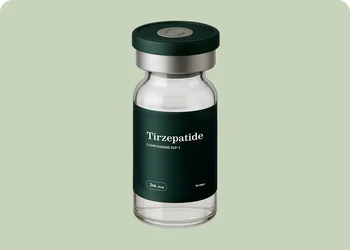
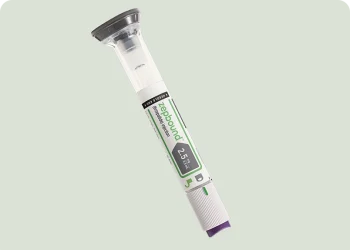
Menopause does not make GLP-1 medications stop working — but it does change the equation. As estrogen declines, fat shifts to the abdomen, insulin resistance rises, and muscle loss accelerates, creating a more stubborn metabolic environment. The good news: the clinical data is clear that GLP-1 medications produce significant weight loss at every reproductive stage. In a post hoc analysis of the landmark SURMOUNT-1 trial 5, tirzepatide (Zepbound®) produced roughly 23% body-weight loss in postmenopausal women and 26% in premenopausal women, versus only 2-3% on placebo 1.
So why does it feel harder? Because the same hormonal shift that drives perimenopause weight gain also amplifies the two risks every GLP-1 patient faces — losing muscle and losing bone. Menopause doesn't demand a different medication; it demands a more comprehensive plan: hormone evaluation, body composition tracking, protein and resistance training to protect lean mass, and — for many women — coordinating GLP-1 medications with bioidentical hormone therapy (BHRT). That coordination is the heart of JumpstartMD's approach: medical weight loss and menopause hormone care in one plan, by one team, tracking lean mass at every visit.
What Menopause Changes About Weight and Metabolism
Menopause — typically around age 51 — marks the transition to a low-estrogen state, and the hormonal drop sets off a cascade of metabolic changes that all push in the same direction 2:
- Fat redistributes to the abdomen. Women gain roughly 1-1.5 lb (about 0.5 kg) per year in midlife regardless of menopausal status, but the transition shifts where fat is stored — from hips and thighs to metabolically dangerous visceral fat around the organs 2.
- Insulin resistance rises, so more glucose is stored as fat and hunger worsens — by age 60, roughly half of women meet criteria for metabolic syndrome 2.
- Muscle loss accelerates. Declining estrogen and testosterone speed up sarcopenia, lowering resting metabolic rate so you burn fewer calories at rest 2, 7.
- Cardiovascular risk and bone loss climb. LDL tends to rise as estrogen falls, and estrogen deficiency tips the balance toward bone loss — which rapid weight loss without resistance training can accelerate 2.
The practical translation: same effort, worse results — which is why weight and hormones are best treated as one connected problem.
What the Clinical Evidence Shows: GLP-1 Works Across Every Reproductive Stage
Despite that tougher backdrop, the evidence that these medications work in menopausal women is strong and getting stronger.
The SURMOUNT reproductive-stage analysis (Obesity, 2025). Researchers re-analyzed the SURMOUNT-1, -3, and -4 trials of tirzepatide — the largest dataset examining GLP-1-class outcomes by menopausal status — sorting women into pre-, peri-, and postmenopausal groups. In SURMOUNT-1, tirzepatide beat placebo at every stage: 26% vs 2% (premenopausal), 23% vs 3% (perimenopausal), and 23% vs 3% (postmenopausal) 1. The lead author concluded that tirzepatide produced significant reductions in body weight, waist circumference, and waist-to-height ratio "regardless of reproductive stage" 1 — and waist size predicts cardiovascular risk better than BMI in this population.
Semaglutide and liraglutide. Semaglutide's pivotal STEP 1 trial established about 15% mean weight loss at 68 weeks 6; a 2026 scoping review in Cureus found semaglutide and liraglutide showed comparable weight loss, lean-mass change, and fat-mass loss in pre- and postmenopausal women, working whether postmenopausal women's BMI was above or below 35 2.
The takeaway: menopause does not make these medications ineffective. The gap in average weight loss between younger and older women is modest — what changes is the environment, which is exactly why clinical attention to hormones and body composition pays off.
Why Combining Hormone Therapy With GLP-1 May Produce Better Results
This is the most JumpstartMD-relevant area of emerging research: menopause hormone therapy (MHT/BHRT) and GLP-1 medications may be synergistic.
- Tirzepatide + hormone therapy (peer-reviewed cohort, 2026). A retrospective study of 120 postmenopausal women on tirzepatide for 12 months or more found that those also using hormone therapy lost an average of 19.2% of body weight versus 14% on tirzepatide alone — roughly 35% more — with improved cardiometabolic parameters 3. As a non-randomized study it can't prove causation, but the signal is consistent.
- Semaglutide + hormone therapy (Menopause, 2024). In a cohort of postmenopausal women on semaglutide, those also using hormone therapy had greater weight loss at every check-in (e.g., 15% vs 10% at 9 months) and were likelier to reach the ≥5% and ≥10% thresholds 4. Adding hormone therapy also improved triglycerides and total cholesterol beyond semaglutide alone 2.
The leading hypothesis is that estrogen supports the body's own GLP-1 signaling and insulin sensitivity, so restoring it may make the medication work more efficiently 3. The practical point: if you're a candidate for both, treating them together may beat either alone.
The Central-Fat Problem: Why the Scale Tells Only Part of the Story
For menopausal women, scale weight is a poor scorecard. The hallmark of the transition is fat moving from under the skin to around the organs, and visceral fat drives insulin resistance, inflammation, and cardiovascular disease even when total weight barely changes 2. That's why body composition tracking — not just the scale — is essential: a DEXA or in-clinic InBody® scan separates fat mass, lean mass, and visceral fat to confirm you're losing the right compartment, something a tape measure cannot do. See visceral fat in menopause for why waist size can matter more than BMI.
Muscle Loss: The Hidden Risk Menopause Amplifies
Every GLP-1 patient loses some lean mass during rapid weight loss — and up to roughly 40% of the weight lost can be muscle when treatment isn't supervised. For menopausal women, this collides with sarcopenia already accelerating from estrogen and testosterone decline 2, 7. Beyond appearance, losing muscle slows resting metabolism, weakens blood-sugar control, and raises fracture risk — and menopause already increases that risk.
The protective strategy is the same we recommend for all GLP-1 patients, just more urgent after menopause: adequate protein (commonly 1.2-1.5 g per kg of body weight per day) plus resistance training 2-5 days per week. Done consistently, this preserves — and sometimes builds — lean mass even while you lose significant total weight. For the full playbook, see how to prevent muscle loss on GLP-1 medications.
GLP-1 Benefits Beyond Weight for Menopausal Women
GLP-1 medications may also help with several menopause-related issues through weight loss 2:
- Hot flashes. One study found women who lost ≥10% of body weight had a 56% higher likelihood of being hot-flash-free 2. Since GLP-1 medications routinely produce loss past that threshold, some women notice relief in their hot flashes and night sweats.
- Sleep apnea. Menopause raises obstructive sleep apnea risk; GLP-1-class medications have improved apnea severity in trials, which can ease menopause insomnia and daytime fatigue 2.
- Metabolic syndrome. GLP-1s address central fat, insulin sensitivity, and blood pressure at once — relevant given how common it is after menopause 2.
Is This Normal? When to Talk to Your Clinician
Some midlife weight and body-shape change is biologically expected — but "expected" doesn't mean "untreatable," and not every change is hormonal. Consider a clinical evaluation if:
- You're gaining more than the typical 1-2 lb per year, or weight is affecting your health, mobility, or quality of life.
- Strategies that used to work have stopped working — the classic "I'm doing everything the same and it's not working anymore."
- You have signs of insulin resistance or metabolic syndrome (rising waist size, high blood pressure, prediabetes, abnormal lipids), or you're losing weight on a GLP-1 and want to confirm it's coming from fat, not muscle.
Red Flags — Seek Care Now
Most midlife weight change is hormonal, but a few patterns are not — get prompt evaluation if you have:
- Rapid weight gain over days to weeks with swelling, shortness of breath, or leg edema — possible thyroid, cardiac, or kidney cause.
- Unexplained, unintended weight loss — needs evaluation for thyroid disease or other systemic illness.
- Severe, persistent abdominal pain on a GLP-1 (especially radiating to the back, with vomiting) — possible pancreatitis; stop the medication and seek care. Persistent vomiting or diarrhea with dehydration also risks acute kidney injury.
- Rapid abdominal enlargement with bloating, early fullness, or pelvic pressure — needs evaluation for ovarian or GI causes, not assumed to be "menopause belly."
- New, severe mood changes — discuss with your clinician promptly; see GLP-1 and mood.
What You Can Do About It
The framework is layered — lifestyle foundations for everyone, clinical tools when indicated, all under medical supervision.
Lifestyle foundations
- Resistance training, 2-3+ times per week — the highest-leverage move for menopausal body composition; it slows muscle loss and protects lean mass during GLP-1 weight loss.
- Protein-forward eating, ~1.2-1.5 g/kg/day, individualized by your clinician (lower in kidney disease).
- Aerobic activity, 150+ minutes/week — the strongest lifestyle lever for visceral fat.
- Protect sleep, manage stress, and limit alcohol — all drive abdominal fat and appetite; treating insomnia and vasomotor symptoms is part of the plan.
Clinical tools (with your clinician)
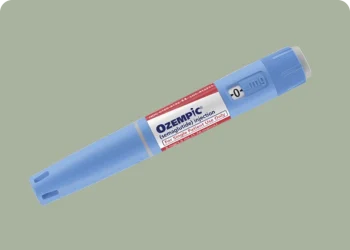
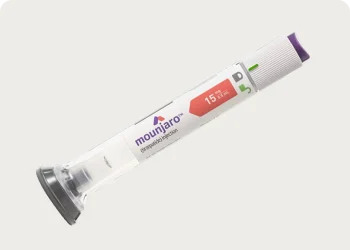
- GLP-1 / dual-agonist medications — Wegovy® (semaglutide) and Zepbound® (tirzepatide) are FDA-approved for chronic weight management (BMI ≥30, or ≥27 with a weight-related condition); Ozempic® and Mounjaro® hold the same active ingredients but are approved for type 2 diabetes (weight use is off-label). Contraindicated with a personal/family history of medullary thyroid carcinoma or MEN2, and not used in pregnancy. See who qualifies and GLP-1 side effects.
- Bioidentical hormone therapy (BHRT) — for eligible women it's the most effective treatment for moderate-to-severe vasomotor symptoms, improves body composition, and may enhance GLP-1 weight loss 3, 4. Generally safest started within 10 years of menopause or before age 60, and not right for everyone 8.
- Body-composition and cardiometabolic monitoring — DEXA or InBody® to confirm you're losing fat (not muscle), plus periodic lipids, blood pressure, and glucose. A mail-order service that just ships you a pen can't tell which you're losing.
Not recommended: severe calorie restriction alone (accelerates muscle and bone loss), "detoxes" and "cleanses," and spot-reduction exercise.
Get Started with JumpstartMD
If menopause has made weight loss feel like a fight you can't win — and you want a team that treats your hormones and your weight as one connected problem — JumpstartMD was built for this.
Founded in 2007 by Stanford-trained physicians, JumpstartMD builds every plan around labs, hormones, and body composition, with peer-reviewed outcomes published in the Journal of Obesity. You're seen face-to-face by licensed clinicians — in person at 14 California locations or online across California. Care starts with a 60-biomarker lab screening and includes InBody® body composition scanning at every visit, so we track lean mass directly and make sure you lose fat, not strength (without supervision, up to 40% of the weight lost on GLP-1s can be muscle — a risk menopause compounds). InBody scans are done in clinic; online members can book one at any of the 14 locations.
For medication, we offer the full range of FDA-approved options — Ozempic®, Wegovy®, Zepbound®, Mounjaro®, and Rybelsus® — plus non-GLP-1 and no-medication plans, with flexible dosing, microdosing, and maintenance support. Every prescription includes clinician-managed titration, contraindication screening, drug-interaction monitoring, restart protocols, and a step-down/taper plan to protect your results after the medication phase. And because we run a clinically supervised BHRT program in the same practice, your hormone therapy and weight-loss medication can be coordinated in one care plan — the combination research suggests may beat either alone. Pricing is personalized — you pay for the dose prescribed, not a flat monthly medication fee — and health coaching and nutrition guidance are included in membership.
Ready to start? Schedule a free, no-obligation consultation by phone or through our online form, and we'll build a plan around your labs, hormones, and goals.
Book FREE Consultation
Share your details and a JumpstartMD team member will reach out shortly. Or call 408.478.3496 for your free, no-obligation consultation.
Share your details and a JumpstartMD team member will reach out when we open — or start online right now.
Related Articles
- How to prevent muscle loss on GLP-1 medications — the protein-and-resistance-training playbook that matters most for menopausal women.
- Expected weight-loss timeline on GLP-1s — what realistic results and pacing look like.
- Who qualifies for GLP-1 treatment — BMI and comorbidity criteria explained.
- GLP-1 side effects — what to expect and how supervision manages them.
- Perimenopause weight gain — why the rules change in midlife (cross-hub).
- Belly fat / visceral fat in menopause — the specific hormone-driven fat shift (cross-hub), part of our full Menopause Symptoms Hub.
Frequently Asked Questions
Can menopause make it harder to lose weight on a GLP-1?
It can make the environment harder — estrogen decline drives visceral fat, insulin resistance, and faster muscle loss — but it doesn't make the medication ineffective. SURMOUNT trial analysis found tirzepatide produced about 23% body-weight loss in postmenopausal women and 26% in premenopausal women, both far above placebo 1. That modest gap isn't the real issue — protecting muscle and bone while you lose weight is, which is why supervision and body-composition tracking matter so much in midlife.
Should I start hormone therapy before or alongside GLP-1 medication?
That's a decision for your prescribing clinician. Emerging evidence suggests the combination may beat either alone — a peer-reviewed cohort found postmenopausal women on tirzepatide plus hormone therapy lost about 19% of body weight versus 14% on tirzepatide alone 3, and semaglutide studies show a similar pattern 4. At JumpstartMD both are managed in one care plan, which makes coordinating the timing straightforward.
Will a GLP-1 help my hot flashes?
I'm perimenopausal — should I wait until after menopause to start?
There's no clinical reason to wait. Perimenopausal women in the SURMOUNT trials lost the same magnitude as postmenopausal women (about 23% on tirzepatide) 1. If anything, perimenopause is a strategic time to act — before the metabolic consequences of estrogen decline set in.
Why does menopause cause weight to shift to my belly?
Declining estrogen is directly associated with increased visceral (abdominal) fat: as estrogen falls, fat storage shifts from hips and thighs toward visceral fat around the organs, raising cardiovascular and metabolic risk independent of total body weight 2. More detail in our visceral fat article.
Is it safe to take a GLP-1 and bioidentical hormone therapy at the same time?
They work through different biological pathways and are commonly used together under supervision; published data on the combination show improved weight loss and cardiometabolic outcomes 2, 3, 4. Both need monitoring — GLP-1s for GI and metabolic changes, hormone therapy for dose optimization and safety screening — so the combined regimen should be overseen by a clinician experienced with both, the model JumpstartMD uses.
How much of the weight I lose will be muscle?
Without attention to protein and resistance training, a substantial share of GLP-1 weight loss can come from lean mass — up to roughly 40% in unsupervised settings — and menopause makes that worse because muscle loss is already accelerating 2, 7. The fix is proven: 1.2-1.5 g/kg/day of protein plus resistance training 2-5 days a week, with body-composition scans to verify it's working. See muscle-loss prevention.
References
- B. G. Tchang, A. C. Mihai, A. Stefanski, et al., "Body weight reduction in women treated with tirzepatide by reproductive stage: a post hoc analysis from the SURMOUNT program," Obesity (Silver Spring), vol. 33, no. 5, pp. 851-860, May 2025, [Online]. Available: https://doi.org/10.1002/oby.24254. [Accessed: Jun. 10, 2026]. ↩
- N. A. Graczyk and J. Bisschops, "Glucagon-Like Peptide-1 Receptor Agonists (GLP-1RAs) for Obesity and Symptoms in Menopause: A Review," Cureus, vol. 18, no. 1, e101693, Jan. 2026, [Online]. Available: https://doi.org/10.7759/cureus.101693. PMID: 41704988. [Accessed: Jun. 10, 2026]. ↩
- R. Castaneda, M. D. Hurtado, et al., "The role of menopause hormone therapy in modulating tirzepatide-associated weight loss in postmenopausal women with overweight or obesity: a retrospective cohort study," The Lancet Obstetrics, Gynaecology & Women's Health, published online Jan. 22, 2026, [Online]. Available: https://www.thelancet.com/journals/lanogw/article/PIIS3050-5038(25)00145-1/abstract. [Accessed: Jun. 10, 2026]. ↩
- M. D. Hurtado, E. Tama, S. Fansa, W. Ghusn, D. Anazco, A. Acosta, S. S. Faubion, C. L. Shufelt, "Weight loss response to semaglutide in postmenopausal women with and without hormone therapy use," Menopause, vol. 31, no. 4, pp. 266-274, Apr. 2024, [Online]. Available: https://doi.org/10.1097/GME.0000000000002310. PMID: 38446869. [Accessed: Jun. 10, 2026]. ↩
- A. M. Jastreboff, L. J. Aronne, N. N. Ahmad, S. Wharton, L. Connery, B. Alves, A. Kiyosue, S. Zhang, B. Liu, M. C. Bunck, A. Stefanski; SURMOUNT-1 Investigators, "Tirzepatide once weekly for the treatment of obesity," New England Journal of Medicine, vol. 387, no. 3, pp. 205-216, Jul. 21, 2022, [Online]. Available: https://doi.org/10.1056/NEJMoa2206038. PMID: 35658024. [Accessed: Jun. 10, 2026]. ↩
- J. P. H. Wilding, R. L. Batterham, S. Calanna, M. Davies, L. F. Van Gaal, I. Lingvay, B. M. McGowan, J. Rosenstock, M. T. D. Tran, T. A. Wadden, S. Wharton, K. Yokote, N. Zeuthen, R. F. Kushner; STEP 1 Study Group, "Once-weekly semaglutide in adults with overweight or obesity (STEP 1)," New England Journal of Medicine, vol. 384, no. 11, pp. 989-1002, Mar. 18, 2021, [Online]. Available: https://doi.org/10.1056/NEJMoa2032183. PMID: 33567185. [Accessed: Jun. 10, 2026]. ↩
- G. A. Greendale, B. Sternfeld, M. Huang, W. Han, C. Karvonen-Gutierrez, K. Ruppert, J. A. Cauley, J. S. Finkelstein, S.-F. Jiang, A. S. Karlamangla, "Changes in body composition and weight during the menopause transition," JCI Insight, vol. 4, no. 5, e124865, Mar. 7, 2019, [Online]. Available: https://doi.org/10.1172/jci.insight.124865. PMID: 30843880. [Accessed: Jun. 10, 2026]. ↩
- The North American Menopause Society, "The 2022 hormone therapy position statement of The North American Menopause Society," Menopause, vol. 29, no. 7, pp. 767-794, Jul. 2022, [Online]. Available: https://doi.org/10.1097/GME.0000000000002028. PMID: 35797481. [Accessed: Jun. 10, 2026]. ↩