




In a Nutshell
Bloating in perimenopause and menopause is common, multifactorial, and usually benign — but it has one of the broader differentials of any menopause symptom.
Typical menopause-related bloating reflects hormonal volatility affecting GI motility, slowed digestion, dietary shifts, and microbiome changes. Treatment combines dietary modification, addressing constipation, identifying food triggers, and (for some women) hormone therapy. Other common non-menopause contributors include constipation, IBS, food intolerances (especially lactose), gallbladder disease, medication side effects, and pelvic floor dysfunction.
The pattern that changes everything: new bloating on most days for 2-3 weeks or more — especially with early satiety, pelvic pain, urinary symptoms, weight loss, or bowel changes — should be evaluated promptly. This is the classic ovarian cancer presentation, which is why persistent bloating is never "just menopause."
What Menopause Bloating Feels Like
Common patterns:
- Distension after meals that's worse than it used to be
- Tight, full feeling in the abdomen
- A sensation of abdominal fullness or visible distension, often worse later in the day
- If you still have cycles, bloating may flare around hormonal shifts or before a period
- Gas, belching, or flatulence
- Sometimes confused with weight gain — bloating fluctuates within hours/days; fat doesn't
- Better in the morning, worse by evening
- Variable triggers — certain foods, stress, hormonal swings
What it usually does NOT involve (suggests another cause):
- Persistent unchanging bloating (vs daily fluctuation) — possible ascites or mass
- Bloating with rapid weight loss — needs evaluation
- Bloating with severe pain or vomiting — needs evaluation
- Bloating with significant change in bowel habits
- Abdominal swelling that is persistent day after day, progressively worsening, or not clearly linked to meals, constipation, or gas — deserves medical evaluation
Why Bloating Happens in Menopause
Bloating in midlife rarely has one cause — most women have several mechanisms working together. The pattern below summarizes the common contributors, with the persistent bloating + early satiety + pelvic discomfort triad flagged for what it can rarely signal.
| Cause | Distinguishing feature | Action |
|---|---|---|
| Hormonal — estrogen fluctuation | Cyclical "water-weight" fluid retention | Cycle tracking; treat hormonal volatility |
| Hormonal — high progesterone (endogenous luteal phase or oral micronized progesterone) | Slowed GI transit; gas/constipation bloating | Adjust progesterone route/dose if iatrogenic |
| Slowed gut transit (aging + estrogen effect) | Constipation pattern | Fiber, hydration, magnesium |
| GLP-1 medication side effect 3, 4 | Started GLP-1 recently; early fullness, belching, constipation | Dose titration, hydration, food adjustments |
| Lactose intolerance (worsens with age) | Bloating with dairy | Lactase or dairy elimination |
| FODMAP intolerance / IBS | Episodic, food-related | Low-FODMAP trial; GI eval |
| Microbiome changes | Persistent bloating with diet shifts | Gut workup if persistent |
| Stress / cortisol | Stress-correlated; gut-brain axis | Stress management |
| Bacterial overgrowth (SIBO) | Postprandial bloating; antibiotic history | GI eval, breath testing |
| Constipation | Reduced bowel movements | Fiber, hydration, motility support |
| Insulin resistance / visceral fat | Persistent abdominal fullness, not true bloating | Body composition (DEXA / InBody) to distinguish |
| ⚠️ Persistent bloating + early satiety + pelvic discomfort | Possible OVARIAN CANCER — Goff index | Urgent gynecologic eval (CA-125, transvaginal ultrasound) |
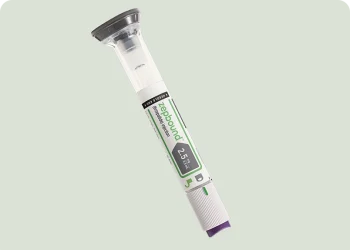
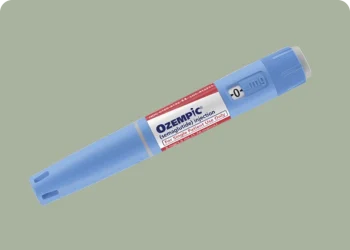
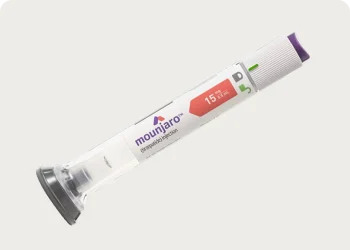
On GLP-1 medications: GLP-1 / GLP-1-GIP receptor agonists 3, 4 (semaglutide / Ozempic / Wegovy, tirzepatide / Mounjaro / Zepbound) intentionally slow gastric emptying — early fullness, nausea, belching ("sulfur burps"), constipation, and bloating are common, especially during dose escalation. Seek urgent care for severe, unrelenting abdominal pain (which may radiate to the back), repeated vomiting, a swollen abdomen that is not improving, or inability to keep food/liquids down or pass stool/gas — these can be signs of pancreatitis or gallbladder disease, both recognized GLP-1 adverse events. GLP-1 side effects are far more manageable in a clinically supervised program where dose titration, hydration, and protein/calorie intake are actively monitored, rather than mail-order prescribing.
Is This Normal? When to See a Doctor
Mild fluctuating bloating is common in perimenopause. Worth seeing a clinician for any of:
- Persistent daily bloating > 2 weeks that doesn't fluctuate
- Bloating with appetite changes (early satiety, decreased appetite)
- Bloating with pelvic or abdominal pain
- Bloating with weight loss
- Bloating with significant change in bowel habits
- Bloating with urinary changes
- New onset of severe bloating
- Family history of ovarian cancer with new persistent bloating
Clinical Red Flags — URGENT EVALUATION
Ovarian cancer often presents with persistent or frequent bloating, early satiety, pelvic/abdominal discomfort, and urinary urgency or frequency. These symptoms are common and usually have benign causes, but when they are new, frequent, and persistent, they warrant evaluation. Ovarian cancer is the deadliest gynecologic cancer largely because these symptoms are vague and often dismissed.
The "Symptom Index 1" for ovarian cancer (any of these for >12 days/month, persistent, new in past year):
- Bloating
- Pelvic or abdominal pain
- Difficulty eating or feeling full quickly (early satiety)
- Urinary urgency or frequency
Other red flags:
- Persistent bloating with weight loss, anorexia, fatigue — possible malignancy
- Bloating with significant pelvic mass on exam
- Bloating with severe pain
- Bloating with ascites (fluid in abdomen, characteristic distension that doesn't resolve)
- Bloating with vomiting and inability to pass gas/stool — possible bowel obstruction (urgent)
- Bloating with blood in stool or rectal bleeding
- Family history of ovarian, breast, colon cancer (especially BRCA, Lynch syndrome) with new persistent bloating
- Bloating not improving after 2-4 weeks of dietary modification
What You Can Do About It
For typical fluctuating menopause-related bloating:
Immediate relief for menopause bloating
For an acute bloating episode, the highest-yield home options:
- Gentle movement — a 10-15 minute walk or gentle yoga (knees-to-chest, gentle twists) stimulates GI motility
- Peppermint tea or enteric-coated peppermint oil — has modest evidence for relaxing GI smooth muscle
- Warm compress / heating pad on the abdomen
- Ginger tea — may help nausea-related bloating
- Sip warm water rather than gulping cold drinks
- Loose clothing
These won't fix chronic bloating but can shorten an episode while you address the underlying drivers.
Dietary interventions (long-term prevention)
- Identify food triggers — keep a food/symptom diary
- Eat slowly, chew thoroughly — reduces swallowed air
- Smaller more frequent meals — easier digestion
- Limit carbonated beverages
- Reduce sugar and ultra-processed foods
- Adequate fiber (gradually) — too much too fast can worsen bloating
- Probiotic foods — yogurt, kefir, sauerkraut; modest evidence
- Trial of low-FODMAP diet for refractory cases (under guidance — not for long-term)
Address constipation
- Adequate fiber (25+ grams/day)
- Adequate hydration
- Regular exercise — promotes GI motility
- OTC options for constipation — polyethylene glycol (Miralax) is generally a safer first-line option. Some people also use magnesium products, but these are not right for everyone (especially those with kidney disease) and can cause diarrhea or electrolyte issues — check with your clinician before using regularly
- Stress management — affects GI through gut-brain axis
Lifestyle factors
- Daily exercise — particularly aerobic; promotes motility and reduces bloating
- Limit alcohol — irritates GI, causes fluid retention
- Stress management
- Adequate sleep
Hormone therapy
Hormone therapy can sometimes improve bloating by stabilizing the hormonal swings. However, hormone therapy itself can also cause bloating (especially oral progesterone) — so the relationship is mixed. Not first-line for bloating alone. If you and your clinician decide hormone therapy is appropriate, FDA-approved bioidentical options are available for many patients; compounded "BHRT" products are not necessarily safer or more effective.
Specific supplements / OTC options
- Simethicone (Gas-X) may help if excess gas or belching is part of the problem, but it does not treat all causes of bloating
- Activated charcoal is sometimes marketed for bloating, but evidence is limited and it can interfere with absorption of medications and supplements — generally not recommended without clinician guidance
- Magnesium — for constipation-related bloating; not appropriate in kidney disease (see above)
- Probiotics — modest evidence for IBS-type bloating; generally low-risk for most people, though they can worsen gas in some and should be used cautiously in severely immunocompromised patients
Workup if persistent
Evaluation depends on symptom pattern, duration, exam, age/risk factors, and bowel symptoms. Your clinician may include:
- Pelvic exam — first-line gynecologic assessment
- Pelvic imaging (often transvaginal ultrasound) — when symptoms or exam findings raise concern for gynecologic causes including ovarian pathology
- CA-125 in selected patients — adjunct to imaging for ovarian cancer evaluation; not specific enough to use as a general screening test
- CBC, CMP — basic screen
- Thyroid panel
- Celiac screening if dietary patterns suggest
- GI evaluation — sometimes endoscopy/colonoscopy; if you are due for colorectal cancer screening or have bowel-habit changes, your clinician may also consider stool testing or colonoscopy based on age and symptoms
- Stool studies if diarrhea-predominant
Get Started with JumpstartMD
Persistent bloating in midlife isn't something to dismiss — it can occasionally signal ovarian or other abdominal/pelvic disease and deserves evaluation.
JumpstartMD's perimenopause and menopause care is part of our broader Total Health Optimization approach — a medically-supervised bioidentical hormone therapy program delivered by an expert team of licensed clinicians (under physician oversight), supported by lifestyle coaching for the behavioral side of care. Treatment balances five key hormones — estrogen, progesterone, DHEA, testosterone, and thyroid — through pills, creams, patches, injections, or subcutaneous pellet therapy (in-person visits only).
The program follows a structured pathway: a phone connection with our team, an online health questionnaire, comprehensive hormone labs at Quest Laboratories, a clinical consultation to review results, a personalized treatment plan, and regular follow-ups to fine-tune dosing as your body responds. Care is delivered in-person at our 14 California clinics or online from anywhere in California. When weight or metabolic health is contributing to your symptoms, BHRT is coordinated with our medical weight loss program in the same care plan.
Membership benefits include comprehensive lab testing, ongoing support and monitoring, exclusive member pricing on products, and concierge medical insurance claims assistance for PPO out-of-network plans (FSA/HSA accepted).
Book FREE Consultation
Share your details and a JumpstartMD team member will reach out shortly. Or call 408.478.3496 for your free, no-obligation consultation.
Share your details and a JumpstartMD team member will reach out when we open — or start online right now.
Frequently Asked Questions
Is it bloating or "menopause belly" (visceral fat)?
Bloating (distension within hours/days, fluctuating) is typically gas, fluid, or food in the GI tract, plus sometimes hormonal fluid retention. Visceral fat is chronic, doesn't fluctuate over hours, and is structurally different — fat tissue surrounding internal organs. Both can coexist. If your "belly" varies dramatically over a day, much of it is bloating, not actual fat.
When should I worry about ovarian cancer?
Persistent (>12 days/month, new within the past year) bloating 1, early satiety, pelvic/abdominal pain, or urinary urgency together raise the index of suspicion. Ovarian cancer is uncommon but its diagnosis is often delayed because symptoms are vague. If symptoms are new, frequent, and persistent, ask for a medical evaluation rather than assuming it is "just menopause." Depending on your symptoms and exam, your clinician may recommend pelvic imaging, lab work (which may include CA-125 in selected cases), or GI evaluation.
Could it be IBS?
IBS often presents with bloating, abdominal discomfort, and altered bowel habits. It's diagnosed clinically by Rome criteria. IBS can develop or worsen at any age, but new IBS-like symptoms after age 50 may still need evaluation before assuming IBS — alarm features like weight loss, rectal bleeding, anemia, or family history of GI cancer warrant a closer look. If your bloating has the IBS pattern (better after bowel movement, related to bowel habit changes), evaluation by a gastroenterologist may be appropriate.
Will hormone therapy help my bloating?
Mixed. Hormone therapy may stabilize the hormonal swings that contribute to bloating in some women, but HT (especially oral progesterone) can also cause bloating in others. Trial-and-monitor with clinician guidance.
Should I try probiotics?
Specific probiotic strains have modest evidence for IBS-type bloating. They are generally low-risk for most people, though they can worsen gas in some and should be used cautiously in severely immunocompromised patients. Evidence for menopause-specific bloating is limited. Try a single product for 4-8 weeks; assess effect; switch or discontinue if not helpful.
References
- B. A. Goff, L. S. Mandel, C. W. Drescher, N. Urban, S. Gough, K. M. Schurman, J. Patras, B. S. Mahony, M. R. Andersen, "Development of an ovarian cancer symptom index: possibilities for earlier detection," Cancer, vol. 109, no. 2, pp. 221-227, Jan. 15, 2007, [Online]. Available: https://doi.org/10.1002/cncr.22371. PMID: 17154394. [Accessed: Apr. 26, 2026]. ↩
- F. Mearin, B. E. Lacy, L. Chang, W. D. Chey, A. J. Lembo, M. Simren, R. Spiller, "Bowel disorders," Gastroenterology, vol. 150, no. 6, pp. 1393-1407, May 2016, [Online]. Available: https://doi.org/10.1053/j.gastro.2016.02.031. PMID: 27144627. [Accessed: Apr. 26, 2026]. ↩
- U.S. Food and Drug Administration, "Highlights of Prescribing Information: Wegovy (semaglutide) injection, for subcutaneous use," [Online]. Available: https://www.accessdata.fda.gov/drugsatfda_docs/label/2021/215256s000lbl.pdf. [Accessed: Apr. 26, 2026]. ↩
- U.S. Food and Drug Administration, "Highlights of Prescribing Information: Zepbound (tirzepatide) injection, for subcutaneous use," [Online]. Available: https://www.accessdata.fda.gov/drugsatfda_docs/label/2023/217806s000lbl.pdf. [Accessed: Apr. 26, 2026]. ↩